

MCC pellets under rheological investigation
MCC pellets under rheological investigation are ideal model spheres for studying powder behavior. In this study, we revisit the work of V. Mohylyuk and R. Dattani to analyze the effect of pellet size on powder properties. Understanding how pellet size influences flow and handling is essential for optimizing powder performance. Moreover, investigating size variations helps improve material processing and formulation strategies. By focusing on these aspects, researchers can better predict and control the behavior of MCC spheres in different applications.
Rheological behavior has a deep impact
The rheological behavior of powders greatly affects pharmaceutical formulations and processing steps. In particular, when studying MCC pellets under rheological investigation, powder rheology becomes a key area of focus. Typically, powders behave as solids under static conditions; however, they can fluidize under certain circumstances. Consequently, fluidization is widely used in pharmaceutical processes because it enables controlled and uniform coating or layering of starter beads with drugs and functional excipients. Moreover, while fluid behavior in liquids depends on inter- and intra-molecular interactions, network bonds, and temperature, powder fluidization primarily relies on micro-particular properties such as particle size, surface characteristics, and flowability. In addition, the exact gas speed and volume required for powder fluidization must be carefully adjusted for each system. Therefore, a thorough analysis of the powder is essential to achieve precise control and optimal performance.
Materials: MCC pellets
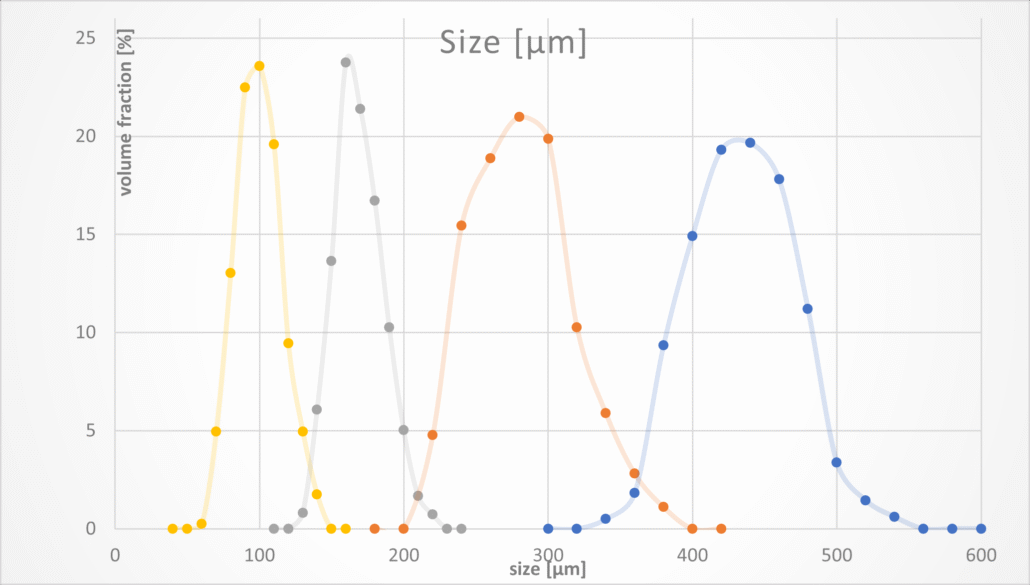
In this study, CELLETS® are used for the investigation. These pellets consist of Microcrystalline Cellulose, featuring a smooth surface, high sphericity, and minimal friability. Due to these properties, CELLETS® are popular as starter beads in pharmaceutical formulations and are ideal model spheres for rheological studies. Four types—CELLETS® 90, CELLETS® 100, CELLETS® 200, and CELLETS® 350—were examined, with size distributions ranging from 90 µm to 500 µm. The D50 values for these types vary between 94 µm and 424 µm. The specific size distribution of each CELLETS® type is summarized in Table 1.
| Type | Particle size distribution (≥ 85 %) |
| CELLETS® 90 | 60-100 µm (250/150) |
| CELLETS® 100 | 100-200 µm (150/80) |
| CELLETS® 200 | 200-355 µm (80/50) |
| CELLETS® 350 | 350-500 µm (50/35) |
Table 1: Particle size distribution of selected MCC spheres.

Characterization Methods for MCC Pellets Under Rheological Investigation
First, we measured the particle size distribution of MCC pellets under rheological investigation using optical digital microscopy (Keyence VHX 600). This approach provides precise and reliable data on pellet dimensions, which is essential for understanding their flow and handling properties.
Next, we applied standard pharmacopoeia methods to determine bulk and tapped density, as well as flow rate using a gravitational funnel. In addition, we analyzed the dynamic angle of repose and dynamic cohesivity index with a rotating drum tester (GranuDrum). Furthermore, we used a powder rheometer (FT4 Powder Rheometer) to evaluate basic flowability energy, specific energy, aerated energy, permeability, and compressibility. Altogether, these measurements give a comprehensive understanding of MCC pellets under rheological investigation and offer detailed insights into their performance in pharmaceutical applications.
Results of the rheological investigations
Figure 1 presents the particle size distribution of MCC pellets under rheological investigation, as measured with an optical digital microscope.
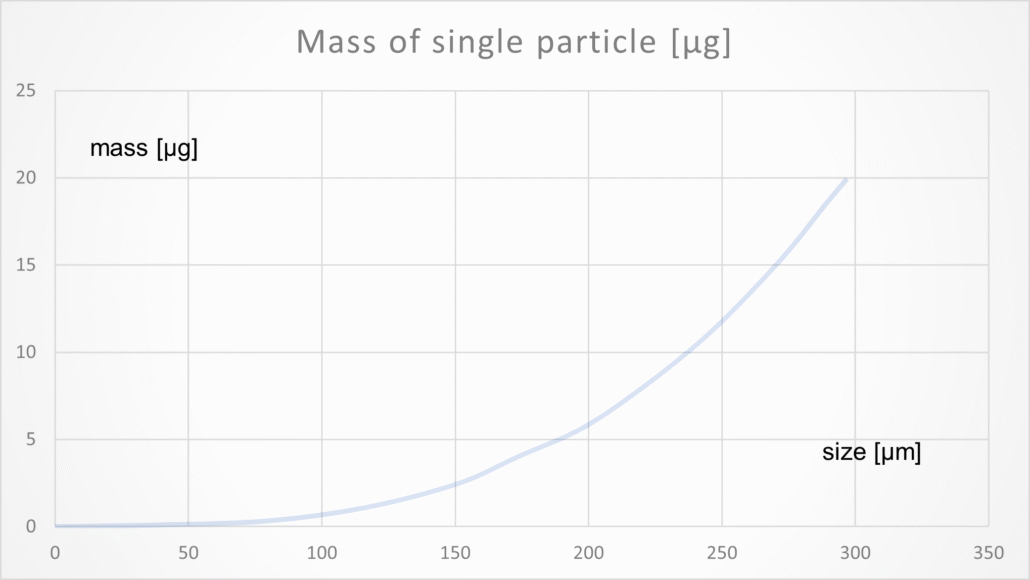
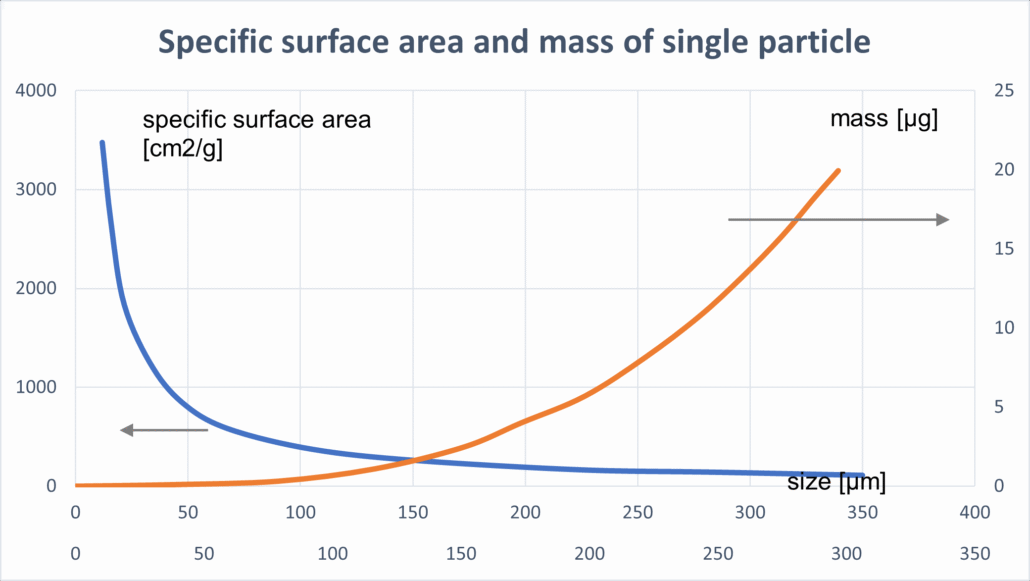
With increasing particle size the apparent specific surface area (fig. 2) decreases obviously. Hence, a decrease in pellet size, allow an expectation in increase in mechanical interlocking.
With increasing particle size, the bulk and tapped density of CELLETS® increases; however, the densification kinetics remained approximately the same for all pellet sizes (Fig. 3). Moreover, a few periodic oscillations significantly influenced the density of the pellets, highlighting subtle variations in their behavior.

With increasing particle size the compressibility decreases (fig. 4). The applied force was identical for all pellets sizes. Worsening packing efficiency.

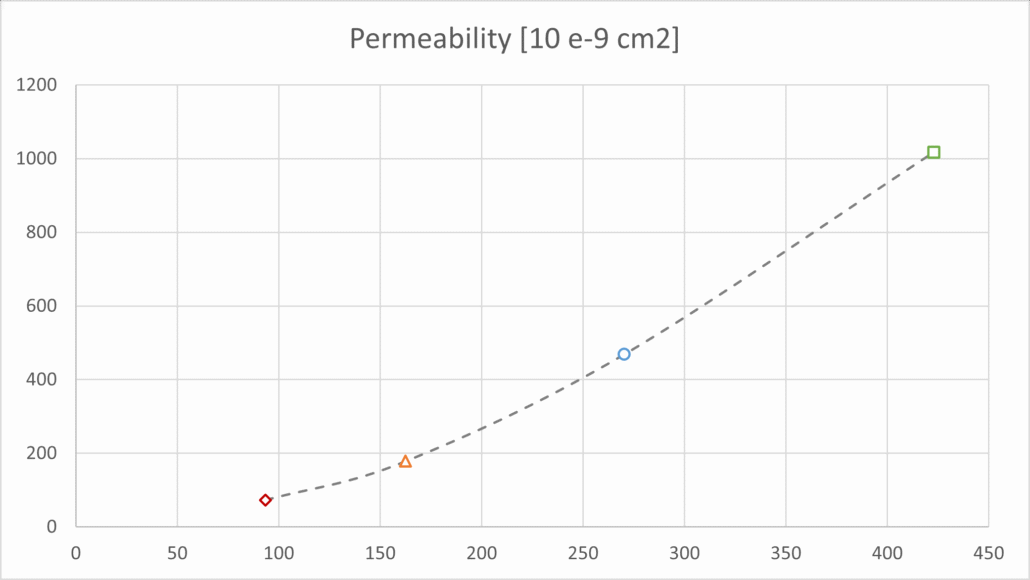
With increasing particle size the permeability increases while applying the same force for all pellet types. (fig. 5). increase in voids between particles.
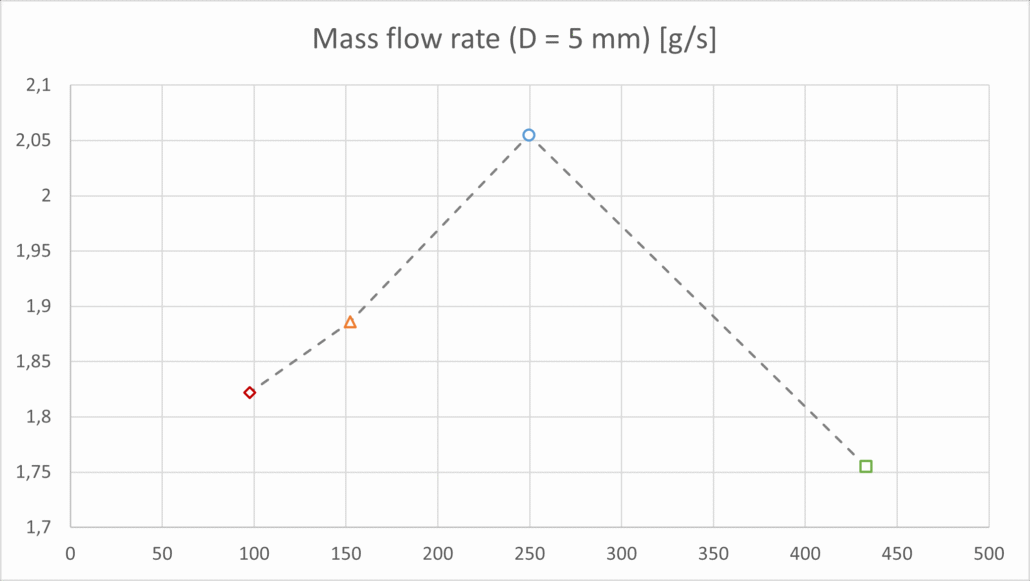
The gravitational funnel method suggests an absence of correlation between the mass flow rate and pellet size or specific surface area (fig. 6).
Analyzing the dynamic angle of repose
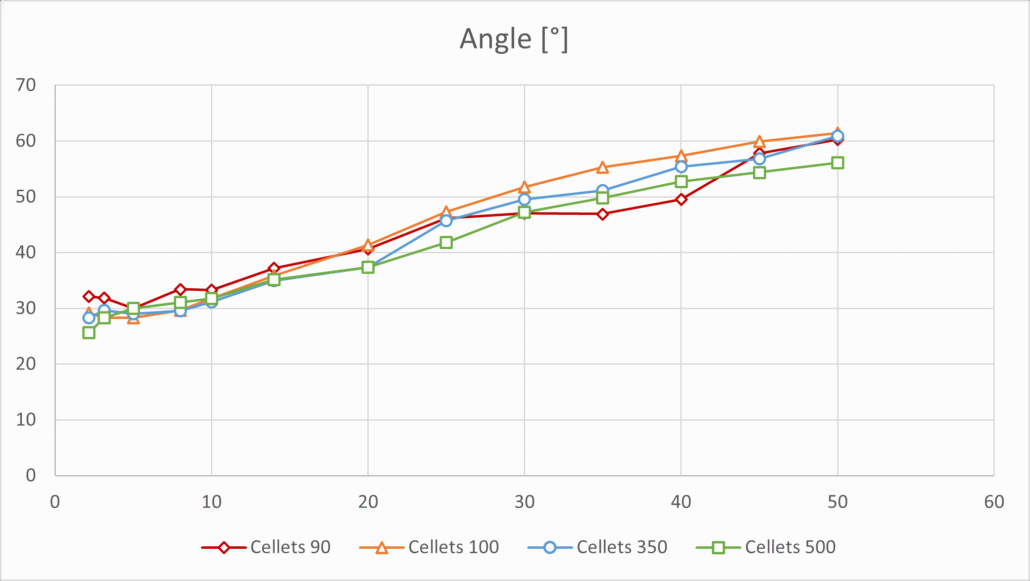
We analyzed the dynamic angle of repose to evaluate the powder flow of MCC pellets under rheological investigation. All pellet sizes showed similar behavior: as the rotation speed increased, the angle of repose rose almost linearly. The measurements for all pellet types formed a funnel shape within the range of analytic errors (Fig. 7). These results clearly characterize the dynamic flow ability of the powders.
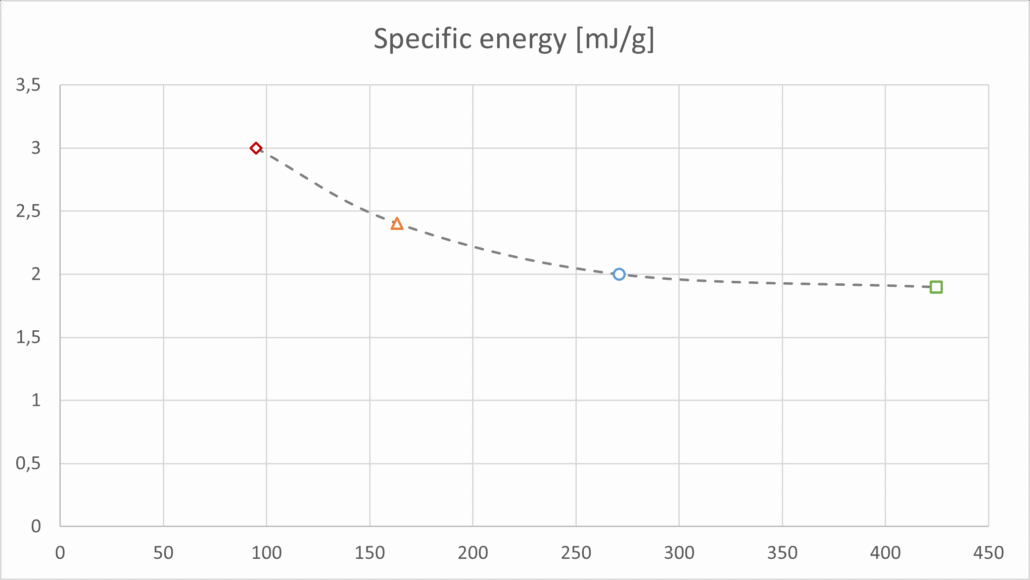
With increasing particle size the specific energy decreases (fig. 8). The level of interlocking and friction between powder particles decreased, the flowability increased.
With increasing particle size the basic flowability energy decreases (fig. 9). the flowability in a constrained environment increased.

The aerated energy rises as air velocity decreases (Fig. 10). This parameter helps determine the minimum fluidization velocity, as increasing air velocity alters interparticle interactions.
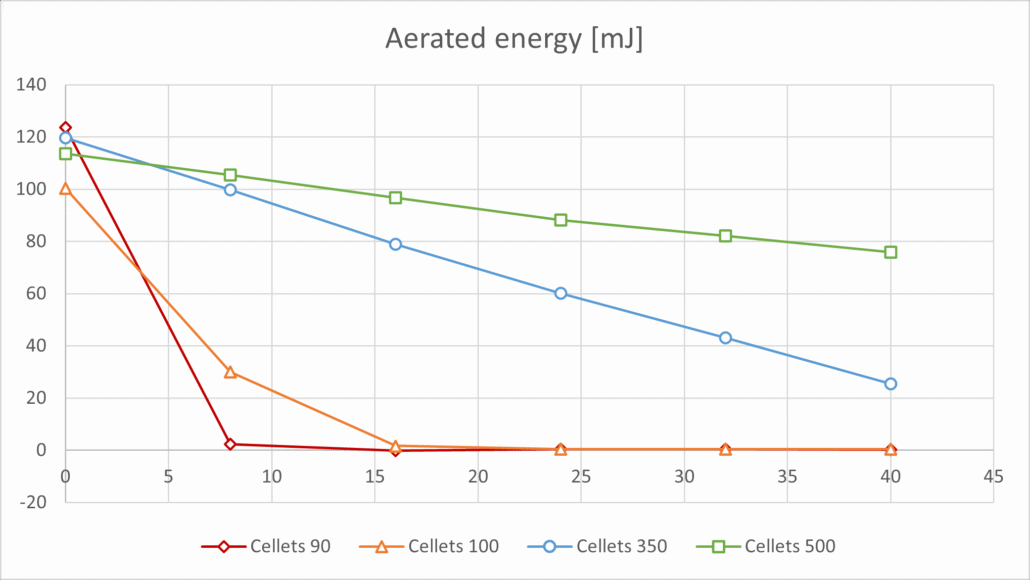
The aerated energy increased with increasing pellet size (fig. 11). dependent on particle mass and inter-particle interactions (friction).

with increasing pellet size, the cohesive index decreases (fig. 12). an indicator of the sum of inter-particle interaction forces.

Summary
Overall, researchers have now characterized MCC pellets under rheological investigation more comprehensively than ever before, providing new insights into their flow behavior and material properties. Powder rheology methods successfully revealed the bulk powder behavior, flow properties, and inter-particular interactions as a function of pellet size. CELLETS® served as robust model spheres made of Microcrystalline Cellulose, making them ideal for these detailed investigations. This study highlights the importance of pellet size in predicting and optimizing powder performance in pharmaceutical formulations.
References
[1] V. Mohylyuk and R. Dattani, “Assessment of the effect of microcrystalline cellulose (MCC) spheres size on the flow via powder rheology”, Conference: The FORGE: Hybrid Conference on Particle Characterisation (March 2022), doi:10.13140/RG.2.2.14935.75688