
Abstract
Multiparticulate formulations based on pellets, granules or beads, could be advantageous for paediatrics, geriatrics and patients with swallowing difficulties. However, these formulations may require suitable administration media to facilitate administration. The aim of this work was to investigate the effect of administration media properties on palatability and ease of swallowing of multiparticulates. A range of vehicles were developed using xanthan gum (XG) and carboxymethyl cellulose (CMC) as model hydrocolloids. Such vehicles were prepared at three consistency levels (Level 1 – ‘syrup’, Level 2 – ‘custard’ and Level 3 – ‘pudding’) to investigate the effect of viscosity on their performance as administration media. A randomised, single-blind sensory evaluation study was carried out in thirty healthy adult volunteers using microcrystalline cellulose pellets as model multiparticulates, dispersed in the hydrogels (and water as control) at a concentration of 250 mg in 5 ml. Samples were evaluated using 5-point scales. The use of hydrogels as administration media improved a range of sample attributes compared to water formulations, including appearance, taste, mouthfeel, ease of swallowing and residue in the mouth (all improved by ca. 0,5 points) and oral grittiness perception (improved by ca. 1 point). Polymeric hydrogels thickened to medium consistency (Level 2, XG 0.5% and CMC 1.0% w/v) demonstrated the best performance.
Reference
Article: “The effect of administration media on palatability and ease of swallowing of multiparticulate formulations”
Authors: Felipe L. Lopez, Terry B. Ernest, Mine Orlu, and Catherine Tuleu.
First published: International Journal of Pharmaceutics 2018, 551(1–2) 67-75; https://doi.org/10.1016/j.ijpharm.2018.08.021
1. Introduction
Multiparticulate formulations, in the form of pellets, granules or beads, offer a range of advantages over conventional tablets and capsules, such as ease of swallowing, flexible dose titration, and suitability for taste-masking and controlled-release (Lopez et al., 2015). They are considered a flexible solid dosage form for the delivery of drugs to a broad range of patients, including paediatrics, geriatrics and patients with swallowing difficulties. However, previous studies suggest that grittiness and rough mouthfeel perception might be a barrier to palatability and patient acceptability (Kimura et al., 2015, Lopez et al., 2018, Lopez et al., 2016). A potential solution to overcome palatability and acceptability issues could be co-administration with a suitable vehicle (i.e. sprinkle), which could help to conceal the presence of multiparticulates. Some drug products that contain multiparticulates within a capsule or sachet indicate in the labelling that the internal beads can be sprinkled on soft foods for their administration (FDA, 2012). Commercial examples include Depakote® sprinkle capsules (divalproex sodium), Creon® capsules (pancrelipase), Granupas® gastro-resistant granules in sachets (para-aminosalicylic acid) and Cipla’s lopinavir/ritonavir pellets in capsules (Hanning et al., 2016, Ternik et al., 2017). Typical vehicles recommended for products labelled for sprinkle include apple sauce and yogurt that provide both flavour and viscosity to facilitate administration and improve patient acceptability (Ternik et al., 2017).
Studies comparing sprinkle formulations to liquid dosage forms in children have commonly showed preference for the solid over the liquid form. A range of studies showed acceptance of iron supplement sprinkles and preference for these compared to oral drops in children with anaemia (Adu-Afarwuah et al., 2008, Geltman et al., 2009, Zlotkin et al., 2003). Likewise, studies involving children suffering from epilepsy consistently showed preference for sprinkle formulations over syrup (Cloyd et al., 1992, Motte et al., 2005, Verrotti et al., 2012). In a recent study, children showed preference for sprinkles over syrup after 12-week antiretroviral therapy; 72% of children below 12 months and 64% of children between 1 and 4 years preferred the multiparticulate dosage form. For those preferring syrups, key issues with sprinkles were problems masking the pellets with food and food refusal, and concerns about not giving the whole dose. However, multiparticulates overcome the storing and transporting issues of syrups (Kekitiinwa et al., 2016).
Medicines are known to be mixed with liquid and semi-solid foodstuff to allow administration in clinical practice (Akram and Mullen, 2015, Akram and Mullen, 2012). However, this is not without the risks that mixing medication with foodstuff could alter bioavailability and introduce poor control over dose intake (EMA, 2013). Therefore, when co-administration of medicines and foodstuff is recommended in the package leaflet, the potential impact on patient acceptability, dosing accuracy, compatibility and drug bioavailability of the proposed vehicle(s) must be investigated (EMA, 2013). This task becomes very impractical when medicines can be mixed with a range of foods with different composition and physical properties (e.g. rheology, pH, ionic strength) (Kersten et al., 2016). The development of a standard pharmaceutical vehicle, rationally designed and fit for purpose, could facilitate such investigations. This vehicle could be manufactured by industry and provided with the finished drug product (although this would increase the overall cost of the product) or it could be compounded in a pharmacy (Kluk and Sznitowska, 2014). Investigation into swallowing aids for the administration of oral solid formulations have been the focus of previous research, with some products already in the market in the form of sprays, pastes or jellies (Bunupuradah et al., 2006, Diamond and Lavallee, 2010, Yoshida et al., 2011).
The rheological properties of the administration media require special consideration. Thick fluids are known to exhibit prolonged oral transit times than thinner fluids, which can be used in the management of patient with dysphagia (Soares et al., 2015). Conversely, greater efforts are required to manipulate in the mouth and swallow thick fluids compared to thin ones (Ong et al., 2018, Steele et al., 2015). Consequently, overly thick liquids may increase the risk of post-swallow residue in the mouth and pharynx, especially for patients with reduced tongue or pharyngeal muscle strength (Steele et al., 2015). Newtonian fluids have also been reported to require greater effort in oral processing and swallowing than shear thinning fluids (Steele et al., 2015). In addition, the rheology of the vehicle also affects its palatability, with organoleptic attributes often reported to worsen as the consistency of the fluid increases (Garcia et al., 2005, Ong et al., 2018). Therefore, it is imperative that the rheological and sensory properties of the vehicle are adequately characterised.
The use of a suitable vehicle could facilitate administration of multiparticulates by preventing fast sedimentation, improving palatability and reducing the risk of aspiration or choking often associated with this dosage form design (Walsh et al., 2018). Development of media for the administration of multiparticulates and evaluation of its effect on palatability has been the focus of two recent studies (Kluk and Sznitowska, 2014, Lopez et al., 2016), both of which concluded that the use of polymeric hydrogels as administration media could help conceal the presence of particles, reducing oral grittiness perception. However, both studies focussed on a swirl and spit methodology, which overlooks other important sample attributes such as ease of swallowing. Moreover, neither of those studies investigated the palatability of the liquid vehicles alone, which limited their understanding on the effect of the palatability of the vehicle on the overall palatability and acceptability of the final formulations.
The aim of this work was to develop liquid vehicles for the administration of multiparticulates and to investigate the effect of the administration media properties on palatability and ease of swallowing of multiparticulate formulations. Administration media were developed using xanthan gum (XG) and carboxymethyl cellulose (CMC) as model hydrocolloids. The rheological properties of the hydrocolloids were characterised to investigate the effect of consistency and shear thinning behaviour on their performance as administration media. Palatability attributes and ease of swallowing of the vehicles alone and formulations containing model multiparticulates were evaluated in healthy volunteers.
2. Materials and methods
2.1. Materials
Microcrystalline cellulose pellets (CELLETS® 200 and CELLETS® 700) were provided by Pharmatrans Sanaq (Basel, Switzerland). Xanthan gum (“XG”, Xantural 180, 1% gum in 1% KCl aqueous solution: 1200–1600 cP) was supplied by CP Kelco (Leatherhead, Surrey, UK); sodium carboxymethyl-cellulose (“CMC”, Blanose 7HF-PH, 1% aqueous solution: 1500–2500 cP) was provided by Ashland (Covington, Kentucky, USA); and vanillin was procured from Sigma-Aldrich (Irvine, Ayrshire, UK).
2.2. Preparation of administration media
Polymeric hydrogels in the range of 0.15–1.50% (w/v) were prepared by slow addition of hydrophilic polymer (XG or CMC) into 100 ml of water under continuous stirring at room temperature. Previous research indicate that some hydrocolloids may impart a noticeable foreign taste or off-flavour to water and other liquid vehicles (Matta et al., 2006, Ong et al., 2018, Pelletier, 1997, Saha and Bhattacharya, 2010). For this reason, a small amount of vanillin (0.1% w/v) was added to mask any potential taste and smell of the polymers which could negatively impact results. Samples were left stirring overnight to ensure complete polymer hydration and stored in the refrigerator at 5 ± 0.5 °C. Samples were allowed to equilibrate to room temperature before testing.
For the sensory evaluation study, the viscosity of the XG and CMC vehicles were targeted to meet the International Dysphagia Diet Standardisation Initiative (IDDSI) descriptors (Cichero et al., 2017, IDDSI, 2015). According to this framework, Level 1 fluids are “thicker than water but flow through a teat/nipple and straw”, Level 2 fluids “require effort to drink through a straw and flow quickly off a spoon” and Level 3 fluids are “difficult to suck through a straw and pour slowly off a spoon”.
2.3. Rheological characterisation
A Bohlin CVO rotational rheometer system (Malvern Instruments Ltd, Malvern, UK) was used to investigate the flow properties of the samples using a cone and plate geometry (40 mm diameter, 4° angle; gap size adjusted to 250 µm). A shear sweep measurement mode was employed, whereby the shear rate of the sample was advanced across the range of 0.1–200 s−1, with ascendant logarithmic progression. The temperature of the samples was maintained at 25 ± 0.2 °C throughout testing. This procedure was repeated three times for each sample.
The resulting data (shear rate vs. shear stress) was fitted to the power law model (Eq. (1)) to describe the flow properties of the samples:(1)σ=Kγnwhere σ is the shear stress (Pa), γ is the shear rate (1/s), K is the consistency index (Pas), and n is the flow behaviour index (dimensionless). The consistency index (K) corresponds to the viscosity at a shear rate of 1 s−1; whereas the flow behaviour index (n) provides an indication of the deformation behaviour, where a value of 1 indicates Newtonian behaviour, 0–1 indicates shear-thinning behaviour and values greater than 1 indicate shear-thickening (O’Leary et al., 2010). In addition, the apparent viscosity at 50 s−1 (ƞ at 50 s−1), a reference shear rate for oral processing and swallowing, and the apparent viscosity at 0.1 s−1 (ƞ at 0.1 s−1), a reference shear rate of the sample at rest, were measured by the rheometer along the ascendant shear ramp.
2.4. Sedimentation experiments
The ability of the administration media to maintain multiparticulates in suspension was calculated based on sedimentation experiments. A sample containing 500 mg of CELLETS® and 50 ml of administration media was filled into a 50-ml graduated plastic tube. The tube was turned upside down until homogeneous dispersion of the particles. Then, the sample was left standing and the time taken for CELLETS® to clarify the top 15 ml of the dispersant (approximately one third of the media volume) was determined. This experiment was adapted from that described by Kluk and co-workers (Kluk and Sznitowska, 2014). Experiments were repeated using multiparticulates of two extreme particle sizes, CELLETS® 200 (200–355 µm) and CELLETS® 700 (700–1000 µm), to account for the effect of particle size on sedimentation. The experiment was conducted in triplicate.
2.5. Sensory evaluation study
2.5.1. Study design
Thirty healthy adult volunteers (aged 19–33 years, average 23.2 ± 4.4 years; 21 females) were enrolled in a randomised, single-blind, single-centre, 3-treatment, crossover sensory evaluation. The study was approved by UCL Research Ethics Committee (Project ID: 4612-011). All participants received a detailed information sheet and provided written consent to participate in the study. The study was conducted in three sessions taken place on three separate days. On each day, participants tested samples of liquid vehicles without particles (T1: ‘no particles’), with 200–355 µm particles (T2: ‘smaller particles’) and with 700–1000 µm particles (T3: ‘larger particles’). Participants were divided into six groups to ensure that all possible sequence orders between treatments were considered. In each session, participants were handed eight samples, including XG and CMC samples and water as a control (Table 1), in a randomised order.
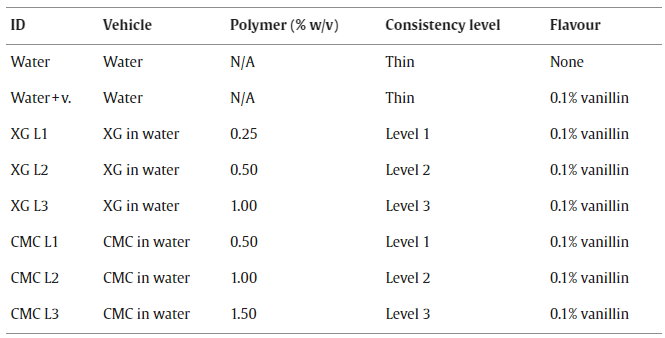
Table 1. List of liquid vehicles assessed in sensory evaluation experiments.
For samples containing multiparticulates, 250 mg of solid particles were pre-dispersed in the administration media (approximately 3 ml, for a total volume of 5 ml) using a spatula immediately before administration. Microcrystalline cellulose pellets used in this investigation were non-disintegrating in water or in the mouth. Samples were provided onto 5-ml plastic medicine spoons that were handed to participants of the study. During the evaluation of the samples, participants had free access to spring water to complete sample intake and clean their palate. To minimise subject discomfort and carryover effect 5–10-minute intervals were respected between samples.
2.5.2. Evaluation tool and outcome measures
A digitalized questionnaire (Qualtrics.com) was used for data collection. Immediately after swallowing the sample, volunteers were asked to rate several sample attributes, including appearance, ease of swallowing, mouth-feel and taste, using a 5-point hedonic scale (1 – extremely liked, 5 – extremely disliked). In addition, the feeling of particles in the mouth during sample intake (i.e. grittiness perception) and the feeling of particles in the mouth after sample intake and after rinsing their mouth with water (i.e. residue in mouth) was assessed using a 5-point magnitude scale (1 – not perceptible, 5 – extremely perceptible). Participants could also provide voluntary feedback of each sample attribute using their own words.
2.5.3. Data analysis
The different categories of the 5-point scales were assigned numeric scores (1–5) from lowest to highest stimuli perception, respectively. Statistical analysis was performed using the non-parametric Kruskal-Wallis one-way analysis of variance followed by Dunn’s test as post hoc for pairwise comparison, both with a 95% confidence level. Minitab 17 (Minitab Inc., State College, Pennsylvania, USA) was used for data analysis.
3. Results and discussion
3.1. Development of administration media for multiparticulates
3.1.1. Rheological properties
The rheological properties of the administration media require especial attention as these will have an impact on several critical quality attributes, such as suspendability and palatability (particularly appearance and mouth-feel). XG and CMC were selected as model excipients to develop polymeric hydrogels for the administration of multiparticulates, being Generally Regarded As Safe (GRAS) excipients commonly used in oral formulations.
The rheological properties of XG and CMC hydrogels were investigated as a function of the hydrocolloid concentration (Table 2). The consistency index of XG and CMC-based polymeric hydrogels increased as the hydrocolloid concentration increased, as it can be expected. The increase in viscosity was more pronounced for XG than it was for CMC, revealing the higher ‘thickening power’ of XG. In addition, XG hydrogels exhibited a strong shear thinning behaviour whereas CMC hydrogels showed a much lower degree of shear thinning; the flow behaviour index (n-value) of XG-based hydrogels was lower than that of CMC-based hydrogels throughout the range of concentrations tested.
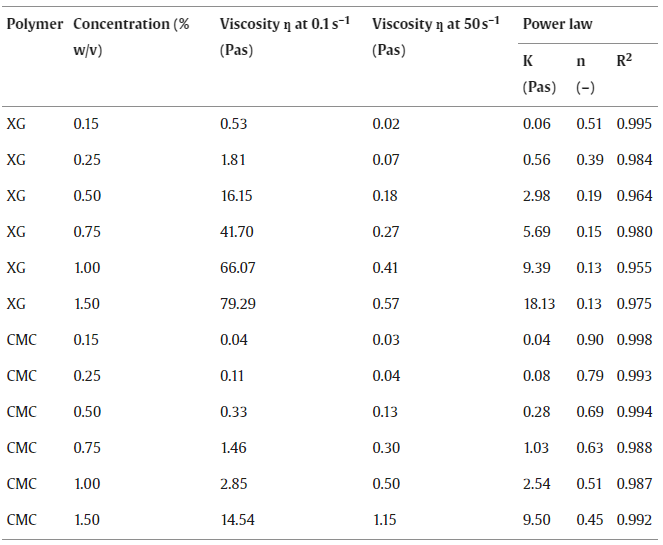
Table 2. Rheological characteristics of XG and CMC hydrogels prepared at concentrations 0.15–1.50% w/v.
The contrasting rheological characteristics of XG and CMC made them ideal candidates to investigate the effect of shear thinning behaviour on their performance as administration media for the administration of multiparticulates. Previous research indicate that Newtonian fluids require greater effort in oral processing and swallowing than shear thinning fluids (Steele et al., 2015). However, it could be hypothesised that shear thinning fluids would be less effective in ‘masking’ the presence of particles since the viscosity of these fluids will decrease under the relatively high shear rates experienced during oral processing (50–300 s−1) (Steele et al., 2015).
3.1.2. Ability to maintain multiparticulates in suspension
An ideal vehicle should be able to maintain multiparticulates in suspension from dispersion of the particles in the media until administration. Sedimentation time of multiparticulates in polymeric hydrogels was determined by measuring the time lapse between homogeneous dispersion of multiparticulates and clearance of the top layer of the liquid vehicle. Results of sedimentation time as a function of the media viscosity are summarised in Table 3. The time needed for manipulation and administration of a medicine is usually less than 5 min but can take longer than 10 min in some cases (Ruiz et al., 2016), thus appropriate administration media should maintain multiparticulates in suspension for at least 10–15 min.
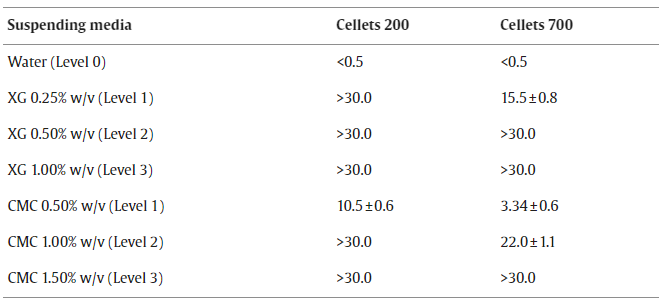
Table 3. Sedimentation time (minutes) of CELLETS® 200 and CELLETS® 700 in XG and CMC hydrogels.
Sedimentation time increased with increasing viscosity of the media and decreased with increasing size of the multiparticulates, in accordance to Stoke’s law. XG hydrogels prepared at 0.25% w/v would be sufficient to maintain both 200–355 and 700–1000 µm particles in suspension for at least 10–15 min, whereas a higher concentration of CMC (1.00% w/v) would be required to maintain the larger particles in suspension for the same time. The lower concentration of XG required to maintain multiparticulates in suspension could be expected based on its stronger thickening power and its shear thinning character, which means that the viscosity of XG hydrogels at low shear rates (i.e. shear rates relevant during sedimentation) is higher than that of CMC hydrogels.
3.2. Sensory evaluation studies
3.2.1. Liquid vehicles without multiparticulates
Participants of the sensory evaluation study tested liquid vehicles without multiparticulates in one of the three sessions of the study. The analysis of liquid vehicles without multiparticulates was performed in order to gain fundamental understanding of the properties of the liquid vehicles, such as appearance, mouthfeel, taste and ease of swallowing.
All samples evaluated received average appearance ratings in the neutral to positive range of the scale, except for XG L3 (average appearance rating = 3.17). According to participants responses to hedonic scales, the appearance of XG hydrogels was worse than the appearance of water and CMC hydrogels (p < 0.001), as shown in Fig. 1. This was adscribed to the opaque appearance of XG hydrogels (in contrast with the transparent aspect of water and CMC hydrogels), as supported by anecdotal feedback provided by the participants: e.g. “I personally prefer when the sample is limpid, this one was a bit opaque and it gives you an idea of dirt” (Participant 11, XG L3). Appearance ratings worsened as the consistency level increased. This indicates that the appearance of very thick samples (which retain their shape when placed on a spoon) was considered less appealing than thinner fluids.
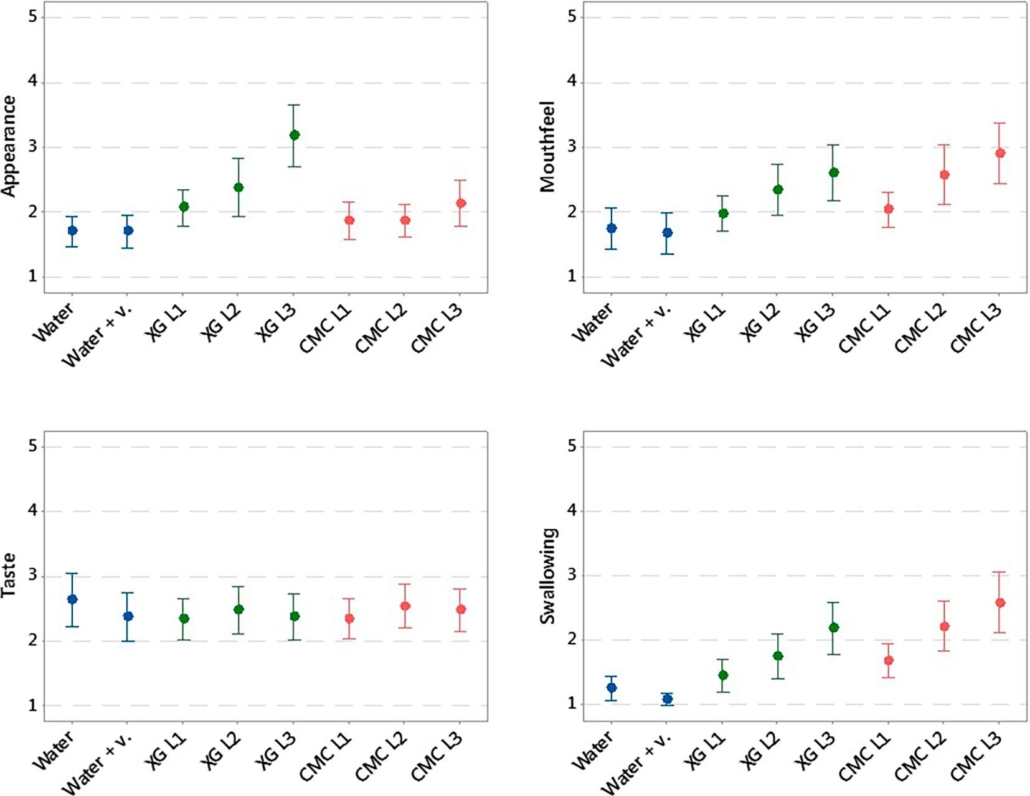
Fig. 1. Interval plot for appearance, mouthfeel, taste and ease of swallowing of different liquid vehicles. Markers represent the population mean for the hedonic ratings (where 1 is the best possible rating and 5 is the worst possible rating) and bars show the 95% CI for the mean. Water + v. represents water to which 0.1% w/v vanillin was added; the consistency level of XG and CMC hydrogels is described as L1 (Level1), L2 (Level 2) and L3 (Level 3).
The taste of all liquid vehicles evaluated received average ratings between 2 and 3 (range: 2.33–2.63; XG L1 – Water), which indicates acceptable neutral taste (Fig. 1). The very small differences between samples confirmed that the level of vanillin used was appropriate to mask any potential foreign taste from the polymer without having a significant impact on results (as it was intended). However, the fact that average ratings for taste were closer to the centre of the scale than to the positive end of the scale may indicate participants’ expectations of a more intense, sweetened or flavoured taste for samples intended as a medicinal product. This was reinforced by voluntary feedback; e.g. “if this had added sugar/sweetener it would be a more enjoyable medicine to take” (P05, CMC L3).
Mouthfeel ratings of XG and CMC hydrogels worsened as the consistency of the sample increased, revealing preference for thinner vehicles (Fig. 1). This is consistent with previous research which reported that thinner fluids are perceived as less viscous, less adhesive and easier to manipulate in the mouth than thicker fluids (Ong et al., 2018). However, all samples received average ratings in the neutral to positive range of the scale (range: 1.67–2.90), suggesting all vehicles prepared had an acceptable mouthfeel to be used as media for the administration of multiparticulates. CMC hydrogels received slighly worse mouthfeel ratings than XG samples, which was attributed to a “greasy” or “oily” feeling in the mouth, as reported by the volunteers. The mouth-coating texture of CMC hydrogels has been reported in previous research and attributed to its low degree of shear thinning (high n-value) (Cho et al., 2015, Szczesniak and Farkas, 1962). On the contrary, xanthan gum samples have been perceived as less adhesive and easier to manipulate in the mouth (Ong et al., 2018). Nevertheless, mouthfeel differences between XG and CMC vehicles were not statistically significant, despite their contrasting rheological profiles. The inability to clearly identify preference between samples can be explained by consumers, including patients, having different criteria for personal preferences (Matta et al., 2006).
All samples evaluated were considered ‘easy to swallow’ by healthy volunteers, receiving average ratings in the neutral to positive range of the scale (range: 1.07–2.57). However, samples were considered relatively more difficult to swallow as the consistency level increased (p < 0.001), as depicted in Fig. 1. This can be attributed to the greater effort required to convey thicker fluids through the oral cavity and greater effort required for the throat muscles to swallow thicker fluids (Ong et al., 2018). In their open-ended feedback, participants described the need to swallow repetitively to achieve full ingestion of thicker samples; e.g. “the sample is very viscous and is difficult to swallow, it remains in my mouth after swallowing a few times” (P22, CMC L3). This is in line with previous research as thicker liquids have been shown to increase the risk of post-swallow residue in the mouth and pharynx (Steele et al., 2015). It is also well established that fluids with higher viscosity exhibit prolonged oral transit times as compared to thinner fluids such as water (Soares et al., 2015). Moreover, the ratings of ease of swallowing indicate that XG hydrogels were slightly easier to swallow than CMC hydrogels (p < 0.018), which was supported by anecdotal feedback; e.g. “this sample (CMC L2) is more difficult than the previous one (XG L2) in swallowing it as a whole, as it remains in my mouth after the first swallow” (P10, CMC L2). This can be explained by the stronger shear thinning behaviour of XG hydrogels. Shear thinning fluids can be expected to be easier to swallow due to lower resistance to flow under shear (Ong et al., 2018, Steele et al., 2015).
3.2.2. Multiparticulates dispersed in liquid vehicles
The appearance of multiparticulate samples dispersed in different vehicles received average ratings around the neutral range of the scale (range: 2.70–3.40), as shown in Fig. 2. The size of the multiparticulates had no influence on the ratings of appearance (p = 0.074), whereas the vehicle used had a significant impact on the appearance of the final formulation (p < 0.001). The appearance of samples dispersed in polymeric hydrogels (2.96 for XG and 2.77 for CMC hydrogels, on average) was considered better than that of samples dispersed in water (3.33 with and 3.40 without vanillin). This was explained by the more homogenous appearance of samples dispersed in thickened vehicles as compared to multiparticulates dispersed in water. Multiparticulates precipitated very quickly in water, due to its very low viscosity, leading to heterogenous samples with particles settled down on the bottom of the spoon. On the contrary, CELLETS® remained homogeneously dispersed in thicker hydrogels, which was considered a positive feature by the volunteers. Moreover, samples prepared in XG vehicles thickened to the highest consistency were rated more negatively than samples dispersed in other hydrogels, which can be expected based on the negative ratings of appearance received by this vehicle when evaluated on its own.
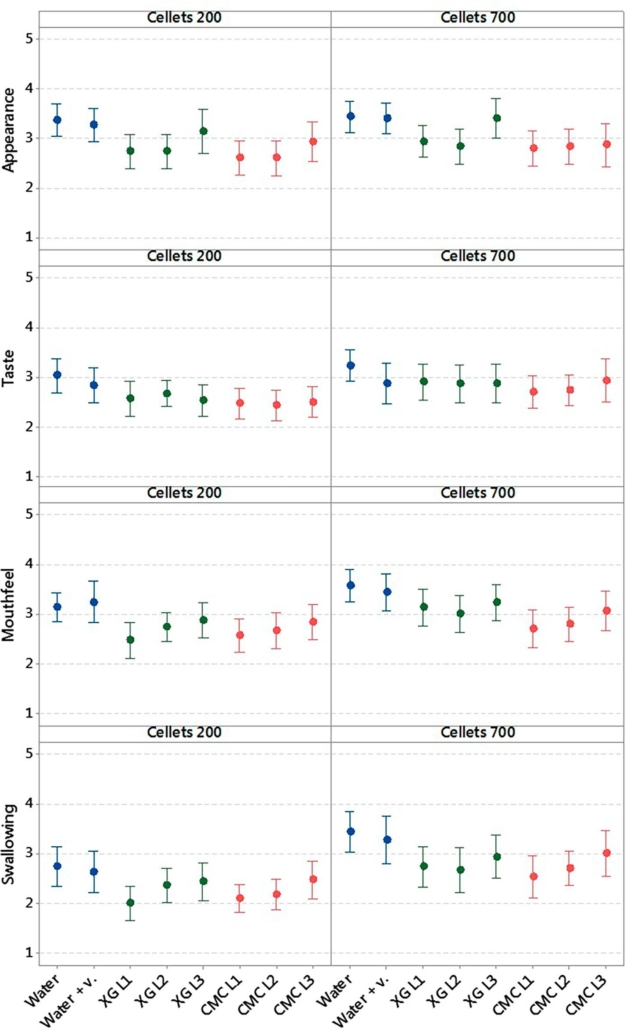
Fig. 2. Interval plot for appearance, taste, mouthfeel and ease of swallowing as a function of the vehicle used as suspending media and the size of the dispersed multiparticulates: 200–355 µm (CELLETS® 200) or 700–1000 µm (CELLETS® 700). Markers represent the population mean for the hedonic ratings (where 1 is the best possible rating and 5 is the worst possible rating) and bars show the 95% CI for the mean. Water + v. represents water to which 0.1% w/v vanillin was added; the consistency level of XG and CMC hydrogels is described as L1 (Level1), L2 (Level 2) and L3 (Level 3).
The taste of the samples worsened when multiparticulates where added into the formulation and when the multiparticulate size increased (Fig. 2); from 2.44 on average without presence of multiparticulates to 2.63 and 2.89 on average with smaller and larger multiparticulates, respectively. In addition, the taste of formulations with vanilla flavour was deemed better than the taste of samples prepared with pure water (p < 0.001). On the contrary, no significant differences were found between XG and CMC samples in terms of taste which, again, confirmed the successful masking of any potential inherent taste of the polymer by addition of a small quantity of vanillin. Although microcrystalline cellulose pellets are expected to be tasteless, negative taste ratings in hedonic scales have been previously reported and attributed to the poor mouthfeel of the formulation (Lopez et al., 2018). This can be explained by a common cognitive bias in sensory evaluation by which perception of a salient attribute influences the ratings of other (independent) sample attributes (Clark and Lawless, 1994).
The mouthfeel of multiparticulates dispersed in liquid vehicles also received average ratings around the neutral range of the scale (Fig. 2). Both the size of the multiparticulates and the vehicle used to disperse them had a significant impact on mouthfeel of the final formulation (p = 0.001 and p < 0.001, for size and vehicle, respectively). The mouthfeel of samples containing smaller multiparticulates was on average 0.30 points better than that of samples containing larger multiparticulates. An increasing grittiness sensation or rough mouthfeel with increasing size of the multiparticulates have also been reported on previous studies (Kimura et al., 2015, Kluk and Sznitowska, 2014, Lopez et al., 2018, Lopez et al., 2016). In terms of the vehicle used, participants showed preference for samples dispersed in thickened vehicles over samples dispersed in water. In addition, participants preferred the samples with low and middle-range consistencies (Level 1 and Level 2) over the extremely thick ones (Level 3). According to the participants of the study, those samples achieved a good balance by “concealing the presence of particles in the mouth” but not being too thick (which has a detrimental impact on mouthfeel). Samples thickened to Level 1 and Level 2 consistencies were rated on average 0.62 and 0.54 points better than water, respectively, whereas samples with Level 3 consistency were rated only 0.34 points better than water, on average.
As depicted in Fig. 2, swallowing of multiparticulates was considered more difficult with increasing particle size, from 2.36 on average for smaller multiparticulates to 2.91 on average for larger multiparticulates (p < 0.001). Multiparticulates dispersed in polymeric hydrogels were easier to swallow than multiparticulates dispersed in water (by approximately 0.50 points), irrespectively of the size of the particles. Both XG and CMC hydrogels were similarly efficient in facilitating swallowing of the multiparticulates (2.52 and 2.49 on average, respectively). Therefore, no significant differences were found between XG and CMC hydrogels in terms of ease of swallowing when administered with multiparticulates, despite their different rheological properties and the differences found when administered without multiparticulates. This might indicate that the sensory properties of the samples were dominated by the presence of particles in suspension at relatively high concentration (Mueller et al., 2010), thus differences between vehicles became negligible. The rheological properties of the samples could be dramatically affected by addition of multiparticulates; the inclusion of the solid particles is expected to produce and increase in consistency and in shear thinning behaviour (Mueller et al., 2010). In agreement with the results for mouthfeel perception, participants showed preference for swallowing samples with thin and middle-range consistencies (Levels 1 and 2) as opposed to thicker samples. These samples performed best at “carrying the particles together” as a bolus and “providing cushioning”, facilitating swallowing, while not being too thick to “linger around” in the oral cavity for long. The contrast between samples of different consistency was reported in open-ended responses; e.g.: “the liquid in this sample was too runny and was unable to carry the particles along with it, so the liquid part was consumed first, leaving behind the solid part of the sample” (P02, CELLETS® 200 in Water); or “I feel that this sample has the correct viscosity that is able to hold the particles together and is able to be easily swallowed” (P10, CELLETS® 200 in XG L1).
As discussed above, grittiness perception increased with increasing size of the multiparticulates (p < 0.001) in agreement with previous studies (Kimura et al., 2015, Kluk and Sznitowska, 2014, Lopez et al., 2018, Lopez et al., 2016); samples of smaller multiparticulates obtained an average grittiness score of 2.50 compared to 3.31 scored on average by samples containing larger multiparticulates. The feeling of residual particles in the mouth also increased with increasing size of the multiparticulates, 1.67 on average for CELLETS® 200 compared to 2.14 on average for CELLETS® 700 (Fig. 3). Participants ratings of ‘grittiness perception’ confirmed the results obtained for mouthfeel and ease of swallowing in that polymeric hydrogels masked the presence of multiparticulates. Grittiness perception was lower for polymeric hydrogel formulations than for samples dispersed in water by approximately 1.0 point, on average, both for smaller and larger multiparticulates. This was supported by voluntary feedback; e.g. “without a thick solution to act as a lubricant and carry the particles along with it, the ‘grainy’ feeling was enhanced, making it very unpleasant to take” (P02, CELLETS® 200 in water); compared to samples in thickened vehicles, e.g. “it is viscous, but that masks the overall ‘particles feel’, which is good” (P12, CELLETS® 200 in CMC L2). The use of polymeric hydrogels to disperse multiparticulates also reduced the ‘residue in mouth’, i.e. the feeling of particles in the mouth after swallowing (p < 0.001), for multiparticulates of both sizes evaluated. The residual feeling of particles was reduced by approximately 0.5 points on average when using polymeric hydrogels as vehicles, as compared to water.
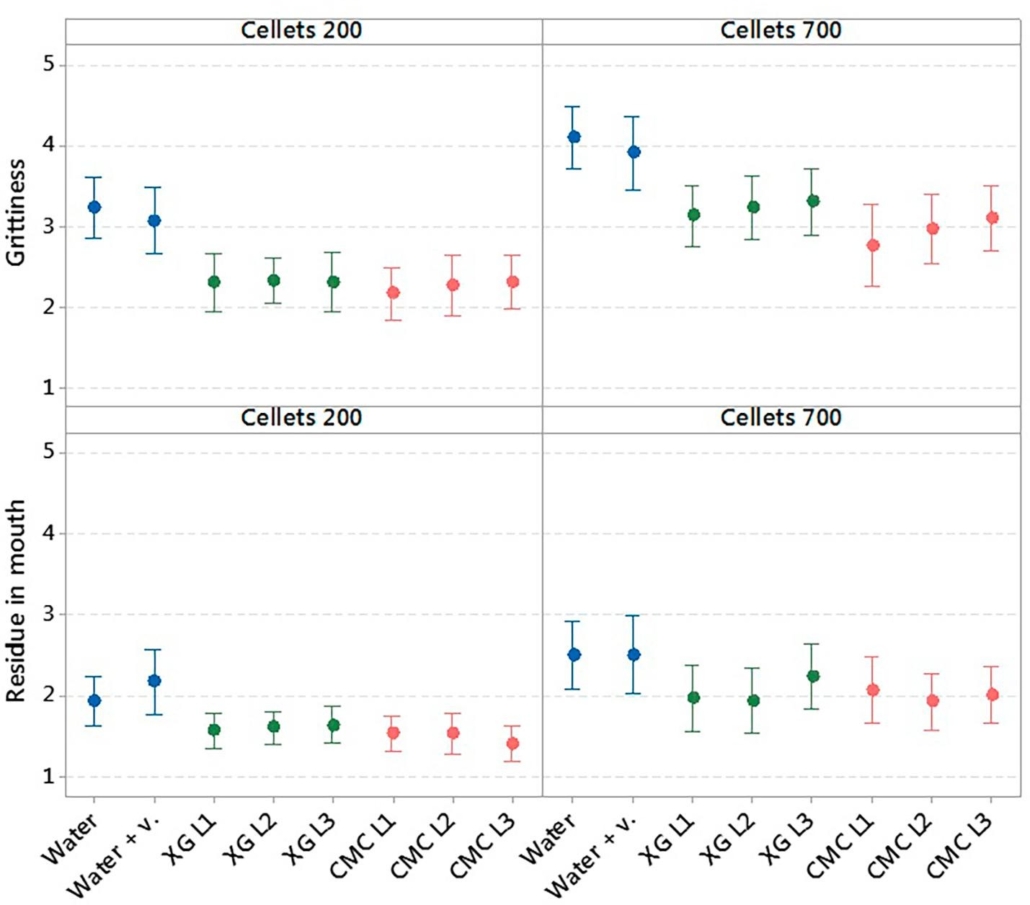
Fig. 3. Interval plot for grittiness and residue of multiparticulates in mouth after swallowing as a function of the vehicle used as suspending media and the size of the multiparticulates: 200–355 µm (CELLETS® 200) or 700–1000 µm (CELLETS® 700). Markers represent the population mean for the 5-point magnitude scale (where 1 is the lowest possible and 5 is the highest possible intensity of the stimulus) and bars show the 95% CI for the mean. Water + v. represents water to which 0.1% w/v vanillin was added; the consistency level of XG and CMC hydrogels is described as L1 (Level1), L2 (Level 2) and L3 (Level 3).
According to the ratings on the 5-point scale, no significant differences were found between XG and CMC hydrogels in their ability to mask the grittiness of particles, either during sample intake or after swallowing of the samples; although the trend suggests that CMC vehicles performed better when using multiparticulates of larger size. As previously discussed, this indicates that the sensory properties of the samples were dominated by the presence of multiparticulates rather than the shear thinning behaviour of the vehicles. Moreover, no significant differences were found between vehicles thickened to different consistency levels based on scale ratings, although anecdotal feedback indicated that thicker hydrogels performed better than thinner vehicles in terms of masking the presence of particles, e.g. “less thick than other samples, thus I can feel the particles when I swallowed it; need to drink water to remove the particles” (P16, CELLETS® 200 in XG L1). Disagreement between grittiness ratings and voluntary feedback suggests that scale ratings were influenced by the overall appreciation of the sample, an issue commonly encountered in sensory evaluation studies (Clark and Lawless, 1994, Prescott et al., 2011). As the concentration of hydrocolloid in de sample increased, the perception of particles decreased but other organoleptic attributes worsened. As such, mouthfeel and grittiness perception were driven by a balance between those opposing phenomena, which explains the similar ratings obtained by samples of different consistency despite their different organoleptic attributes. These findings highlight the multifactorial nature of palatability and mouthfeel perception which poses a challenge to evaluate sample attributes independently (Clark and Lawless, 1994, Popper et al., 2004, Prescott et al., 2011).
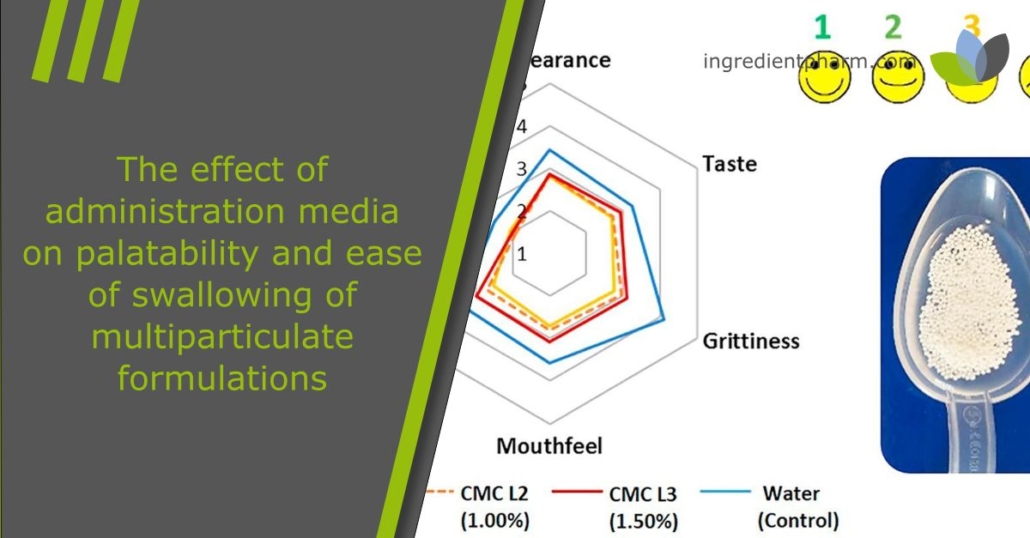
The results of these trial are summarised in Fig. 4, where the radar charts show the mean result for each palatability attribute as a function of the size of the multiparticulates and the administration media (water with vanillin, which was used as a control, was excluded from the graphs to aid clarity). The use of polymeric hydrogels as administration media resulted in an overall improvement of the samples: appearance, taste, mouthfeel, ease of swallowing and residue in the mouth improved by ca. 0.5 points, and oral grittiness perception improved by ca. 1 point. Overall, polymeric hydrogels thickened to medium consistency (Level 2) demonstrated the best performance by virtue of their ability to conceal the grittiness of multiparticulates in the mouth and to aid swallowing of the formulation as a bolus, while maintaining a balanced consistency (not too thick) to ensure appropriate mouthfeel. These findings were in line with previous research in the field in that vehicles of very thick consistency tend to be disliked despite their ability to mask the presence of multiparticulates in the formulation (Kluk and Sznitowska, 2014, Lopez et al., 2016). Further investigation of the physicochemical properties of the samples, such as adhesiveness, ductility and lubrication properties could provide a more rigorous insight into the physical drivers for mouthfeel perception (Stokes et al., 2013). Differences in palatability and acceptability can be expected in different sub-sets of the population (Lopez et al., 2018, Mennella et al., 2012), thus future work should investigate the acceptability of these vehicles in paediatrics and patients with swallowing difficulties, those who could benefit the most from these formulations.
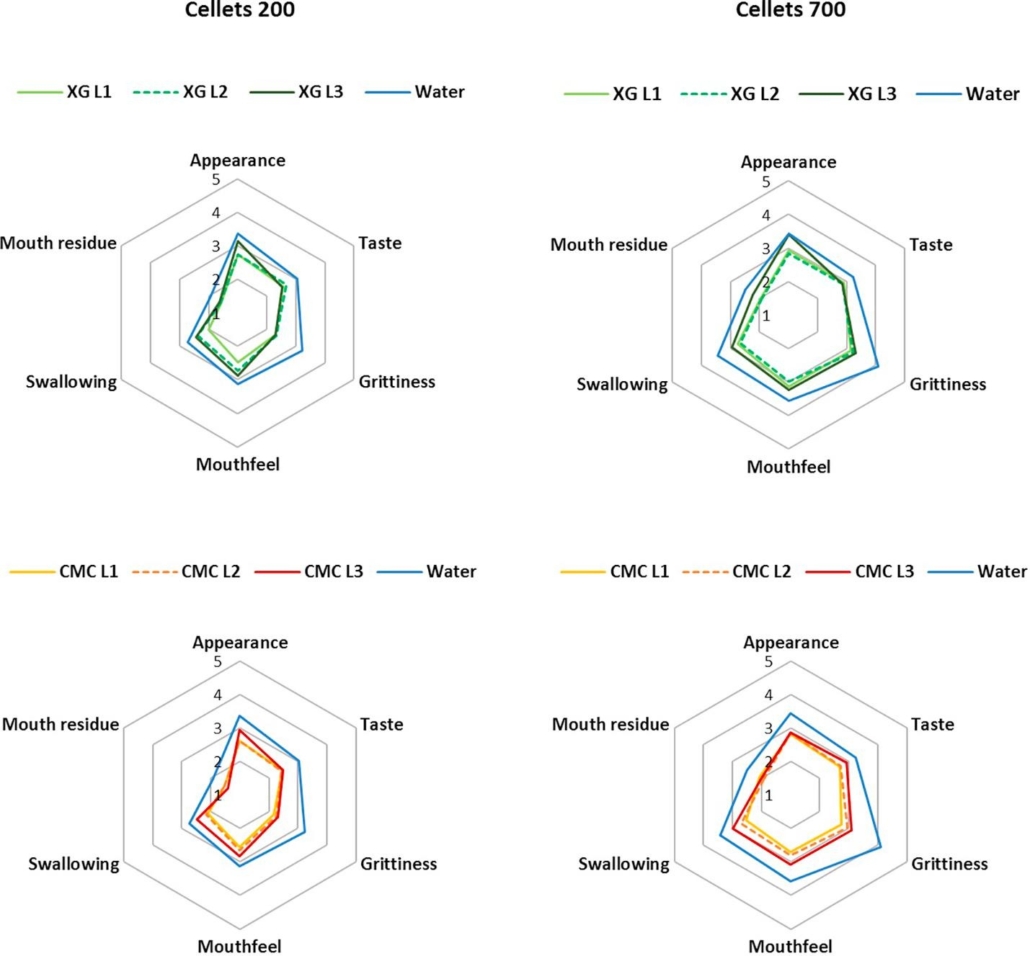
Fig. 4. Radar chart for appearance, taste, grittiness, mouthfeel, ease of swallowing and residue of multiparticulates in mouth as a function of the vehicle used as suspending media and the size of the multiparticulates: 200–355 µm (CELLETS® 200) or 700–1000 µm (CELLETS® 700). Each palatability item is described by its population mean for the 5-point scale (where 1 is the lowest possible and 5 is the highest possible intensity of the stimulus). The consistency level of XG and CMC hydrogels is described as L1 (Level1), L2 (Level 2) and L3 (Level 3).
4. Conclusion
The use of hydrogels as administration media for multiparticulates improved a range of sample attributes compared to water formulations, including appearance, taste, mouthfeel, ease of swallowing and grittiness perception during and after sample intake. This improvement was apparent for samples containing multiparticulates of both sizes investigated (those over 200 and those over 700 µm). Polymeric hydrocolloids provided ‘cushioning and lubrication’ of the particles and acted as an effective vehicle by ‘carrying the particles together’, concealing the gritty feeling of the multiparticulates and assisting swallowing. Participants also reported that additional intake of water after administration of the gel formulation was beneficial to facilitate swallowing of the full dose of multiparticulates. Polymeric hydrogels thickened to medium consistency (Level 2, XG 0.5% and CMC 1.0% w/v) were preferred over either thinner or thicker vehicles. A balanced consistency reduced the gritty feeling of multiparticulates while not being overly thick, which would hinder sensory attributes. Meanwhile, differences between XG and CMC hydrogels were minimal despite their opposing shear thinning behaviour. These findings suggest that the consistency of the vehicle was an attribute of greater importance than its shear thinning behaviour. However, XG brings the added value of its strong thickening power, requiring very low concentrations to produce hydrogels of adequate consistency. Results of this study indicate that polymeric hydrogels could be used to improve palatability, facilitate swallowing and enhance patient acceptability of multiparticulate formulation.
5. Author contribution statement
Felipe L. Lopez: Methodology, Investigation, Formal Analysis, Visualization, Writing- Original draft preparation. Terry B. Ernest: Funding Acquisition, Conceptualization, Methodology, Supervision, Writing – Review & Editing. Mine Orlu: Funding Acquisition, Conceptualization, Methodology, Supervision, Writing – Review & Editing. Catherine Tuleu: Funding Acquisition, Conceptualization, Methodology, Validation, Supervision, Writing – Review & Editing.
Acknowledgement
The authors are grateful to the EPSRC for providing funding through a studentship within the CDT in Targeted Therapeutics and Formulation Sciences (EPSRC grant: EP/I01375X/1).
Conflict of interest statement
The authors declare no conflict of interest other than their disclosed affiliations and acknowledged funding.
Appendix A. Supplementary data
Supplementary data associated with this article can be found, in the online version, at https://doi.org/10.1016/j.ijpharm.2018.08.021.
License
Creative Commons license CC BY 4.0.
References
Adu-Afarwuah, S., Lartey, A., Brown, K.H., Zlotkin, S., Briend, A., Dewey, K.G., 2008. Home fortification of complementary foods with micronutrient supplements is well accepted and has positive effects on infant iron status in Ghana. Am. J. Clin. Nutr. 87, 929–938.
Akram, G., Mullen, A.B., 2015. Mixing medication into foodstuffs: identifying the issues for paediatric nurses. Int. J. Nurs. Pract. 21, 125–131. https://doi.org/10.1111/ijn.12222.
Akram, G., Mullen, A.B., 2012. Paediatric nurses’ knowledge and practice of mixing medication into foodstuff. Int. J. Pharm. Pract. 20, 191–198. https://doi.org/10.1111/j.2042-7174.2011.00179.x.
Bunupuradah, T., Wannachai, S., Chuamchaitrakool, A., Intasan, J., Nuchapong, T., Neiss, W., Kramm, K., Pancharoen, C., Burger, D., Ananworanich, J., 2006. Use of tastemasking product, FLAVORx, to assist Thai children to ingest generic antiretrovirals. AIDS Res. Ther. 3, 30. https://doi.org/10.1186/1742-6405-3-30.
Cho, H., Yoo, W., Yoo, B., 2015. In: Effect of NaCl Addition on Rheological Behaviors of Commercial Gum-Based Food Thickener Used for Dysphagia Diets, pp. 137–142. https://doi.org/https://doi.org/10.3746/pnf.2015.20.2.137.
Cichero, J.A.Y., Lam, P., Steele, C.M., Hanson, B., Chen, J., Dantas, R.O., Duivestein, J., Kayashita, J., Lecko, C., Murray, J., Pillay, M., Riquelme, L., Stanschus, S., 2017. Development of international terminology and definitions for texture-modified foods and thickened fluids used in dysphagia management: the IDDSI framework. Dysphagia 32, 293–314. https://doi.org/10.1007/s00455-016-9758-y.
Clark, C., Lawless, H.T., 1994. Limiting response alternatives in time-intensity scaling: an examination of the halo-dumping effect. Chem. Senses 19, 583–594. https://doi.org/10.1093/chemse/19.6.583.
Cloyd, J.C., Kriel, R.L., Jones-Saete, C.M., Ong, B.Y., Jancik, J.T., Remmel, R.P., 1992. Comparison of sprinkle versus syrup formulations of valproate for bioavailability, tolerance, and preference. J. Pediatr. 120, 634–638. https://doi.org/10.1016/S0022-3476(05)82496-5.
Diamond, S., Lavallee, D.C., 2010. Experience with a pill-swallowing enhancement aid. Clin. Pediatr. (Phila) 49, 391–393. https://doi.org/10.1177/0009922809355313. EMA, 2013. Guideline on pharmaceutical development of medicines for paediatric use [WWW Document]. URL http://www.ema.europa.eu/docs/en_GB/document_library/Scientific_guideline/2013/07/WC500147002.pdf.
FDA, 2012. Guidance for Industry Size of Beads in Drug Products Labeled for Sprinkle Guidance for Industry Size of Beads in Drug Products Labeled for Sprinkle.
Garcia, J.M., Chambers IV, E., Matta, Z., Clark, M., 2005. Viscosity measurements of nectar- and honey-thick liquids: product, liquid, and time comparisons. Dysphagia 20, 325–335. https://doi.org/10.1007/s00455-005-0034-9.
Geltman, P.L., Hironaka, L.K., Mehta, S.D., Padilla, P., Rodrigues, P., Meyers, A.F., Bauchner, H., 2009. Iron supplementation of low-income infants: a randomized clinical trial of adherence with ferrous fumarate sprinkles versus ferrous sulfate drops. J. Pediatr. 154. https://doi.org/10.1016/j.jpeds.2008.11.003.
Hanning, S.M., Lopez, F.L., Wong, I.C.K., Ernest, T.B., Tuleu, C., Orlu Gul, M., 2016. Patient centric formulations for paediatrics and geriatrics: similarities and differences. Int. J. Pharm. 512, 355–359. https://doi.org/https://doi.org/10.1016/j.ijpharm.2016.03.017.
IDDSI, 2015. Detailed Descriptors, Testing Methods and Evidence – Drinks: Levels 0-4 [WWW Document]. URL http://iddsi.org/framework/.
Kekitiinwa, A., Musiime, V., Thomason, M.J., Mirembe, G., Lallemant, M., Nakalanzi, S., Baptiste, D., Walker, A.S., Gibb, D.M., Judd, A., Judd, A., 2016. Acceptability of lopinavir/r pellets (minitabs), tablets and syrups in HIV-infected children. Antiviral Ther. https://doi.org/10.3851/IMP3054.
Kersten, E., Barry, A., Klein, S., 2016. Physicochemical characterisation of fluids and soft foods frequently mixed with oral drug formulations prior to administration to children. Pharmazie 71, 122–127. https://doi.org/10.1691/ph.2016.5145.
Kimura, S., Uchida, S., Kanada, K., Namiki, N., 2015. Effect of granule properties on rough mouth feel and palatability of orally disintegrating tablets. Int. J. Pharm. 484, 156–162. https://doi.org/10.1016/j.ijpharm.2015.02.023.
Kluk, A., Sznitowska, M., 2014. Application properties of oral gels as media for administration of minitablets and pellets to paediatric patients. Int. J. Pharm. 460, 228–233. https://doi.org/10.1016/j.ijpharm.2013.10.052.
Lopez, F.L., Bowles, A., Gul, M.O., Clapham, D., Ernest, T.B., Tuleu, C., 2016. Effect of formulation variables on oral grittiness and preferences of multiparticulate formulations in adult volunteers. Eur. J. Pharm. Sci. 92, 156–162. https://doi.org/10.1016/j.ejps.2016.07.006.
Lopez, F.L., Ernest, T.B., Tuleu, C., Gul, M.O., 2015. Formulation approaches to pediatric oral drug delivery: benefits and limitations of current platforms. Expert Opin. Drug Deliv. 12, 1727–1740. https://doi.org/10.1517/17425247.2015.1060218.
Lopez, F.L., Mistry, P., Batchelor, H.K., Bennett, J., Coupe, A., Ernest, T.B., Orlu, M., Tuleu, C., 2018. Acceptability of placebo multiparticulate formulations in children and adults. Sci. Rep. 1–10. https://doi.org/10.1038/s41598-018-27446-6.
Matta, Z., Chambers IV, E., Garcia, J.M., Helverson, J.M.G., 2006. Sensory characteristics of beverages prepared with commercial thickeners used for dysphagia diets. J. Am. Diet. Assoc. 106, 1049–1054. https://doi.org/10.1016/j.jada.2006.04.022.
Mennella, J.A., Finkbeiner, S., Reed, D.R., 2012. The proof is in the pudding: children prefer lower fat but higher sugar than do mothers. Int. J. Obes. 36, 1285–1291. https://doi.org/10.1038/ijo.2012.51.
Motte, J., Pedespan, J.M., Sevestre, M., Chiron, C., 2005. Acceptability and tolerance of sodium valproate, a new sustained-action granule formulation, in monotherapy for epileptic children from 3 years old. Arch. Pediatr. 12, 1533–1539. https://doi.org/10.1016/j.arcped.2005.07.009.
Mueller, S., Llewellin, E.W., Mader, H.M., 2010. The rheology of suspensions of solid particles. Proc. R. Soc. 466, 1201–1228. https://doi.org/10.1007/BF01432034.
O’Leary, M., Hanson, B., Smith, C., 2010. Viscosity and non-Newtonian features of thickened fluids used for dysphagia therapy. J. Food Sci. 75, E330–E338. https://doi.org/10.1111/j.1750-3841.2010.01673.x.
Ong, J.J.X., Steele, C.M., Duizer, L.M., 2018. Sensory characteristics of liquids thickened with commercial thickeners to levels specified in the International Dysphagia Diet Standardization Initiative (IDDSI) framework. Food Hydrocoll. 79, 208–217. https://doi.org/10.1016/j.foodhyd.2017.12.035.
Pelletier, C.A., 1997. A comparison of consistency and taste of five commercial thickeners. Dysphagia 12, 74–78. https://doi.org/10.1007/PL00009522.
Popper, R., Rosenstock, W., Schraidt, M., Kroll, B.J., 2004. The effect of attribute questions on overall liking ratings. Food Qual. Prefer. 15, 853–858. https://doi.org/10.1016/j.foodqual.2003.12.004.
Prescott, J., Lee, S.M., Kim, K.O., 2011. Analytic approaches to evaluation modify hedonic responses. Food Qual. Prefer. 22, 391–393. https://doi.org/10.1016/j.foodqual.2011.01.007.
Ruiz, F., Vallet, T., Pensé-Lhéritier, A.-M., Aoussat, A., 2016. Standardized method to assess medicines’ acceptability: focus on paediatric population. J. Pharm. Pharmacol. https://doi.org/10.1111/jphp.12547.
Saha, D., Bhattacharya, S., 2010. Hydrocolloids as thickening and gelling agents in food: a critical review. J. Food Sci. Technol. 47, 587–597. https://doi.org/10.1007/s13197-010-0162-6.
Soares, T.J., Moraes, D.P., de Medeiros, G.C., Sassi, F.C., Zilberstein, B., de Andrade, C.R.F., 2015. Oral transit time: a critical review of the literature. Arq. Bras. Cir. Dig. 28, 144–147. https://doi.org/10.1590/S0102-67202015000200015.
Steele, C.M., Alsanei, W.A., Ayanikalath, S., Barbon, C.E.A., Chen, J., Cichero, J.A.Y., Coutts, K., Dantas, R.O., Duivestein, J., Giosa, L., Hanson, B., Lam, P., Lecko, C., Leigh, C., Nagy, A., Namasivayam, A.M., Nascimento, W.V., Odendaal, I., Smith, C.H., Wang, H., 2015. The influence of food texture and liquid consistency modification on swallowing physiology and function: a systematic review. Dysphagia 30, 2–26. https://doi.org/10.1007/s00455-014-9578-x.
Stokes, J.R., Boehm, M.W., Baier, S.K., 2013. Oral processing, texture and mouthfeel: from rheology to tribology and beyond. Curr. Opin. Colloid Interface Sci. 18, 349–359. https://doi.org/10.1016/j.cocis.2013.04.010.
Szczesniak, A.S., Farkas, E., 1962. Objective characterization of the mouthfeel of gum solutions. J. Food Sci. 27, 381–385. https://doi.org/10.1111/j.1365-2621.1962. tb00112.x.
Ternik, R., Liu, F., Bartlett, J.A., Khong, M., Cheng, D., Tan, T., Dixit, T., Wang, S., Galella, E.A., Gao, Z., Klein, S., 2017. Assessment of swallowability and palatability of oral dosage forms in children: report from an M-CERSI pediatric formulation workshop. Int. J. Pharm. https://doi.org/10.1016/j.ijpharm.2017.08.088.
Verrotti, A., Nanni, G., Agostinelli, S., Alleva, E.T., Aloisi, P., Franzoni, E., Spalice, A., Chiarelli, F., Coppola, G., 2012. Effects of the abrupt switch from solution to modified-release granule formulation of valproate. Acta Neurol. Scand. 125, 14–18. https://doi.org/10.1111/j.1600-0404.2011.01568.x.
Walsh, J., Ranmal, S.R., Ernest, T.B., Liu, F., 2018. Patient acceptability, safety and access: a balancing act for selecting age-appropriate oral dosage forms for paediatric and geriatric populations. Int. J. Pharm. 536, 547–562. https://doi.org/10.1016/j.ijpharm.2017.07.017.
Yoshida, M., Hazekawa, M., Haraguchi, T., Uchida, T., 2011. Influence of swallowing Aids on the adsorption and palatability of Kremezin®. Chem. Pharm. Bull. (Tokyo) 59, 434–437. https://doi.org/10.1248/cpb.59.434.
Zlotkin, S., Antwi, K.Y., Schauer, C., Yeung, G., 2003. Use of microencapsulated iron(II) fumarate sprinkles to prevent recurrence of anaemia in infants and young children at high risk. Bull. World Health Organ. 81, 108–115. https://doi.org/10.1590/S0042-96862003000200007.
 adobe firefly
 adobe firefly