This article [1] on the development of an innovative method to improve the dissolution performance of rivaroxaban was first published here.
Abstract
A method to improve the dissolution performance of rivaroxaban
Recent advances in solid dosage form design with active ingredient–cyclodextrin complexes have attracted strong interest in pharmaceutical research. However, most earlier studies focused on solid-state complexes, which often caused incomplete inclusion. Therefore, new methods became necessary to improve drug incorporation.
In this study, the researchers developed a novel way to integrate liquid-state drug–cyclodextrin complexes into solid dosage forms. Specifically, their work centered on rivaroxaban, a poorly water-soluble and hydrophobic drug. To achieve this, Ozon et al. combined rivaroxaban with hydroxypropyl-β-cyclodextrin at a 1:1 molar ratio and kept the mixture in a liquid state. Furthermore, to increase viscosity, the team added 2% hydroxypropyl-cellulose. Finally, they sprayed the resulting dispersion onto cellulose pellets (CELLETS® 780) using a Caleva Mini Coater.
Improved Process Strategies for Rivaroxaban Dissolution
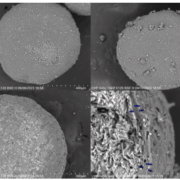
The researchers carefully controlled the process conditions. Specifically, atomization air pressure stayed at 1.1 atm, while fluidizing airflow ranged between 35–45 m³/h. After coating, they analyzed the pellets and raw materials using FTIR, XRD, SEM, and DSC techniques. As a result, these tests confirmed that rivaroxaban successfully formed inclusion complexes with hydroxypropyl-β-cyclodextrin. Furthermore, the final pellets showed excellent flowability, good compressibility, and adequate hardness.
In addition, HPLC-DAD analysis confirmed a drug loading of 10 mg rivaroxaban per 750 mg of coated pellets. For dissolution testing, the researchers used two distinct media: sodium acetate buffer pH 4.5 with 0.2% sodium dodecyl sulfate, and phosphate buffer pH 6.8 without surfactants. They then compared the new capsules with both reference capsules and conventional tablets. Consequently, results showed that the experimental capsules matched the release profile of Xarelto® 10 mg. Moreover, they released rivaroxaban at a faster rate within the first 10 minutes.
Conclusion
In conclusion, this research introduces an effective method to create solid dosage forms from liquid-state drug–cyclodextrin complexes. More importantly, this innovative approach significantly improves the dissolution performance of rivaroxaban. Therefore, it opens promising new possibilities for enhanced drug delivery and greater oral bioavailability. This breakthrough highlights the potential of liquid-state inclusion complexes to optimize the dissolution performance of rivaroxaban, paving the way for more efficient drug delivery systems and enhanced oral bioavailability.