Methylphenidate Modified Release Formulations and Their Clinical Importance
Methylphenidate modified release formulations play a central role in modern ADHD treatment. These dosage forms control the rate and timing of drug release after administration. As a result, they maintain therapeutic drug levels over an extended period and reduce the need for multiple daily doses. Methylphenidate is a central nervous system stimulant that improves attention and reduces hyperactivity and impulsivity. Amphetamine-based active pharmaceutical ingredients (APIs), including amphetamine salts and related derivatives, belong to the same therapeutic class. However, they act through somewhat different pharmacological mechanisms by increasing catecholamine release and inhibiting neurotransmitter reuptake.
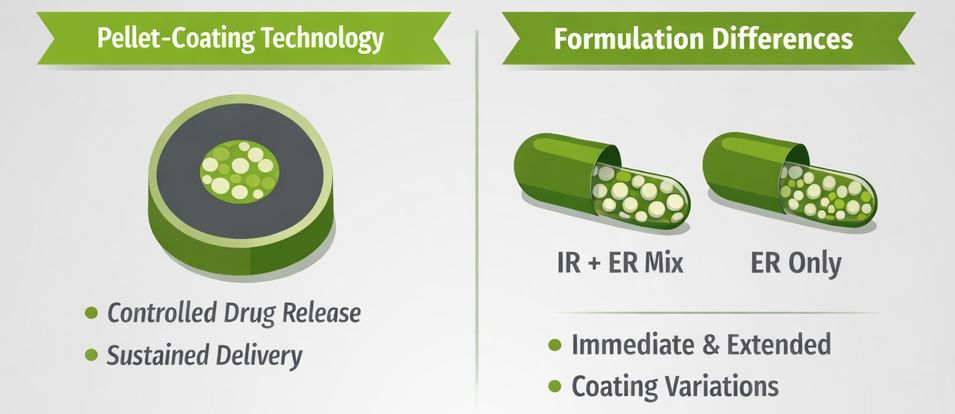
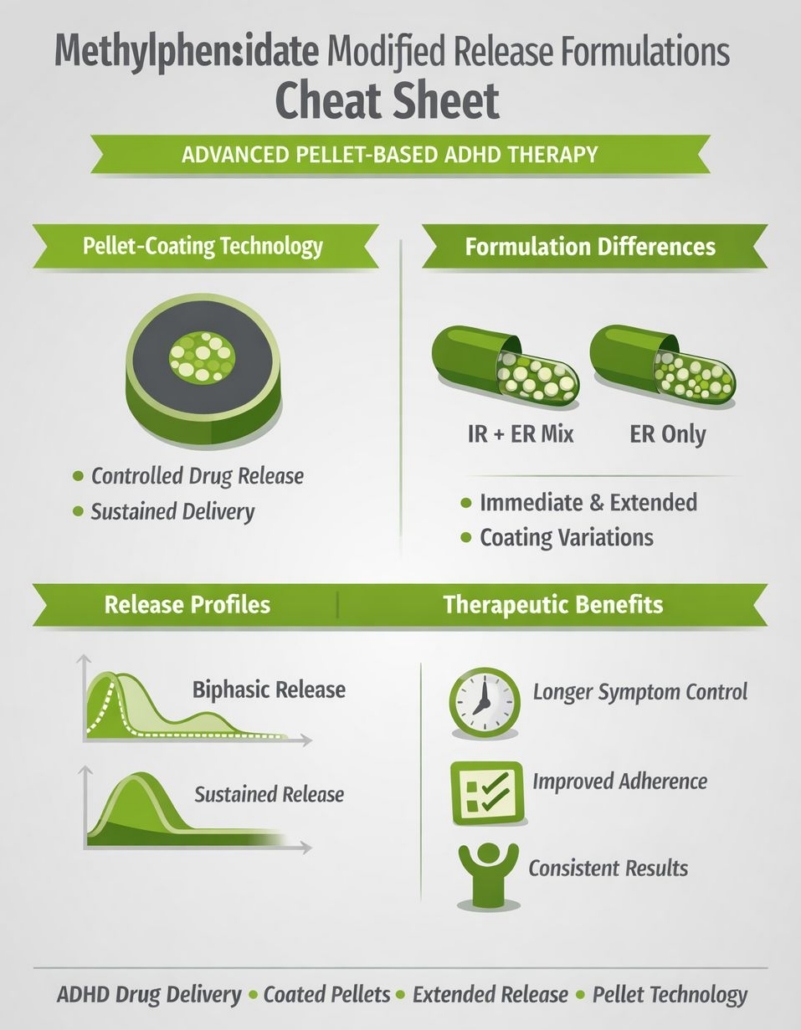
Both stimulant classes benefit from modified-release technologies because they provide longer symptom control and reduce fluctuations in plasma concentrations. In particular, pellet-based systems have become highly important in extended-release products. These systems contain numerous small drug-loaded pellets (CELLETS® 500) coated with functional polymer layers. Consequently, formulators can precisely control drug release kinetics. Furthermore, pellet coatings improve dose uniformity, support reproducible gastrointestinal transit, and lower the risk of dose dumping. Therefore, patients often experience more consistent therapeutic effects and improved treatment adherence.
Composition and Functional Differences in the Patent
The patent US20260076916A1 describes several methylphenidate modified release formulations based on coated pellet technology. The disclosed formulations share the same overall objective but differ in their composition and functional design. For example, the formulations vary in drug loading, pellet structure, coating composition, coating thickness, and the ratio of immediate-release and extended-release fractions. These differences directly influence dissolution behavior and pharmacokinetic performance. As a result, each formulation can generate a distinct release profile. Some compositions provide a rapid initial release followed by sustained drug delivery. In contrast, other formulations focus on maintaining a smoother and more prolonged release pattern throughout the day. Thus, the patent demonstrates how targeted formulation changes can tailor therapeutic performance to specific clinical needs.
The Role of Pellet Coatings in Extended-Release Performance
Pellet coatings represent the key functional element in these formulations. They regulate water penetration, drug diffusion, and ultimately drug release. Depending on the selected polymer, the coating may function as a diffusion barrier, a delayed-release layer, or a permeability-controlled membrane. Moreover, coating thickness strongly influences release kinetics. Thicker coatings generally slow drug release, whereas thinner or more permeable coatings accelerate release. In addition, manufacturers can combine pellets with different coating properties in a single capsule or tablet. This approach creates multiphasic release profiles that better match daily therapeutic requirements. Consequently, patients receive both rapid symptom relief and sustained efficacy from a single dose. Such multiparticulate systems also improve formulation flexibility during product development.
Importance of CELLETS® 500 in the Methylphenidate Modified Release Formulations Patent
In the patent US20260076916A1, CELLETS® 500 serve as the inert starter cores on which methylphenidate and the functional coating layers are applied. These spherical pellets, consisting of 100% microcrystalline cellulose and having a particle size range of approximately 500–710 µm, provide an ideal substrate for uniform drug layering and subsequent polymer coating. Their high sphericity, smooth surface, mechanical strength, and low friability support reproducible coating processes and consistent pellet quality. As a result, formulators can precisely control coating thickness and permeability, which are critical parameters for achieving the desired modified-release profile.
Moreover, the relatively large surface area of CELLETS® 500 enables efficient drug loading while maintaining excellent flowability and processing characteristics during fluid-bed coating operations. In multiparticulate methylphenidate formulations, these properties contribute directly to uniform drug release, reduced variability in pharmacokinetic performance, and reliable therapeutic outcomes. Therefore, CELLETS® 500 are not merely inactive excipients but a key enabling technology that supports the development of robust extended-release formulations with predictable dissolution behavior and improved patient adherence.
Conclusion and Outlook
Methylphenidate modified release formulations combine established stimulant therapy with advanced drug delivery technology. The patent clearly shows that differences in pellet composition and coating design create distinct release characteristics. Therefore, formulation scientists can fine-tune onset of action, duration of effect, and overall pharmacokinetic performance. Pellet coating technology offers significant advantages for both pharmaceutical manufacturers and patients. Furthermore, it supports consistent drug delivery, improved treatment adherence, and reliable symptom control. Looking ahead, continued advances in polymer science and multiparticulate formulation design will likely produce even more precise release profiles. As a result, future methylphenidate modified release formulations may further improve individualized ADHD therapy and long-term patient outcomes.
Patent Summary
- Name of Patent: Methylphenidate modified release formulations
- Patent Number: US20260076916A1
- Year of Patent: 2025
- Patent Holders: Sudhir R. Gorukanti, Rajan Sharma Bhattarai, Mallikharjun Vasireddy, Chintan Desai
- Affiliation: Granules Pharmaceuticals Inc