
Posts

cellulose-derived spherical activated carbon

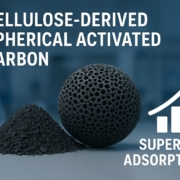
Cellulose-derived spherical activated carbon is a sustainable carbon material made from renewable cellulose sources. It forms uniform spheres with high surface area and excellent porosity after activation. Because of its spherical shape, this carbon flows smoothly, packs efficiently, and resists dust formation. These traits make it ideal for pharmaceutical and biomedical uses. In drug formulation, amorphized amlodipine besylate and hydrochlorothiazide offer exciting potential. Their amorphous states increase solubility, speed up dissolution, and enhance bioavailability. This improvement allows more consistent dosing and better combination therapies. Furthermore, a high-shear granulator helps mix and layer ingredients under controlled energy and moisture. It ensures uniform distribution of amorphous drugs and consistent granule quality, which improves final product performance.

Summary of the Publication

The publication by K. Shin et al [1] introduces an eco-friendly method to create cellulose-derived spherical activated carbon from microcrystalline cellulose. The researchers first carbonized cellulose spheres and then activated them with steam. This process produced strong, uniform carbon spheres with hierarchical pores and high adsorption capacity. The spherical design improved handling and flow compared to traditional irregular carbon particles. Moreover, the material demonstrated high performance in removing uremic toxins in simulated biomedical tests. It showed quick adsorption, strong selectivity, and good stability under different pH and ionic strengths.

Because the raw cellulose originates from renewable sources, this process aligns with circular-economy goals. It also reduces production costs while improving quality and uniformity. The study compared these spherical carbons with conventional activated carbons and found similar or superior adsorption properties. However, the new materials also offered better mechanical strength and shape stability. In addition, the pore size and surface characteristics could be tuned by adjusting activation conditions or cellulose template sizes. This tunability is vital for targeting specific biomedical and environmental applications. Therefore, the study links sustainable material design with real-world medical use.

Use of CELLETS® in the Study

The authors used CELLETS® microcrystalline cellulose spheres as templates to shape the final spherical activated carbon. These CELLETS® provided precise size control and reliable structure during carbonization. As a result, the produced carbon spheres maintained uniform shape, size, and mechanical stability. The templating method allowed predictable performance and made the process suitable for scaling up. In practical terms, this ensured consistent flow, packing, and adsorption performance—essential features in pharmaceutical and medical applications.

Conclusion and Outlook

Cellulose-derived spherical activated carbon offers a major step toward green, high-performance adsorbents. It combines renewable sourcing, excellent flow behavior, and strong adsorption capacity. The integration of CELLETS® templates made production reproducible and efficient. Future work should focus on in-vivo safety, selective adsorption of specific toxins, and process optimization under GMP standards. Furthermore, pairing this carbon material with amorphous APIs like amlodipine besylate and hydrochlorothiazide could lead to multifunctional systems for improved drug delivery and detoxification. As industries move toward sustainability and advanced pharmaceutical technologies, cellulose-derived spherical activated carbon will likely play a central role in next-generation biomedical materials.

References

[1] K. Shin et al., Materials & Design 259 (2025) 114892. doi: 10.1016/j.matdes.2025.114892.

microcrystalline cellulose for organic pollutants adsorption

Introduction

Fixed-bed column adsorption is an essential process in modern water treatment systems, widely implemented due to its continuous operation, ease of design, and applicability in large-scale systems. In this method, a contaminant-laden liquid passes through a column packed with adsorbent material, facilitating efficient contaminant removal before discharge or reuse. While effective for many pollutants, the removal of organic dyes—particularly synthetic types such as Methylene Blue—remains a formidable challenge due to their structural complexity, high solubility, and resistance to conventional degradation methods. These characteristics are especially problematic in pharmaceutical applications, where effluents must meet strict regulatory limits to prevent environmental and product contamination.

Organic dyes in pharmaceutical wastewater not only hinder downstream purification but also pose ecotoxicological risks when released into natural water bodies. As such, there is an ongoing demand for adsorbent materials that are effective, regenerable, and environmentally friendly. Within this framework, microcrystalline cellulose for organic pollutants adsorption represents a promising and sustainable approach.

Use of CELLETS® and experimental design

In the study referenced by DOI 10.5004/dwt.2019.23638 [1], researchers evaluated microcrystalline cellulose-based spherical pellets—commercially known as CELLETS® —for their potential to adsorb organic dyes from aqueous solutions. These pellets are manufactured via wet-granulation and extrusion processes, yielding highly uniform, spherical particles with low friability and high surface area. Such properties are ideal for both batch and dynamic (fixed-bed) adsorption studies due to predictable flow behavior and minimal mechanical breakdown under continuous operation.

Batch experiments were initially conducted using Methylene Blue as a model compound. Isotherm analysis revealed strong agreement with the Langmuir model, indicating monolayer adsorption with a maximum capacity of approximately 82 mg/g. Kinetic modeling confirmed that adsorption followed pseudo-second-order dynamics, suggesting chemisorption mechanisms dominated the process.

Key findings

The results showed that microcrystalline cellulose pellets offer a high specific adsorption capacity for Methylene Blue dye, consistent with Langmuir isotherm behavior. The pseudo-second-order kinetic model provided the best fit for experimental data, supporting a chemisorption-driven process. Notably, the physical structure of the CELLETS® 200 remained intact after multiple uses, and regeneration with dilute acids such as acetic and sulfuric acid restored a significant portion of the adsorption capacity without compromising structural integrity. These findings validate the use of microcrystalline cellulose for organic pollutants adsorption, especially where material longevity and repeat usability are essential.

Regeneration cycles and sustainability

One of the critical advantages of CELLETS® lies in their capacity for multiple regeneration cycles. The study demonstrated that after five adsorption-desorption cycles, more than 85% of the original adsorption capacity was retained, especially when 0.01 mol/L sulfuric acid was used as the desorbing agent. Minimal structural degradation was observed, which confirms the material’s resilience to chemical treatment. The efficient desorption and structural stability make these cellulose-based adsorbents both economically and environmentally viable, reducing the need for frequent replacement and waste generation—a key factor in large-scale industrial settings.

Column-scale modeling

Though the primary focus was on batch experiments, the implications of the findings extend to column-scale applications. The authors suggest that due to the spherical shape and low pressure drop of CELLETS®, these materials are ideally suited for packed-bed column use. Future studies are encouraged to employ dynamic modeling approaches such as Thomas, Yoon–Nelson, or Bohart–Adams models to predict breakthrough behavior under continuous flow. Such models would enable optimization of operational parameters (e.g., flow rate, bed height, and influent concentration) and facilitate scale-up for industrial applications.

The material’s excellent flowability and structural uniformity ensure homogeneous packing and minimized channeling—common issues in poorly engineered adsorbent beds. These features underscore the practical applicability of microcrystalline cellulose for organic pollutants adsorption in fixed-bed column configurations.

Comparative performance

Compared to other low-cost and industrial adsorbents—such as activated carbon, bentonite clay, or synthetic resins—microcrystalline cellulose offers several advantages. While activated carbon exhibits higher adsorption capacity per gram, it suffers from high cost, complex regeneration, and variable quality. Conversely, cellulose-based materials are biodegradable, inexpensive, and easier to functionalize chemically if needed.

Moreover, unlike biomass-based powders (e.g., sawdust or peanut shells), CELLETS® provide consistent performance due to controlled manufacturing processes. Their uniform size, sphericity, and mechanical strength reduce operational issues like clogging and channel formation in dynamic systems. These comparative strengths position microcrystalline cellulose for organic pollutants adsorption as a versatile solution in both environmental and industrial water treatment sectors.

Conclusion and outlook

The study presents compelling evidence for the effective use of CELLETS®, a form of microcrystalline cellulose, in the adsorption of organic pollutants such as Methylene Blue. With a high uptake capacity, favorable kinetic behavior, excellent reusability, and strong structural integrity, these cellulose-based pellets are well-suited for sustainable wastewater treatment applications. Their compatibility with both batch and fixed-bed systems broadens their potential for industrial implementation.

Looking ahead, further investigations should focus on scaling the process to pilot and industrial levels, applying column modeling techniques to optimize system design. Additionally, exploring chemical modifications to enhance selectivity and adsorption performance against a wider range of organic pollutants—including pharmaceutical residues and endocrine-disrupting compounds—will further elevate the role of microcrystalline cellulose for organic pollutants adsorption in advanced water treatment technologies.

References

[1] Daniela Suteu, Gabriela Biliuta, Lacramioara Rusu, Sergiu Coseri, Christophe Vial, Iulia Nica (Nebunu), Desalination and Water Treatment Volume 146, April 2019, Pages 176-187, doi:10.5004/dwt.2019.23638.