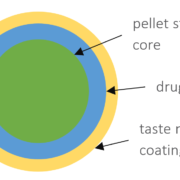

Multiple-Unit Pellet System with Diclofenac Sodium represents a modern and flexible approach to oral drug delivery. This multiparticulate system divides the drug dose into many small pellets, each functioning as an individual unit. Because of this design, the formulation ensures more uniform gastrointestinal distribution and minimizes dose dumping. It also improves patient compliance and allows combination of different release profiles in a single dosage form.
Diclofenac Sodium, a potent nonsteroidal anti-inflammatory drug (NSAID), reduces pain, inflammation, and fever. However, it has low solubility and high permeability, which limits its absorption. Therefore, formulating it in a multiple-unit pellet system improves its bioavailability and controls its release rate. As a result, patients experience longer relief with fewer side effects, especially gastrointestinal irritation.
Summary of the Publication
The study “Development of a Biphasic-Release Multiple-Unit Pellet System with Diclofenac Sodium Using Novel Calcium Phosphate-Based Starter Pellets” focuses on creating a capsule with both rapid and sustained release. It combines two types of pellets: delayed-release (DR) pellets coated to resist stomach acid, and extended-release (XR) pellets designed for gradual release in the intestine. This structure allows a quick onset of action and a long-lasting therapeutic effect.
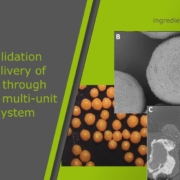
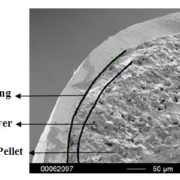
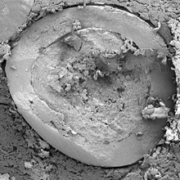
The researchers introduced dicalcium phosphate anhydrous (DCPA) as a new starter core. Unlike conventional cores such as microcrystalline cellulose (for example CELLETS® 500), sucrose, or isomalt, DCPA cores are dense and insoluble. They show excellent strength, low friability, and smooth flow. These qualities make them ideal for producing stable multiparticulate systems. Furthermore, the team used a fluid-bed coating process to ensure even layers of drug and polymer, verified by scanning electron and Raman microscopy.
Dissolution testing showed clear differences among core types. DCPA-based pellets released the drug steadily and predictably, even under variable pH and hydrodynamic conditions. In contrast, soluble cores like sucrose and isomalt caused uneven release and premature erosion. The biphasic MUPS capsules with DCPA pellets combined rapid and prolonged release successfully. Under simulated physiological conditions, they maintained consistent performance and outperformed commercial reference formulations.
The study highlights that the pellet core material strongly affects drug release and mechanical behavior. Insoluble DCPA cores provided stability and controlled release, while soluble ones failed to maintain coating integrity. Therefore, choosing the right core is essential for reliable performance in Multiple-Unit Pellet System with Diclofenac Sodium formulations.
Conclusion and Outlook
Multiple-Unit Pellet System with Diclofenac Sodium offers a strong platform for precise and predictable drug delivery. The use of calcium phosphate-based starter pellets supports biphasic release with high mechanical stability and consistent drug diffusion. As a result, patients benefit from immediate pain relief followed by sustained therapeutic action.
In the future, researchers can use UV imaging, Raman mapping, and other visualization techniques to monitor the release process in real time. These tools will deepen understanding of coating behavior and in vivo performance. Continued development of the Multiple-Unit Pellet System with Diclofenac Sodium will likely lead to safer, more effective, and patient-friendly oral therapies.
References
[1] Zakowiecki et al., Pharmaceutics 2021, 13(6), 805; doi:10.3390/pharmaceutics13060805

 ingredientpharm