Posts

CELLETS as new type of adsorbent

Abstract

CELLETS, a new type of adsorbent, have emerged as a promising solution in water treatment. They are particularly effective in fixed-bed column systems for removing persistent organic pollutants, such as synthetic dyes. This summary reflects research published by Suteu et al. [1].

Fixed-bed adsorption is a well-established filtration method. It allows continuous treatment of contaminated water by passing it through a packed column filled with adsorbent material. Its advantages include high throughput, easy operation, scalability, and adaptability to various industrial settings. However, one enduring challenge is the effective removal of dyes. These molecules, especially from pharmaceutical and chemical effluents, have complex aromatic structures, high chemical stability, and resistance to biodegradation.

Dyes, both cationic and anionic, are not only visually polluting but also potentially toxic, mutagenic, or carcinogenic. In pharmaceutical wastewater, even trace levels can disrupt downstream processes or contaminate the environment. Consequently, this raises concerns for human and ecological health. Conventional adsorbents, such as activated carbon and ion-exchange resins, are effective but have limitations. They are costly, inefficient to regenerate, and prone to fouling.

In this context, microcrystalline cellulose (MCC) cellets offer a novel approach. Their spherical shape, uniform particle size, mechanical resilience, and hydrophilic surface make them suitable for packed-bed applications. This study examines cellets’ performance in removing representative dyes from aqueous media. By focusing on CELLETS as a new type of adsorbent, the research addresses a critical gap. It offers a sustainable, cost-effective, and scalable solution for dye-laden industrial wastewater, particularly under the stringent requirements of the pharmaceutical sector.

Introduction

Fixed-bed column techniques are essential filtration systems. In these systems, a fluid stream passes continuously through a packed bed of adsorbent material. They are valued for operational simplicity, scalability, and continuous processing—key features for industrial and pharmaceutical wastewater treatment. However, removing dyes remains a major challenge. These molecules are complex, often toxic, and chemically stable, resisting conventional treatment. In pharmaceutical effluents, even trace dye residues can pose serious safety risks and violate strict regulatory limits.

This study investigates CELLETS® as a new type of adsorbent in fixed-bed columns. CELLETS® are spherical microcrystalline cellulose pellets. They are tested for their ability to remove both cationic and anionic dyes from aqueous streams. Thanks to their uniform geometry, mechanical strength, and biocompatibility, CELLETS® show promise in overcoming the limitations of current dye removal methods.

Use of cellulose CELLETS as new type of adsorbent

CELLETS® are uniformly sized spherical pellets made of microcrystalline cellulose. They are typically available in diameters ranging from 100 µm to 500 µm. Their narrow size distribution, smooth surface, and water-insoluble nature reduce friability and minimize clogging. As a result, they are ideal for packed-bed applications [1]. In this study, CELLETS® 200 and CELLETS® 350 served as the fixed-bed medium.

First, the authors characterized their morphology, including sphericity, porosity, and mechanical stability. Then, they applied CELLETS® in fixed-bed column experiments to remove model dyes: Methylene Blue (cationic) and Brilliant Red HE‑3B (anionic).

Additionally, batch experiments were performed to establish equilibrium, kinetics, and isotherm parameters before column testing. In the fixed-bed setup, breakthrough curves were recorded under different operational conditions, such as flow rate, bed height, and influent dye concentration. These tests revealed how CELLETS® perform under dynamic conditions.

Key Findings

The study revealed that CELLETS® exhibit strong adsorption capabilities for both cationic and anionic dyes, performing comparably to other biosorbents used in dynamic treatment systems. The breakthrough curves demonstrated that column performance could be modulated by operational parameters: increasing bed height extended breakthrough time and improved capacity, while higher flow rates accelerated breakthrough due to mass transfer limitations. Mathematical models commonly used for fixed-bed adsorption (Thomas, Yoon–Nelson, Bohart–Adams) fit the experimental data well, enabling the extraction of key design parameters for scale-up. Notably, CELLETS® displayed mechanical robustness, sustaining repeated adsorption–desorption cycles (through mild acid or ethanol washout) with over 80 % retention of initial capacity [1,2]. Their spherical geometry resulted in low pressure drop and uniform flow, mitigating common issues like channeling and bed compaction.

Conclusion & Outlook

This study convincingly positions CELLETS® as a compelling new type of adsorbent for dye removal in fixed-bed systems. Their blend of favorable adsorptive properties, structural resilience, and hydraulic stability make them attractive for continuous water treatment processes, especially where regulatory constraints demand high effluent quality. The renewable nature of microcrystalline cellulose adds environmental value, aligning with sustainable treatment practices.

Future research directions include enhancing CELLETS®’ adsorption capacity via surface functionalization (e.g., with carboxyl or amine moieties) to target specific pollutants, extending studies with real industrial and pharmaceutical effluents, and integrating CELLETS®-based systems with complementary treatment processes such as membrane filtration or advanced oxidation. Pilot-scale studies and economic assessments will be essential to advance CELLETS® from lab-scale validation to industrial adoption.

By demonstrating CELLETS® as new type of adsorbent, this publication highlights their promising role in addressing the persistent challenge of dye removal in fixed-bed column systems—offering a scalable, effective, and sustainable solution for complex aqueous pollution.

References

[1] Environmental Engineering and Management Journal, 2015, Vol.14, No. 3, 525-532; http://www.eemj.icpm.tuiasi.ro/pdfs/vol14/no3/full/4_998_Suteu_14.pdf

[2] Fixed-bed-column studies for methylene blue removal by CELLETS

[3] Renewable Resource Biosorbents: Granulated Cellulose CELLETS 200 for Organic Pollutants Adsorption in Fixed-Bed Column Systems, Separations 202310(2), 143; doi:10.3390/separations10020143

Cellets 200 for organic pollutants adsorption

Introduction

Fixed-bed column techniques are widely applied in water and wastewater treatment to achieve continuous adsorption of pollutants. In these systems, aqueous effluent flows through a packed bed of adsorbent material, offering operational simplicity, easy scale-up, and consistent performance—critical features in industrial and pharmaceutical settings. However, removing dyes from pharmaceutical effluents presents unique challenges: dyes are structurally complex, resistant to biodegradation, and often toxic or carcinogenic even at trace levels. Pharmaceutical industries demand exceptionally high water quality, making dye removal both technically difficult and economically significant.

This study evaluates granulated cellulose CELLETS® 200 for organic pollutants adsorption in fixed-bed systems. CELLETS® 200, composed of microcrystalline cellulose, are spherical pellets with defined particle size and porosity, designed to serve as a sustainable biosorbent. Their uniform granulation minimizes bed channeling and pressure drop—common operational issues—while their renewable nature supports greener treatment practices.

Use of CELLETS® 200 for organic pollutants adsorption

In the reported research, Granulated CELLETS® 200 were packed into vertical fixed-bed columns to treat aqueous solutions containing model organic dyes. Prior to column testing, batch experiments were used to determine equilibrium and kinetic parameters, ensuring reliable interpretation of breakthrough behavior. Columns were operated under controlled conditions—including flow rate, temperature (20 °C), and influent concentration—to monitor how CELLETS® 200 performed dynamically. Breakthrough curves were generated to assess adsorption capacity over time, and mathematical models (Thomas, Yoon–Nelson, Bohart–Adams) were applied to approximate performance and guide scale-up efforts.

Key Findings

Granulated cellulose CELLETS® 200 demonstrated effective uptake of cationic dyes such as Methylene Blue in a continuous-flow setup. The fixed-bed columns showed clear breakthrough profiles: bed depth and lower flow rates correlated with delayed breakthrough and increased total adsorption, confirming that the system response is highly dependent on operational variables. The experimental breakthrough data matched well with established fixed-bed adsorption models, suggesting predictable performance in larger-scale applications. Additionally, the mechanical integrity of CELLETS® 200—owing to their spherical shape and granulated structure—ensured low pressure drop and mitigated flow channeling even over extended operation. The study also underscored that CELLETS® 200 can be regenerated through mild washing treatments, maintaining a significant fraction of their capacity across multiple cycles. These findings reinforce the suitability of granulated cellulose CELLETS® 200 for organic pollutants adsorption in fixed-bed systems tailored to industrial effluents.

Conclusion & Outlook

The investigation confirms that granulated cellulose CELLETS® 200 for organic pollutants adsorption offers a sustainable, efficient biosorbent option for fixed-bed column processes, particularly in the removal of indelible dye molecules from pharmaceutical wastewater. The combination of green material sourcing, predictable and scalable performance, low hydraulic resistance, and reusability highlights CELLETS® 200 as a practical alternative to conventional adsorbents like activated carbon.

Future research should explore surface functionalization—such as the introduction of carboxyl or amine groups—to improve selectivity and capacity for various organic pollutants, including pharmaceutical remnants beyond dyes. Pilot-scale validations using actual industrial effluents, alongside techno-economic assessments and lifecycle analyses, will be essential to confirm the feasibility and environmental benefits of integrating CELLETS® 200 into full-scale wastewater treatment operations.

By showcasing granulated cellulose CELLETS® 200 for organic pollutants adsorption, this study advances the dialogue on sustainable biosorbents in fixed-bed systems, offering a strong foundation for both academic and industrial uptake of cellulose-based solutions in water treatment.

References

[1] Separations 2023, 10(2), 143; https://doi.org/10.3390/separations10020143 (PDF)

Fixed-bed-column studies for methylene blue removal by CELLETS

This study investigated fixed-bed columns for methylene blue removal. It evaluated CELLETS®, a granulated spherical cellulose material, as an adsorbent in the system [1]. CELLETS® 200 has useful properties, including perfect sphericity, narrow particle size distribution, low friability, and chemical inertness. Experiments used a dye solution (9–10 mg/L, pH 4.7) with different flow rates. We modeled dynamic adsorption using the Thomas and Yoon–Nelson models. Results showed an optimal flow rate above 0.01368 m³/day per gram of adsorbent. Adsorption capacities ranged from 1.375 to 3.303 mg/g. These findings confirm that CELLETS® 200 is effective for wastewater treatment targeting organic dyes.

Introduction: fixed-bed column techniques & challenges of dye removal

Fixed-bed column adsorption is widely used in water purification. In this process, contaminated fluid passes through a packed column of adsorbent material. First, the process forms a saturated front zone, and then a sharp adsorption zone (mass transfer zone) develops. As a result, this design allows continuous or semi-batch operation. Moreover, it is favored for cost-efficiency, scalability, and ease of integration into industrial setups. Thus, compared to batch processes, it performs better in real-world applications.

However, removing synthetic dyes like methylene blue remains challenging. This is because these compounds have complex aromatic structures, high stability, and resist biodegradation. Consequently, conventional treatments often fail. In particular, in pharmaceutical and textile industries, dye contamination can compromise product safety and interfere with downstream processes. It also raises environmental and regulatory concerns, especially due to strict effluent purity standards in drug manufacturing. Therefore, developing effective, robust, and regenerable adsorbents is essential.

Use of CELLETS® 200 in this study

The publication “Fixed‑Bed‑Column Studies for Methylene Blue Removal by Cellulose CELLETS®” investigates CELLETS® 200 as a novel adsorbent. CELLETS® are granulated spherical cellulose with several advantages. They have near-perfect sphericity, narrow particle-size distribution, low friability, and chemical inertness. These features ensure predictable column hydraulics, low pressure drop, and resistance to mechanical breakage. Such attributes are essential for reliable fixed-bed media.

Experimental setup

  • Column configuration: A lab-scale glass column was packed with CELLETS® 200 beads.

  • Feed Solution: Aqueous methylene blue dye (9–10 mg/L), pH ~4.7.

  • Operational variables: Volumetric flow rate, bed height, and influent dye concentration were systematically varied.

  • Modeling approaches: Breakthrough data were analyzed using two classic dynamic models:

    • Thomas model – assumes plug flow and Langmuir-type kinetics;

    • Yoon–Nelson model – which simplifies predictions of breakthrough time tied to the probability of adsorption and breakthrough .

Key findings

The study identified key findings on CELLETS® 200 in fixed-bed column adsorption of methylene blue. Higher flow rates caused faster breakthrough times. This reduced the contact between dye molecules and the adsorbent, lowering overall adsorption efficiency. Lower flow rates and taller bed heights extended contact time. This improved dye removal and delayed breakthrough. CELLETS® 200 showed adsorption capacities from 1.375 to 3.303 mg of dye per gram of adsorbent. These values indicate consistent, moderate uptake suitable for treating dilute dye solutions. Experimental data matched the Thomas and Yoon–Nelson kinetic models. This suggests the models can reliably describe dynamic behavior under different operating conditions. The study established an optimal flow rate above 0.01368 m³/day per gram of adsorbent. This threshold ensured efficient dye removal and manageable hydraulic conditions in the column.

Conclusion & outlook

This study, “Fixed-Bed-Column Studies for Methylene Blue Removal by CELLETS”, shows that CELLETS® 200 granules are promising for continuous removal of low-concentration organic dyes like methylene blue. Their physical robustness and predictable hydraulics make them suitable for industrial wastewater applications. The adsorption capacities are moderate but sufficient for tertiary or polishing stages in effluent treatment. They are especially useful in pharmaceutical processes, where dye levels are often in the low mg/L range.

Outlook & Future Directions:

  • Regeneration and reuse: Future work should address desorption protocols and adsorbent longevity—critical for economic and environmental sustainability.

  • Real wastewater testing: Performance in multi-component, real industrial effluents (e.g., pharmaceutical or textile waste streams) needs to be validated to confirm efficacy under complex matrix conditions.

  • Scale-up studies: Pilot-scale trials will help translate lab-scale findings to full-scale operations, where factors like channeling, pressure drops, and extended service life become significant.

  • Material modification: Surface functionalization (e.g., with charged or reactive groups) may enhance uptake and selectivity, improving performance against a broader range of dyes.

In summary, this research highlights CELLETS® 200 as a viable, solid-phase adsorbent for low-level dye removal in dynamic systems. With further development in regeneration, real-world testing, and scaling strategies, it holds strong potential for integration into modern industrial wastewater treatment frameworks.

References

[1] Iulia Nica, Gabriela Biliuta, Carmen Zaharia, Lacramioara Rusu, Sergiu Coseri, Daniela Suteu, Environmental Engineering and Management Journal, 2020, Vol.19, No. 2, 269-279. online Link

Ultrasound Imaging of Artificial Tongues – an approach with Cellets

The article titled “Ultrasound Imaging of Artificial Tongues During Compression and Shearing of Food Gels on a Biomimetic Testing Bench” by Glumac et al. [1] introduces a novel method to study tongue–food interactions using ultrasound (US) imaging. The study primarily aims to improve understanding of mechanical processes during oral food processing. In particular, it focuses on how deformation at the tongue–food interface influences texture perception.

To simulate oral conditions, the researchers created four artificial tongue models from polyvinyl alcohol (PVA) cryogels. These phantoms varied in surface roughness and stiffness to mimic different human tongue properties. They also prepared model food gels from agar, each with different concentrations to represent various textures. In the experiments, the gels were placed between the tongue phantom and a simulated hard palate on a biomimetic testing bench. A multi-axis force sensor measured the mechanical loads, while an ultrasound transducer array captured real-time images of the tongue surface during both compression and shear tests.

Using ultrasound contour tracking, the team precisely monitored deformation along the contact surface. During shear tests, particle tracking methods, including Particle Image Velocimetry (PIV), visualized horizontal velocity gradients within the tongue model. These results showed that deformation was unevenly distributed across the contact region. Consequently, the study revealed how tactile stimuli arise during oral food manipulation.

A key finding was the ability to distinguish between static and dynamic friction phases during shearing. This distinction significantly affects how textures are perceived in the mouth. Moreover, the technique demonstrated how tongue stiffness influenced force transmission and deformation patterns. These results underscore the crucial role of oral biomechanics in sensory evaluation.

Importantly, the study combines high-resolution US imaging with a biomimetic mechanical platform. This approach offers spatial and temporal resolution of oral interactions that were previously inaccessible. Therefore, the findings have broad implications for sensory science, food texture engineering, and oral drug delivery.

MCC Spheres enhancing the reproducibility and standardization

In the context of ultrasound imaging of artificial tongues, CELLETS® 90 (60 – 100 µm) provide a promising way to improve reproducibility and standardization. These highly uniform microcrystalline cellulose spheres have consistent mechanical properties and geometric features. Therefore, they are ideal as model substrates in oral-processing research. Their controlled size and mechanical resilience can benchmark system sensitivity. Additionally, they can serve as reference particles within gel matrices to help interpret deformation dynamics more clearly. Moreover, using CELLETS® supports pharmaceutical studies by simulating oral disintegration of solid dosage forms. By integrating them into the US-based methodology, researchers can expand the translational relevance of this platform for both food and pharmaceutical applications.

Scientific Significance

This work pioneers the use of biomimetic tongue models combined with advanced ultrasound imaging. It allows researchers to quantitatively analyze oral texture mechanics. Importantly, the method resolves friction phases, spatial deformation patterns, and velocity gradients during tongue–food interactions. As a result, it enhances our understanding of mechanosensory stimulation pathways. These insights are invaluable for designing food products, especially for populations with altered oral processing, such as the elderly or people with dysphagia. They also guide the development of orally disintegrating drug formulations. Furthermore, integrating CELLETS® strengthens the methodology’s robustness. This addition bridges food science and pharmaceutical applications while encouraging cross-disciplinary collaboration.

References

[1] M. Glumac, J.-L. Gennisson, V. Mathieu, Journal of Texture Studies, 2025; 56:e70030; doi:10.1111/jtxs.70030

Disclaimer: this text was partly composed with ChatGPT-4.

Patent on solid oral dosage form comprising antibodies for sustained release in the lower gastrointestinal tract (ChatGPT-Image-6.-Mai-2025-16_09_21 Kopie)

Abstract

The patent “Solid oral dosage form comprising antibodies for sustained release in the lower gastrointestinal tract” (US20250127722A1 [1]) presents a novel pharmaceutical formulation. It uses microcrystalline cellulose pellets, called CELLETS®, as inert starter cores for controlled-release drug delivery systems. Moreover, these CELLETS® act as a stable foundation, ensuring uniform layering of active pharmaceutical ingredients (APIs). Consequently, the formulation achieves consistent drug delivery in the lower gastrointestinal tract.

Importance of Cellets® in the Application

CELLETS® play a key role in this pharmaceutical formulation because of their unique physical and chemical properties. They act as neutral carriers and consist entirely of microcrystalline cellulose, which is inert and insoluble. This inertness prevents unwanted interactions with the active ingredients, preserving the medication’s stability and efficacy.

Moreover, their high sphericity and narrow particle size distribution support a consistent and reproducible layering process. This uniformity is essential for achieving controlled and sustained release of the APIs. In addition, their mechanical strength and low friability reduce the generation of fines during processing. These fines can otherwise cause inconsistencies in drug release and dosing.

Furthermore, CELLETS® resist abrasion, which benefits the coating process. This property helps the pellets maintain their integrity and shape. As a result, the API layers are applied more efficiently and uniformly. Altogether, these characteristics make CELLETS® ideal MCC starter beads for controlled-release formulations requiring precise dosing and reliable performance.

Specific Type of Cellets® Used

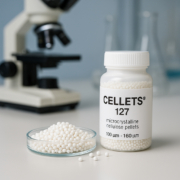
In this application, the formulation uses CELLETS® 127, which have a particle size between 100 µm and 160 µm. This size range optimizes the surface area for API layering while maintaining good flow and compressibility. Moreover, choosing CELLETS® 127 ensures a balance between mechanical strength and drug release kinetics. As a result, the final product delivers improved therapeutic outcomes.

Conclusion

The formulation in patent US20250127722A1 uses CELLETS® 127 (100 µm to 160 µm) as inert starter cores. This choice highlights the importance of selecting appropriate excipients for controlled and sustained drug release. Additionally, their unique properties support the stability, efficacy, and reproducibility of the final dosage form. Therefore, CELLETS® 127 are a valuable component in advanced drug delivery systems.

Document information

Document Type and Number:  (“SOLID ORAL DOSAGE FORM COMPRISING ANTIBODIES FOR SUSTAINED RELEASE IN THE LOWER GASTROINTESTINAL TRACT”)
Kind Code: A1

Inventors:

Tillotts Pharma AG

References

[1] Patent; SOLID ORAL DOSAGE FORM COMPRISING ANTIBODIES FOR SUSTAINED RELEASE IN THE LOWER GASTROINTESTINAL TRACT

Disclaimer: text and picture generation had been assisted by AI software ChatGPT version GPT-4o as of May 2024.

Over the past few weeks, we have explored the fascinating world of patents related to controlled and modified drug release through our eight-part blog series. This journey has taken us from the extended release of pyridostigmine and atomoxetine to the innovative formulations of gamma-hydroxybutyrate. 🚀💊

Each entry provided valuable insights into the advancements in Cellets technology and its impact on drug administration. We examined how highly lipophilic physiologically active substances and pulsatile release mechanisms are poised to revolutionize therapeutic approaches. 🌟

The insights gained from this series underscore the importance of these technologies in enhancing patient outcomes. Not only do they improve compliance, but they also enable targeted therapies tailored to the unique needs of each patient.

Here’s a recap of the blog posts featured in the series:

      1. Patent on Extended Release Compositions Comprising Pyridostigmine
        Posted on: Oct 24, 2024
      2. Patent on Extended-Release Compositions Comprising Atomoxetine
        Posted on: Oct 31, 2024
      3. Patent on Modified Release Gamma-Hydroxybutyrate Formulations
        Posted on: Nov 07, 2024
      4. Patent on Methods of Administering Gamma-Hydroxybutyrate
        Posted on: Nov 14, 2024
      5. Highly Lipophilic Physiologically Active Substances – Controlled Release
        Posted on: Nov 21, 2024
      6. Modified-Release Gamma-Hydroxybutyrate – a pellet technologies Formulation
        Posted on: Nov 28, 2024
      7. Patent on Pulsatile Release Caffeine Formulation – a pellet technologies Formulation
        Posted on: Dec 05, 2024
      8. Patent on Packaged Modified Release Gamma-Hydroxybutyrate
        Posted on: Dec 12, 2024
      9. Patent on gamma-hydroxybutyrate compositions having improved pharmacokinetics
        Posted on: Dec 19, 2024
      10. Patent on pharmaceutical compositions and methods for treating hyperhidrosis
        Posted on: Jan 02, 2025

We extend our heartfelt gratitude to everyone who has accompanied us on this enlightening journey. We look forward to sharing more insights and innovations in the field of drug development in the future. Stay tuned for our upcoming content and follow us on LinkedIn! 📅✨

US20240350420A1 methods for treating hyperhidrosis

The patent application US20240350420A1 focuses on pharmaceutical formulations and methods for treating conditions such as hyperhidrosis, which causes excessive sweating. It details the development of modified-release compositions using Pilocarpine HCl, a muscarinic agonist. These formulations aim to optimize drug delivery by using various release mechanisms, including immediate, delayed, or sustained release. Notably, the innovations include encapsulation techniques with polymer coatings. These coatings control dissolution rates under different conditions, ensuring stable and effective drug delivery over time.

Moreover, the application highlights formulations that combine Pilocarpine with other agents, such as Oxybutynin, to boost therapeutic efficacy. It also examines dissolution profiles under varying environmental conditions, emphasizing stability and performance consistency. Consequently, this approach seeks to improve patient outcomes by tailoring release profiles to specific medical needs. Additionally, it minimizes side effects through controlled drug exposure.

Why CELLETS® are important in these methods for treating hyperhidrosis

CELLETS® are microcrystalline cellulose spheres. They serve as an essential component in drug delivery systems designed for controlled and extended release of active pharmaceutical ingredients (API). These spheres act as inert core substrates, providing a uniform and stable base for layering active compounds and functional polymers. In addition, their consistent size and smooth surface allow precise and even distribution of coatings, which is critical for predictable drug release kinetics.

Cellets form the crucial base for formulations that rely on pellet technologies. These formulations improve the pharmacokinetic profile of APIs, especially highly lipophilic drugs, by controlling their release rate. By coating excipients and API, multi-layer systems on these cores enable gradual drug dissolution. This process reduces fluctuations in plasma drug levels and minimizes side effects. For example, in a Pilocarpine HCl formulation, coating CELLETS® with suitable excipients allows extended drug release. This maintains therapeutic concentrations longer and improves patient compliance by reducing dosing frequency.

Moreover, their flexibility allows use across various dosage forms, such as capsules, compressed tablets, or even gel-like forms. Additionally, the uniformity of these MCC starter beads ensures each pellet delivers a controlled dose of the active ingredient. Therefore, they are integral to achieving consistent therapeutic outcomes in complex drug delivery systems.

The function of Pilocarpine HCl

Pilocarpine HCl is a cholinergic agonist. It stimulates muscarinic receptors, increasing secretion production and smooth muscle contraction. Primarily, it treats glaucoma in ophthalmology by reducing intraocular pressure. This effect occurs through enhanced aqueous humor outflow. Additionally, it manages xerostomia (dry mouth) caused by conditions like Sjögren’s syndrome or radiation therapy for head and neck cancers. Its parasympathomimetic action stimulates saliva production and improves symptoms.

Document information

Document Type and Number: (“Pharmaceutical compositions and methods for treating hyperhidrosis”).

Kind Code: A1

Inventors:

Stephen Wayne Andrews, Samuel Bruce Balik, John Edward Jett, Robert Michael LEMING

Disclaimer

This text was partly generated by chatGPT engine version GPT‑4o, on Nov 21, 2024. Image was generated with Adobe Firefly.

US20240350437A1 Patent on gamma-hydroxybutyrate compositions

Patents US20240350437A1 and US20240350438A1 – Gamma-hydroxybutyrate compositions having improved pharmacokinetics in the fed state – cover pharmaceutical compositions and systems that deliver oral drugs in a controlled and consistent way. The invention tackles challenges in delayed or multi-stage drug release. This is especially important for active pharmaceutical ingredients (APIs) with complex absorption profiles or sensitivity to environmental factors, such as pH. Specifically, the formulation uses gamma-hydroxybutyrate (GHB) as the API. GHB belongs to sedatives and doctors approve it for treating narcolepsy with cataplexy in adults.

The patent focuses on multiparticulate formulations. Small spherical particles or granules carry APIs and polymers in coated layers. These coatings control drug release rates, enabling gradual, sustained, or targeted delivery in the gastrointestinal tract. As a result, the technology delivers precise therapeutic effects, reduces dosing frequency, and minimizes side effects caused by rapid drug release.

Moreover, the document highlights improvements in coating techniques and the use of stabilizing agents. These measures enhance the integrity and functionality of the drug delivery system. Additionally, the patent addresses scalability and manufacturing efficiency. Therefore, these formulations are suitable for large-scale production while maintaining consistent dosage and performance.

Potential applications include treatments for chronic conditions or drugs requiring precise dosing. The invention allows flexibility in formulating a range of APIs. This customization meets specific therapeutic needs. By enabling controlled drug release, the technology improves medication adherence and efficacy, benefiting both patients and healthcare providers.

What is the role of MCC pellets as drug carrier of gamma-hydroxybutyrate compositions?

This patent US20240350437A1 focuses on an innovative approach to creating multiparticulate pharmaceutical formulations for oral administration. It introduces CELLETS®, a key component of the drug delivery system. CELLETS® are small, uniform spherical particles made of inert microcrystalline cellulose (MCC). They act as carriers for active pharmaceutical ingredients (APIs). These particles provide an optimal surface for drug layering, which facilitates precise drug release profiles. In this patent, the following types of CELLETS® are used:

  • CELLETS® 90
  • CELLETS® 100
  • CELLETS® 127

The invention tackles challenges in achieving controlled drug release, especially for APIs requiring multi-step or delayed absorption. By coating these MCC carriers with specific polymers and APIs, the system delivers drugs at targeted points in the gastrointestinal tract. This approach is particularly beneficial for drugs with narrow therapeutic windows or sensitivity to pH levels.

Furthermore, the patent highlights improvements in coating techniques and formulation stability. These advancements ensure high reproducibility and efficient manufacturing. Consequently, the multiparticulate system offers dosage flexibility, fewer side effects, and improved patient adherence compared to conventional tablets or capsules.

Additionally, the invention supports the development of treatments for chronic conditions, where consistent and predictable drug release is critical. Applying CELLETS® in this context demonstrates their versatility and potential to enhance both the efficacy and safety of oral drug delivery systems.

Document information

Document Type and Numbers:

  • (“Gamma-hydroxybutyrate compositions having improved pharmacokinetics in the fed state”).
  • US20240350438A1 (“Gamma-hydroxybutyrate compositions having improved pharmacokinetics in the fed state”).
Kind Code: A1

Inventors:

Julien Grassot, Cendrine Grangeon, Jordan Dubow

Disclaimer

This text was partly generated by chatGPT engine version GPT‑4o, on Nov 21, 2024. Image was generated with Adobe Firefly.

nutritional table for CELLETS®

What is a nutritional table for CELLETS® about? CELLETS® consist of 100% microcrystalline cellulose (MCC) and were developed for advanced oral dosage forms, such as MUPS, capsules, sachets, and stick pack units. Some pharmaceutical applications now overlap with food products and vice versa. The nutraceutical market is growing, and we frequently receive questions about the energy and nutritional content of MCC. Let’s clarify this.

MCC is a modified form of cellulose commonly used as a filler and stabilizer in the food and pharmaceutical industries. It consists of plant fibers and acts mainly as a dietary fiber. It contains almost no usable nutrients, such as vitamins, minerals, proteins, or fats. Since the human body cannot digest MCC, it provides no calories.

Because the body does not metabolize microcrystalline cellulose, it does not supply any macro- or micronutrients. Therefore, a nutritional table for 100 g of MCC would look like this:

Substance quantity per 100 g
Energy 0 kcal
Protein 0 g
Fat 0 g
Carbohydrates 0 g
Dietary fiber 100 g
Sugar 0 g
Salt 0 g
Vitamins & minerals 0 mg

Microcrystalline cellulose is a pure dietary fiber with no nutritional value. The human digestive tract does not break it down or absorb it [1]. As a result, it provides no calories and no nutrients to the body. The same nutritional profile applies to CELLETS®, although it rarely matters in pharmaceutical formulations.

References

[1] N. Prabsangob, NFS Journal, 31 (2023) 39-49. doi:10.1016/j.nfs.2023.03.002

In vitro validation of colon delivery of vitamin B2 through a food grade multi-unit particle system

Colon Delivery of Vitamin B2: A Novel Food-Grade Approach

Innovative Food-Grade Delivery Systems

This article, “In vitro validation of colon delivery of vitamin B2 through a food grade multi-unit particle system,” [1] presents a novel method for delivering active ingredients to the colon. Specifically, it focuses on riboflavin in a food-grade and environmentally friendly form. The system uses a double-layer coated multi-unit particle system (MUPS). The MUPS features a cellulose core, an alginate inner layer, and a shellac outer layer. This design protects the particles as they pass through the upper digestive tract.

Moreover, tests show that the system releases about 90% of riboflavin directly in the colon. This release promotes gut health by increasing beneficial short-chain fatty acids. In addition, this sustainable method responds to the growing demand for effective colon-targeted health products. It also complies with EU regulations that restrict microplastic use in consumable goods.

The MUPS containing riboflavin, branded as Humiome® B2 by DSM-Firmenich, uses cellulose pellets called CELLETS® as its core. During manufacturing, producers apply riboflavin and pectin as a binder onto the Cellets using a fluid bed layering method. Next, they coat the MUPS with layers of sodium alginate and harden them with calcium chloride. Finally, they add a shellac outer layer. This structure controls the release of riboflavin in the colon and provides an efficient, food-grade delivery system for active nutrients.

Furthermore, the study highlights the effectiveness of the shellac-alginate MUPS for targeted riboflavin delivery to the colon. Food-grade materials support environmental standards, making this approach sustainable. In vitro tests confirm that approximately 90% of riboflavin reaches the colonic region. The results also indicate potential health benefits, including microbiome modulation and increased short-chain fatty acid production. Looking ahead, clinical studies will examine how this delivery system affects the microbiome and overall host health. These findings support its use in functional foods, dietary supplements, and medical nutrition.

Abstract

Colon-targeted delivery of active ingredients is common in pharmaceutical products. However, such delivery systems are rare in functional foods, beverages, dietary supplements, and medical nutrition. Nevertheless, emerging evidence shows that nutrients delivered to the colon can benefit gut microbiota and overall host health. This trend increases the demand for sustainable, food-grade materials that are approved for regulatory use.

In this paper, we describe a double-layer coated multi-unit particle system (MUPS) with a diameter of approximately 730 microns. It consists of food-grade materials: shellac as the outer layer, alginate as the inner layer, cellulose as the core, and riboflavin as the active ingredient. We tested the MUPS for colonic delivery using three well-established in vitro digestion and fermentation models: USP Apparatus 3, TIM-1, and TIM-2. All models confirmed that the MUPS remained intact through simulated upper gastrointestinal conditions. Furthermore, approximately 90% of riboflavin was released under simulated ileal-colonic conditions.

The TIM-2 model also revealed effects on microbiome composition, showing increased production of short-chain fatty acids, including acetate and butyrate. These results provide a solid foundation for validating this vitamin-loaded food-grade MUPS in future human clinical trials. Additionally, following the European Commission’s recent decision to restrict intentionally added microplastics in products, the materials used in this formulation offer an environmentally friendly alternative to traditional methyl acrylate coatings.

Reference

[1] Steinert, R.E., Sybesma, W., Duss, R., Rehman, A., Watson, M., van den Ende, T.C., & Funda, E. (2024). In vitro validation of colon delivery of vitamin B2 through a food grade multi-unit particle system. Beneficial Microbes16(2), 253-269. doi:10.1163/18762891-bja00045