

Control Strategy for Wurster Coating and Its Importance in Modern Drug Formulation
Control Strategy for Wurster Coating plays a central role in the production of high-quality pharmaceutical pellets for extended-release drug products. In multiparticulate formulations, coating efficiency and coating accuracy determine the final drug release profile. Therefore, manufacturers must control coating thickness with high precision. Even small differences in pellet size can affect coating uniformity and alter dissolution behavior. As a result, coating consistency directly influences product quality, therapeutic performance, and patient safety. Modern pharmaceutical manufacturing increasingly relies on Quality by Design (QbD) principles and Process Analytical Technology (PAT). Consequently, advanced control strategies help manufacturers achieve reliable and reproducible coating results while reducing process variability.
Understanding the Wurster Process and Bottom-Spray Fluid-Bed Technology
The Wurster process is a specialized bottom-spray fluid-bed coating technology used for pellets, beads, and granules. During the process, conditioned air fluidizes the particles inside the coating chamber. At the same time, a spray nozzle applies the coating suspension from below. The characteristic Wurster column creates a controlled particle circulation pattern. As a result, each pellet repeatedly passes through the spray zone and receives a uniform coating layer. This mechanism enables highly accurate film formation on large numbers of particles. Therefore, the technology has become the preferred solution for extended-release, delayed-release, and taste-masked formulations. Compared with many alternative coating methods, the Wurster process delivers superior coating uniformity and process reproducibility.

How a Modern Control Strategy for Wurster Coating Improves Process Performance
Traditional coating processes often rely on spraying a predefined amount of coating material. However, pellet size variations can influence the final coating thickness. Consequently, manufacturers may achieve different coating results even when they use the same coating quantity. A modern Control Strategy for Wurster Coating addresses this challenge through real-time process monitoring. Instead of focusing only on coating mass, the strategy measures particle growth during the coating process. Manufacturers can then continue spraying until the target coating thickness is reached. As a result, the process directly controls a critical quality attribute rather than an indirect process parameter. Furthermore, this approach compensates for substrate variability and improves batch-to-batch consistency. It also strengthens process robustness and supports regulatory expectations for advanced pharmaceutical manufacturing.
The Function of CELLETS® 500 in Wurster Coating Studies
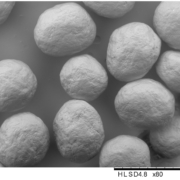
CELLETS® 500 microcrystalline cellulose pellets serve as highly spherical starter cores for coating development and process evaluation. In the referenced study, researchers used CELLETS® 500 as a model substrate to investigate coating performance. This approach eliminated the influence of active pharmaceutical ingredients and allowed a focused assessment of coating behavior. In addition, the pellets provided a reproducible and well-characterized surface for coating application. Researchers compared different pellet size populations to examine the impact of substrate dimensions on coating thickness. Consequently, CELLETS® 500 helped validate the effectiveness of a PAT-based Control Strategy for Wurster Coating and demonstrated the importance of controlling particle growth during processing.
Benefits for Pharmaceutical Products and Patients
A modern Control Strategy for Wurster Coating offers significant advantages for both manufacturers and patients. First, it improves coating uniformity and dissolution profile consistency. Second, it reduces batch variability and minimizes the risk of product deviations. Moreover, precise coating control supports predictable drug release throughout the intended dosing period. This consistency helps ensure reliable therapeutic outcomes. At the manufacturing level, companies can reduce waste and improve production efficiency. In addition, advanced process control supports continuous improvement initiatives and data-driven decision-making. Ultimately, patients benefit from consistent drug performance, improved treatment reliability, and enhanced product quality.
Conclusion and Outlook
Control Strategy for Wurster Coating has become a key element of modern pharmaceutical pellet manufacturing. The combination of bottom-spray fluid-bed technology and real-time process monitoring enables highly accurate coating control. Furthermore, PAT-based approaches allow manufacturers to target coating thickness directly and compensate for pellet size variability. This capability improves product quality and strengthens process reliability. Looking ahead, digitalization, automation, and advanced analytics will further enhance Wurster coating operations. As pharmaceutical manufacturing continues to evolve, modern Control Strategy for Wurster Coating concepts will support more efficient production processes and more consistent extended-release drug products for patients worldwide.
References
[1] Edward Godek, Chris O’Callaghan, Ian Jones, Piyush Patel, Pharmaceutical Technology, 08 Feb 2018, 43(8)
 adobe firefly

 ingredientpharm