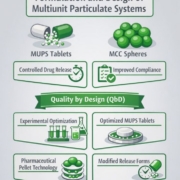

Introduction to delayed release oral pharmaceutical compositions
Delayed release oral pharmaceutical compositions enable drug delivery at a defined time after oral administration. Unlike immediate release dosage forms, these systems control when the active pharmaceutical ingredient becomes available for absorption. As a result, they protect acid-sensitive drugs and allow targeted delivery to specific gastrointestinal regions. Moreover, delayed release forms can reduce gastric irritation and peak-related side effects. Therefore, they often improve patient tolerance and adherence. From a consumer compliance perspective, these formulations support simplified dosing schedules and more predictable therapeutic effects. Consequently, they play a key role in chronic therapies that demand long-term adherence and consistent drug exposure.
Summary of US12521351B1: delayed release oral pharmaceutical compositions
The patent US12521351B1 describes delayed release oral pharmaceutical compositions designed primarily for treating inflammatory bowel disease. Specifically, the invention focuses on multiparticulate systems containing mesalamine and hyaluronan within an oral capsule. These particles use an inert core that serves as a substrate for successive functional layers. First, a mesalamine-containing drug layer is applied. Next, a hyaluronan layer follows, which contributes both therapeutic and release-modifying functions. Finally, an outer coating controls the onset of drug release in the gastrointestinal tract.
Importantly, the patent emphasizes controlled release timing rather than simple gastro-resistance. The coating system delays drug exposure until the dosage form reaches intestinal regions associated with inflammation. As a result, the formulation minimizes drug loss in the stomach and improves local efficacy. Furthermore, the multiparticulate design allows uniform drug distribution throughout the intestine, which reduces variability in drug exposure.
In addition, the patent outlines manufacturing methods such as fluid-bed coating and encapsulation. These processes ensure reproducible layer thickness and particle size distribution. Consequently, the formulations achieve consistent dissolution behavior across batches. The patent also defines preferred ranges for core size, drug load, and coating thickness. Therefore, it provides a framework for scalable industrial production.
Overall, US12521351B1 demonstrates how delayed release oral pharmaceutical compositions can combine therapeutic targeting with patient-friendly oral delivery. By integrating functional excipients and structured layering, the invention advances existing mesalamine therapies toward improved clinical performance.
Technical considerations and formulation context
Delayed release oral drug forms differ fundamentally from uncontrolled release systems. While immediate release products dissolve rapidly after ingestion, delayed release formulations intentionally suppress early dissolution. Consequently, they reduce exposure in the stomach and shift drug availability to later intestinal segments. This distinction becomes critical for drugs that cause gastric irritation or degrade in acidic environments.
Dissolution profiles represent a central design parameter. Ideally, delayed release systems show minimal drug release under acidic conditions. Then, they exhibit a rapid and reproducible release once intestinal pH thresholds are reached. Therefore, formulators must carefully balance coating composition, thickness, and particle size. In addition, variability in gastrointestinal transit times must be considered during development.
However, delayed release formulations face several obstacles. Uniform coating of multiparticulates remains technically demanding. Moreover, small variations in process parameters can significantly affect release kinetics. Stability during storage also presents challenges, especially for moisture-sensitive coatings. As a result, robust process control and extensive dissolution testing are essential.
Within this patent context, CELLETS® 500 play a supportive yet important role. These microcrystalline cellulose starter cores provide a smooth, inert, and size-defined substrate. Consequently, they enable uniform drug layering and coating application. Their narrow particle size distribution improves batch reproducibility and dissolution consistency. Therefore, CELLETS® 500 contribute directly to the functional reliability of delayed release oral pharmaceutical compositions.

Conclusion and outlook
Delayed release oral pharmaceutical compositions continue to shape modern oral drug delivery. They align pharmacokinetics with disease physiology and patient needs. The US12521351B1 patent illustrates how structured multiparticulate systems can enhance intestinal targeting and therapeutic consistency. Looking ahead, advances in coating polymers, starter core technologies, and process analytics will further refine these formulations. Consequently, delayed release oral pharmaceutical compositions will remain central to improving efficacy, safety, and long-term patient compliance in oral therapies.
Patent Summary
- Name of Patent: Delayed release oral pharmaceutical composition
- Patent Number: US12521351B1
- Year of Patent: 2026
- Patent Holders: Tsung-Chung Wu, Yu-Chih Chen
- Affiliation: Aihol Corp