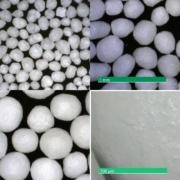
CELLETS® 200

(200-355 µm)

CELLETS® 200 is a subtype of pellets made of microcrystalline cellulose. The size ranges from 200 µm to 355 µm. Find more product information and technical specifications.

Comparison of Mini-Tablets and Pellets as Multiparticulate Drug Delivery Systems for Controlled Drug Release

Multiparticulate Drug Delivery Systems: Advantages and Applications

Multiparticulate drug delivery systems offer clear advantages for controlled drug release. Manufacturers can place mini-tablets in hard capsules or administer them using special dosing units. Similarly, they can give pellets in hard capsules or compress them into tablets. Together, these forms provide flexible and precise drug delivery with polymer coatings.

In this study [1], researchers prepared four solid drug formulations and analyzed their drug release. First, they coated inert pellets with the model drug sodium benzoate. Next, they added a layer of insoluble ethyl cellulose. Afterward, they compressed the coated pellets into mini-tablets and normal tablets. Meanwhile, they directly compressed another type of mini-tablet from a sodium benzoate mixture and coated it with ethyl cellulose. They applied the coating using fluidized bed technology.

The coated pellets showed a lag time and retarded release. Afterward, the release followed first-order kinetics. In contrast, mini-tablets and normal tablets made from coated pellets released sodium benzoate without a lag time. This occurred because tableting partially disrupted the ethyl cellulose layer. Moreover, directly compressed mini-tablets released sodium benzoate more slowly as the coating thickness increased.

Therefore, the different formulations of coated pellets, mini-tablets, and normal tablets provide a wide range of drug release profiles. Consequently, they can meet various biopharmaceutical and pharmacological requirements.

Ethyl Cellulose-coated Mini-Tablets as Multiparticulate Drug Delivery Systems

Multiparticulate drug delivery systems can be made by compressing drug- and polymer-coated pellets into mini-tablets or normal tablets. Moreover, pellets and mini-tablets compressed into tablets spread widely in the small intestine. This improves drug absorption and increases bioavailability compared to normal tablets. In both tablet types, the sodium benzoate release slows down depending on the thickness and properties of the ethylcellulose coating.

Additionally, ethylcellulose-coated mini-tablets made by directly compressing sodium benzoate with excipients provide an alternative multiparticulate drug delivery method. These mini-tablets release the drug slowly, and the rate depends on the coating thickness. Consequently, they are suitable for prolonged-release applications. Furthermore, their release variation is higher than that of pellets or normal multiple-unit tablets made from pellets.

Finally, sodium benzoate layering on pellets using a fluidized bed, followed by tableting, works for both mini-tablets and normal tablets. Therefore, manufacturers can adjust the final pharmaceutical form to create diverse release profiles, which can support marketing or patenting strategies.

Read more

Read more about how CELLETS 200 are employed in mini-tablets and pellets as multiparticulate drug delivery systems by F. Priese et al.

Authors

F. Priese, D. Wiegel, C. Funaro, G. Mondelli, and B. Wolf, Coatings 202313(11), 1891; doi:10.3390/coatings13111891

Abstract

Multiparticulates made of pellets are ideal dosage forms to be used in pediatrics. Having the suitability of paediatric consumers in mind, formulations of small-sized pellets offer a valuable base for increased compliance and improved age-appropriately dosage form. Due to their round shape of pellets, smooth surface area and narrow particle size distribution they can easily be functionally coated [1] to achieve e. g. a taste masking, enteric protection or the controlled release of the active pharmaceutical ingredient (API) in defined parts of the gastro-intestinal (GI) tract. The release profile then often depends on the coating weight gain (thickness) and composition of the functional coating.

Coating weight gain, manufacture and analysis of pellets

A well soluble drug was used as model API.  In a first approach, pellets were produced applying the ProCell technology, a direct pelletization process allowing the production of highly drug loaded matrix pellets (here 95%) in a spouted bed. Two types of pellets were produced: A) with a poly amino saccharide-based binder, followed by a cellulose based seal coating and B) with a polyacrylic acid-based binder, followed by a pH-depending coating. In a second approach the API was layered onto inert starter cores (MCC, CELLETS® 200) by the aid of a cellulose based binder and antitacking agent applying the Wurster technology targeting a drug load of 50 %, followed by a pH-depending coating (C). All three pellets-based populations were functionally coated by a pH-independent sustained release polymer. Samples were taken at pre-defined coating levels for dissolution testing. For API layering and coating a GPCG 1.1 with a 6” Wurster insert was used. Direct pelletization was performed in a ProCell 5. Particle size distribution (PSD) analysis was performed by Eyecon2TM. The particle size is given as numeric or volumetric distribution (e.g. Dn50 or Dv50). The specific surface area is calculated by measuring the true density by gas pycnometry and the Sauter diameter by Laser diffraction. Dissolution was measured in the acid stage (0.1 M HCl), in buffer pH 5.5 and in buffer pH 7.2 over 300 min. The API should not be released in the first 180 min. Between 210 min and 240 min an increased drug release is expected. The dissolution rates at 225 min were compared for the coating levels at 10, 15 and 20 %.

Results

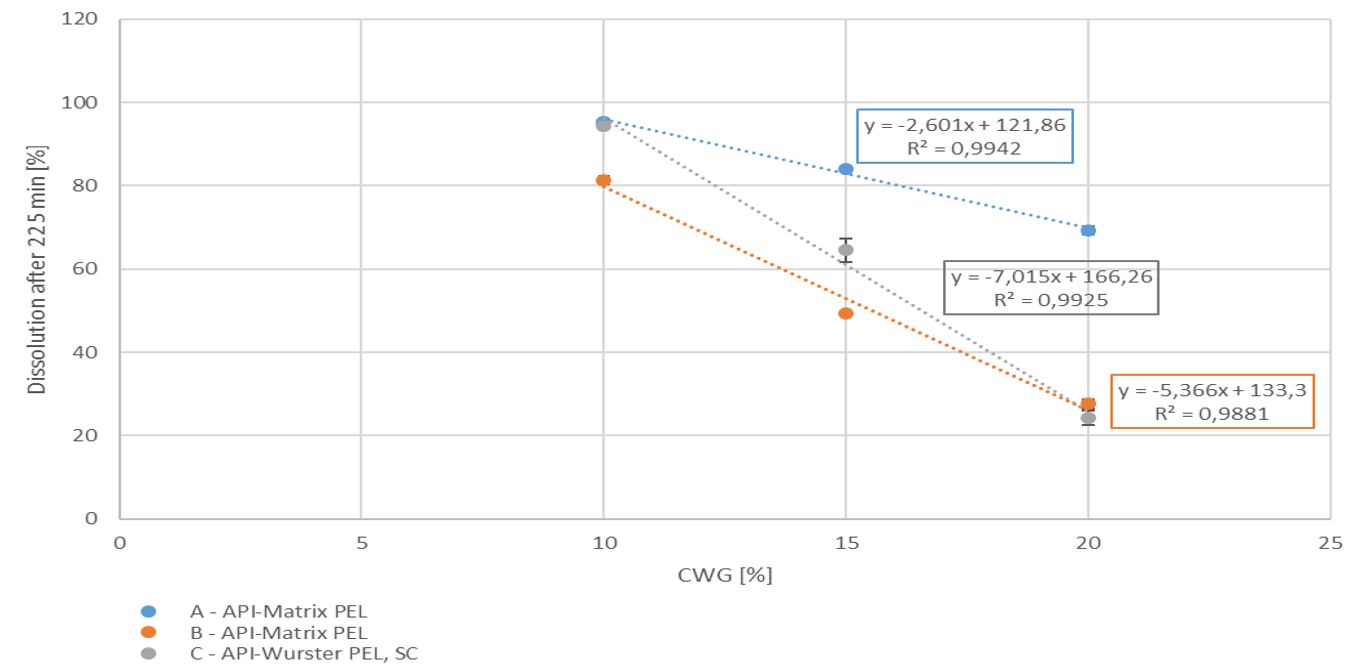
With increasing coating weight gains decreasing dissolution rates at 225 min were measured for the sustained release coating with a good linearity. Matrix PEL (A) show higher dissolution rates comparing the same coating levels than Matrix PEL (B), Wurster pellets showed the strongest decrease with increasing CWG, table 1, figure 1. This correlation was not observed for pH-depending coating (data not shown).

Dv 50 [µm] Dn 50 [µm] PSD mean [µm] Specific surface area [m2/g]
A Matrix PEL 496 475 481 0,00980
B Matrix PEL 461 427 425 0,01210
C Wurster PEL 414 396 401 0,01100

Table 1. PSD data and specific surface area of starter beads before functional coating.

coating weight gain

Figure 1. Dissolution at 225 min vs. coating weight gain (CWG)

Summary

Drug loaded pellets were prepared either as matrix pellets applying the ProCell technology, or by layering of starter cores applying the Wurster technology. Both populations were coated with different coating levels of a sustained release functional coating, resulting in decreasing dissolution rates with increasing coating weight gain. Due to the good correlation between coating weight gain and dissolution profile a prediction of the dissolution rate might be possible for pre-defined coating levels. These findings are a crucial step towards novel paediatric formulations with improved dissolution profiles and dosage safety.

References

[1] Palugan, L.; Cerea, M.; Zema, L.; Gazzaniga, A.; Maroni, A. Coated pellets for oral colon delivery, Journal of Drug Delivery Science and Technology 25, 1 – 15 (2015).

This study was presented on 14th annual EuPFI conference, Rome, Italy.

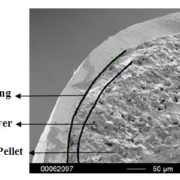
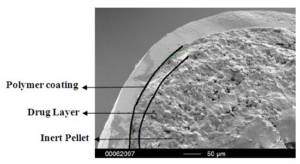
Figure 3: SEM picture of cross section of a Taste masked pellets coated with 25 mg Eudragit EPO.

Abstract

This case study on Atomoxetine HCl pellets is a short abstract of the publication by Y.D. Priya et al. [1].

Atomoxetine is a medication used to treat attention deficit hyperactivity disorder (ADHD) [2]. The API is marketed under the trade names Atomoxetine, Atomoxe, Agakalin, and Strattera (initially launched) [3]. Atomoxetine is an extremely bitter API. As being initially launched for children as capsules or tablets, the paediatric compliance by improved taste-masking and the simplified administration to paediatrics are in focus of this study.

A multi-unit particulate pellet coating (MUPS) was selected as oral dosage form. The fluidized bed technology (with Wurster column) was employed for coating and layering processes. This is a well-known technology, which Is for instance offered by Glatt. Starter cores were coated with the API, followed by layering with a polymeric coating for which realized the taste-masking.

Atomoxetine layering

Starter cores are made of Microcrystalline Cellulose (MCC) in sizes comparable to CELLETS® 200, while a fair efficiency of drug layering was observed with the combination of HPMC (Hydroxypropyl methyl cellulose) and HPC (Hydroxypropyl cellulose) as binders. The composition of API layering is presented in Table 1. The drug dispersion was sprayed onto the MCC pellets with an inlet temperature between 50 °C and 55 °C and a fluidized bed temperature between 35 °C and 40 °C.

API layering material Composition
Starter core
  MCC pellets 58.00
API layering
  Atomoxetine HCl 25.00
  Hydroxypropyl methylcellulose 3.50
  Hydroxypropyl Cellulose 3.50
  Low-Substituted Hydroxypropyl Cellulose 5.00
  Talc 5.00
  Purified Water Qs
Total weight (mg) 100.00

Table 1: Formulation of API layered pellets.

Taste-masking coating

The polymeric taste-masking layer is made of a methacrylate co-polymer (Eudragit EPO) providing an excellent coating with taste masking properties for fine particles and tablets. The composition of the taste-masking suspension is shown in Table 2. The inlet temperature is between 40 °C and 45 °C, and fluidized bed temperature is between 25 °C and 30 °C.

Polymeric coating material Composition
Drug Layered pellets 100.00
Eudragit EPO 25.00
Sodium Lauryl Sulfate 2.500
Stearic acid 3.750
Talc 6.25
FD&C Yellow No. 6 0.50
FD&C Red No. 3 0.05
Purified Water Qs
Total weight (mg) 138.050

Table 2: Formulation of polymeric coating suspension.

The efficiency of taste-masking was benchmarked by a bitterness rating on human volunteers. Figure 1 shows, that the taste sensitivity identifies a bitterness at 6 µg/ml API concentration and an extreme bitterness at 7 µg/ml API and higher concentration. Thus, the threshold bitterness of Atomoxetine HCl is 6 µg/ml.

Atomoxetine: bitternessFigure 1: Concentration of drug solution (µg/ ml). Bitter intensity ratings from no bitterness (green), bitterness (blue), extremely bitter (red).

Figure 1: Concentration of drug solution (µg/ ml). Bitter intensity ratings from no bitterness (green), bitterness (blue), extremely bitter (red).

All the volunteers felt bitter taste when the drug layered pellets were coated with 6.25 mg of Eudragit EPO. Whereas in the pellets coated with 12.5 mg and 18.75 mg of Eudragit EPO, bitter taste was masked up to 15 seconds after keeping the tablet in the mouth, and later all the human volunteers felt bitter taste. When the concentration of Eudragit EPO was increased to 25 mg, the bitter taste of Atomoxetine HCl was completely taste-masked and no volunteer was felt bitter taste.

Figure 2: In-Vivo Taste evaluation in healthy human volunteers.

Figure 2: In-Vivo Taste evaluation in healthy human volunteers.

Figure 3 depicts the entire particle size of a taste-masked MCC pellet coated with the Atomoxetine drug layer and 25 mg of Eudragit EPO. The average particle size of the taste-masked pellets is between 180 µm and 250 µm, assuming, that no gritty feeling of particles in patient’s mouth will appear. It should be said, that a micronization of Atomoxetine HCl was deemed to be necessary for the drug layering process. Micronization minimized the surface roughness of the API layered pellet so that an efficient taste-masking coating can be applied.

Figure 3: SEM picture of cross section of a Taste masked pellets coated with 25 mg Eudragit EPO.

Figure 3: SEM picture of cross section of a Taste masked pellets coated with 25 mg Eudragit EPO.

Summary

MCC pellets in the size of about 200 µm were layered with Atomoxetine. HPMC and HPC were used as binders, realizing a precise surface definition for a subsequent taste-masking coating. The taste-masking was most efficient at a polymeric concentration of 25 mg. Keeping the size of the coated pellets below 300 µm avoids a gritty feeling and thus increase the patient’s compliance.

This study by Priya et al. indicated that the fluidized bed process produced the most appropriate taste masked pellets of Atomoxetine HCl for oral disintegrating tablets.

References

[1] Y.D. Priya et al., Int J Pharm Pharm Sci, (6) 7, (2014) 110-115

[2] “Atomoxetine Hydrochloride Monograph for Professionals”. Drugs.com. American Society of Health-System Pharmacists. Archived from the original on 4 April 2019. Retrieved 22 March 2019.

[3] ROTE LISTE 2017, Verlag Rote Liste Service GmbH, Frankfurt am Main, ISBN 978-3-946057-10-9, (2017) 162.

Abstract

This application note is based on content from Pohlen et al. [1]. Simvastatin (CAS number 79902-63-9) is a cholesterol-lowering agent with a low bioavailability of 5% [2,3]. This API is formulated as a lipid based drug delivery system for oral uptake. Two technologies, which are spray drying and fluidized bed layering technologies were compared with respect to the process and product characteristics of otherwise similar Simvastatin loaded dry emulsion systems. Investigated parameters are the process yield, encapsulation efficiency, relative product stability, particle morphology, drug content, and the relative increase in bioavailability.

Enhancing bioavailability

Some of the recently discovered new chemical entities (NCE) show a low solubility and high permeability (BCS class II), or even low permeability in the case of very high lipophilicity (BCS class IV).

Material Company
Simvastatin Krka, SI
1-oleoyl-rac-glycerol,

Magnesium stearate,

Tween® 20

Merck, D
Pharmacoat 603 ShinEtsu, JAP
Miglyol® 812 Sasol, D
Pearlitol SD 200 Roquette, F
CELLETS® 200 HARKE Pharma, D
Avicel® PH 101,

Lactose mesh 200

Lek, d.d., SI

Table 1: Used Material and origin.

This means a major challenge for formulation development in terms of assuring drug bioavailability [4,5]. A strategy for increasing the solubility are lipid based drug delivery systems (LBDDS). As main advantage, they are likely to solubilize the API and make it available for the absorption into the bloodstream [6]. Additionally, converting the liquid or semi-solid LBDDS into solid dosage forms eliminates undesired characteristics such as a lack of chemical stability and product portability, susceptibility for drug recrystallization and costly manufacturing [7]. Furthermore, solid dosage form solutions allow benefits, such as easy powder processing, flow and compression behavior, controlled drug release, improved patient safety. Among others, dry emulsions are a type of solidified LBDDS and allow carrying and releasing the encapsulated lipophilic API. In the following, some solidification process technologies are introduced. The required parameter for Wurster fluidized bed and spray drying are displayed in Table 2 and Table 3, respectively.

Opposite to the spray drying process, the fluidized bed process employs CELLETS® 200 as starter beads for layering. Several formulations are composed by Pohlen et al., the materials are listed in Table 1.

Parameter Value
Setup Glatt Fluidized bed Dryer Model GPCG-1 (Glatt, D)
Two-fluid

Schlick nozzle

0.8 mm
cap opening diameter 2.50 mm
Inlet airflow rate 130 m3/h
Inlet air temperature 47 °C to 56 °C
outlet air / product temperature 34 °C
spraying rate 5 g/min to 9 g/min
atomizing air pressure 2 bar
Gap to Wurster insert bottom edge 17.5 mm
Drying time 180 s @ 42 °C
Starter pellets 200 g
starting

emulsion

1000 g

Table 2: Parameters and values for Fluidized bed layering.

Parameter Value
Setup Mini Spray Dryer B-290 (Büchi, CH)
Two-fluid

nozzle

1.4 mm
cap opening diameter 2.20 mm
Inlet airflow rate 28 m3/h
Inlet air temperature 145°C to 175 °C
outlet air / product temperature 75 °C to 80 °C
spraying rate 6 g/min
Drying time 180 s @ 80 °C
Starter pellets 200 g
starting

emulsion

1000 g

Table 3: Parameters and values for spray drying.

Process yield

Spray drying results on average in lower process yield than the fluidized bed results. The process yield for spray drying experiments is in average value of 71.5 %, and of 83.3 % for fluidized bed layering experiments. It is assumed, that in spray drying process adhesion of the smallest particles to the cyclone walls or outtake through the air stream occur.

Drug content

An averaged API content at 9.34 mg/g in fluidized bed experiments, and at 22.2 mg/g for spray dried dry emulsions is reached. Although spray drying offers a much higher drug content and more flexible formulations, the content variation between replicates is increased. The use a swirl air generator in the fluidized bed equipment increases process stability and allows an even larger amount of oil to be incorporated. It is possible increase the maximum amount of API to 22 mg/g onto the starter pellets. Anyhow, the fluidized bed technology suffers from sticky effects of oil phases which is not a big deal in spray drying processes.

Encapsulation efficiency

A low encapsulation efficiency shall be avoided as it causes drug losses during processing and increased production costs. The encapsulation efficiency in fluidized bed experiments is at 80.0 %, compared to spray drying experiments being at 68.4 %. A main issue of the spray drying technology might be higher process temperature leading to a higher risk of API degradation. Spray drying also suffers from a larger surface-to-volume area which might induce an increased risk of oxidation during the drying process.

Morphology and particle size

The main advantage of fluidized bed technology is the use of starter pellets, which are perfectly spherical starter beads. Following, API coating results in highly spherical coated particles with a high level of monodispersity and an average particle size around 336 µm (D50 value). Not mentionable, that spray drying technology results in smaller average particle sizes at 56 µm (D50 value), but the morphology shows a coarse, rough and undefined surface. In turn, dry emulsion layered pellets have better flow properties [8].

Redispersibility and oil droplet size

All re-dispersed oil droplets have a size of a few micrometers between less than 1 µm and less than 7 µm. Fluidized bed layering technology generally leads to larger droplets. Considering also the probable bimodal nature of the droplet size distribution, fluidized bed layering provides a narrower size distribution and thus better results. In turn, the fluidized bed technology might provide slightly better bioavailability.

Product stability

Stability is measured by means of the one-month relative drug content stability. The particles produced in the fluidized bed technology show a better one-month relative drug content stability than particles produced by spray drying. This might be caused by the higher monodispersity, larger particles and smoother surfaces. All properties minimize the risk of API gradation, treatment failure, or toxicity.

Dissolution

Both technologies show a superior dissolution behavior compared to the dissolution of pure crystalline API (less than 3 %) or a generic API tablet (less than 10 %). It has to be stated, that both technologies allow dissolution rates of more than 80 % within the first 30 minutes, wherein the Spray drying products show a slightly better and faster dissolution rate.

Bioavailability

Bioavailability of formulations from fluidized bed layered dry emulsion pellets provide the highest increase in relative bioavailability within the examined formulations, confirming that fluidized bed technology is superior to spray drying technology for potent or low dose APIs.

Summary

Fluidized bed layering and spray drying technology have been selected for analyzing the properties of dry emulsions. Simvastatin was selected as API, encapsulated in the dry emulsion.

Fluidized bed layering technology uses starter cores, such as CELLETS® as a dry emulsion carrier system, while spray drying does not.

The main advantage of the fluidized bed technology is the higher process yield, the better encapsulation efficiency and redispersibility, the defined morphology of the product causing better process handling and product stability.

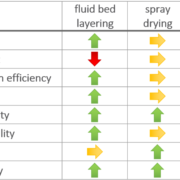
Spray drying technology allows a higher drug content with better chances of formulation variation, and an even faster and more complete dissolution (Figure 1).
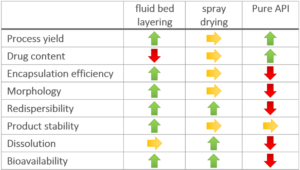
Advantages of technological methods compared to a pure API usage.

Figure 1: Advantages of technological methods compared to a pure API usage.

References

[1] M. Pohlen, J. Aguiar Zdovc, J. Trontelj, J. Mravljak, M. G. Matjaž, I. Grabnar, T. Snoj and R. Dreu, Eur J Pharm Biopharm (2021), S0939-6411(21)00353-2, doi:10.1016/j.ejpb.2021.12.004

[2] S. Geboers, J. Stappaerts, J. Tack, P. Annaert and P. Augustijns, Int. J. Pharm. 510 (2016) 296-303, doi:10.1016/j.ijpharm.2016.06.048

[3] T. Taupitz, J.B. Dressman and S. Klein, Eur J Pharm Biopharm. 84 (2013) 208-218, doi:10.1016/j.ejpb.2012.11.027.

[4] T. Das, C.H. Mehta and U.Y. Nayak, Drug Discov. Today 25(7) (2020) 1206-1212,  doi:10.1016/j.drudis.2020.04.016

[5] G.L. Amidon, H. Lennernäs, V.P. Shah and J.R. Crison, Pharm. Res. 12 (1995) 413-420,  doi:10.1023/a:1016212804288.

[6] H. Mu, R. Holm and A. Müllertz, Int. J. Pharm. 453 (2013) 215-224, doi:10.1016/j.ijpharm.2013.03.054.

[7] P. Joyce, T.J. Dening, T.R. Meola, H.B. Schultz, R. Holm, N. Thomas and C.A. Prestidge, Adv. Drug Deliv. (2018), doi:10.1016/j.addr.2018.11.006.

[8] X. Fu, D. Huck, L. Makein, B. Armstrong, U. Willen and T. Freeman, Particuology. 10 (2012) 203-208, doi:10.1016/j.partic.2011.11.003

Abstract

Cellets are inert starter cores made of microcrystalline cellulose (MCC). They play an important role in new formulations of solid dosage forms. As a carrier system for actives, the chemical inertness and surface smoothness are crucial parameters. Additionally, high level of robustness and sphericity simplify formulations and technical processes, such as fluidized bed technologies for coating and layering. In a joint study between the University of Hertfordshire and Freeman Technology (a Micromeritics company), the effect of pellets’ size on the behavior in a Wurster process is explained. Wurster fluid bed coating of Cellets with particle size larger than 400 µm is unproblematic. However, decreasing the particle size begins to complicate the coating process. So, powder rheology was used to compare Cellets with different particle sizes in terms of their effect on the powder flow in the Wurster fluid bed coater. For deeper knowledge, we strongly recommend reading investigations by V. Mohylyuk et al. [1]

Materials

Cellets® 90, 100, 200 and 350 (D50-size from 94 µm to 424 μm, Ingredientpharm, Switzerland). MCC powder Avicel® PH-102 (supplied by IMCD UK Ltd., UK) is included in the investigations, as it is widely used in industry and can be used by readers for comparison with other studies.

Wurster fluid-bed

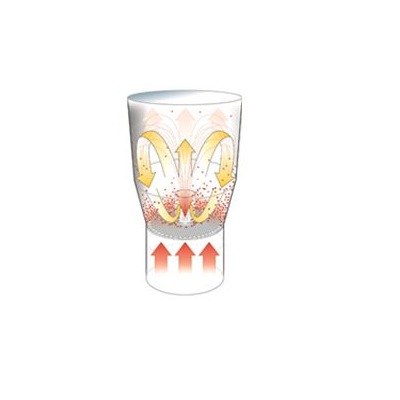
Wurster process is a bottom-spray method, employed as a coating technology, for layering powder-like particles in a fluidized bed system (Figure 1). The process can be separated in different zones of mass flow, such as the down-flow zone or the horizontal transport zone. The flowability in these zones is crucial for homogeneous and efficient coating of the particles.

wurster_500x500

Figure 1: Wurster process is a bottom-spray method for layering powder-like particles in a fluidized bed system.

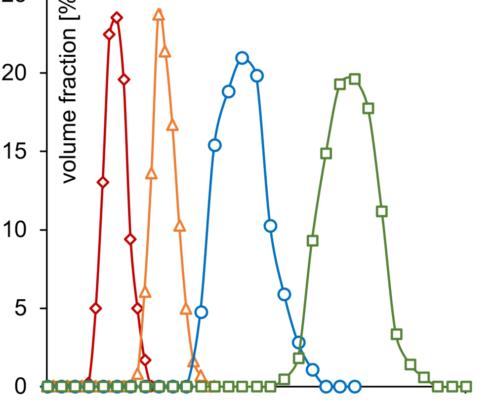
Hereby, the size of particles might play an important role. The narrow size distribution of MCC pellets is shown in Figure 2 and Figure 3. Measured data is presented in Table 1.

Figure-2

Volume weightened size distribution of Cellets 90 (red, diamonds), Cellets 100 (orange, triangles), Cellets 200 (blue, circles), Cellets 350 (green, squares).

The compact Cellets with fair sphericity, zero friability and a high level of surface smoothness show a fair mass flow rate which is almost independent of particle size at given experimental conditions and was determined by the gravitational funnel method. The reference MCC powder did not flow through the orifice.

Excipient PSD
[µm]
Span
[µm]
Flow rate
[g/s]
Avicel PH-102 115a 1.85 No flow
Cellets 90 94b 0.44 1.76
Cellets 100 163b 0.27 2.06
Cellets 200 270b 0.34 1.89
Cellets 350 424b 0.22 1.83

Table 1: Particle size distribution (D50) value and span by laser diffraction (a) and digital microscopy (b), and the mass flow rate by gravitational funnel method (5 mm diameter orifice) for the investigated excipients.

Impact of the Cellets’ size

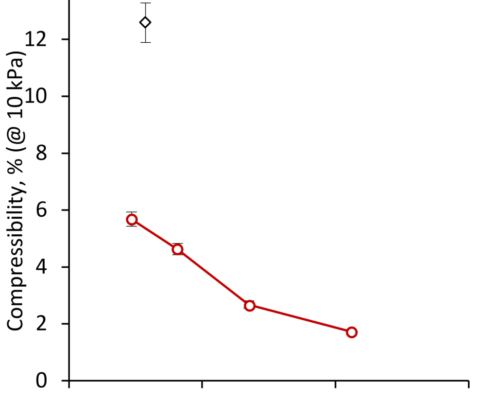
The impact of the Cellets’ size on bulk powder behavior can only be estimated by screening additional parameters. In addition to the mass flow rate, standard pharmacopoeia methods such as bulk/tapped density were initially employed for the characterization of the powder’s properties. This was extended to rotating drum measurements providing the dynamic angle of repose and dynamic cohesivity index. Via powder rheology the conditioned bulk density, basic flowability energy, specific energy, pressure drop, permeability and compressibility (Figure 4) were obtained [1].

By picking the compressibility of Cellets at an applied force of 10 kPa normal stress, two key points need to be mentioned: (a) smaller particle size induces a higher rate of compressibility; (b) Cellets are less compressible than the reference MCC powder.

These findings are part of the open question on powder flow in a Wurster process. It is expected, that Cellets with a lower compressibility will result in better flow behavior in the fluidized bed.

Figure-3

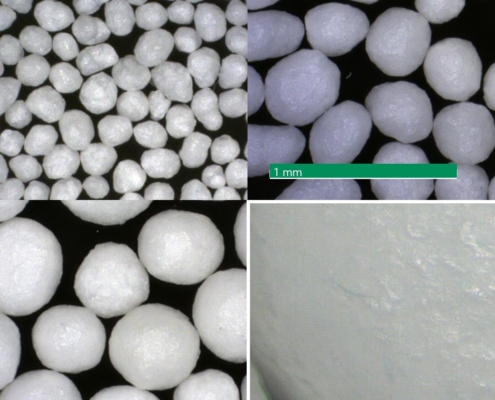
Microscopic imaging of Cellets 100 (top left), 200 (top right), 350 (bottom left) with 1 mm scale bar and 100x magnification. Bottom right: surface of Cellets 350 in 1000x magnification.

Figure-4

Compressibility at 10 kPa normal stress on Cellets with varying particle size (D50) and Avicel® PH-102.

Summary

The flow of Cellets’ through a Wurster fluid-bed coater is likely to show improved performance as the Cellets’ particle size increases. Among others, a lower compressibility demonstrates a rheological behavior which is superior to MCC.

References

[1] Mohylyuk V, Styliari ID, Novykov D, Pikett R, Dattani R. Assessment of the effect of Cellets’ particle size on the flow in a Wurster fluid-bed coater via powder rheology. J D Deliv Sci Tec. 2019; 54: 101320, doi: 10.1016/j.jddst.2019.101320.

The renaissance of micropellets is promoting innovative technologies

In recent years, formulations based on pellets and micropellets have been the trend. New technologies make it possible to circumvent property rights for active ingredients and are therefore very popular with pharmaceutical customers. But which technologies are the most important?

Pellets are the jack-of-alltrades of solid dosage forms. Positioned somewhere between powder and granulate, they make bitter medicine more palatable and can even awaken a child’s instinct to play when the dosage forms are imaginative enough. One well-known example is the Xstraw, a plastic tube shaped like a drinking straw which is filled with pellets of active ingredient, through which children or elderly people can take in the medicine with water. Pellets in tablets are also making a splash – hybrids which combine all the advantages of both dosage forms. The pioneers in the development of these formulations, known as Multiple Unit Pellet Systems (or MUPS for short), was Astra Zeneca in 1999. Their move to embed the proton pump inhibitor Omeprazole in micropellets and then compress these pellets into immediate release tablets was an award-winning one at the time. The development of MUPS and Xstraw symbolizes the impetus pellets have fueled in recent years.

Klaus N. Möller, Head of Business Development at Glatt in Binzen / Germany, explains: “New excipients, coating materials and sophisticated processes allow us to extend the patent protection period and to make the dosage form more attractive.“

The number of patents registered yearly for pellet-based formulations has increased exponentially and is set to continue. According to research performed by IMS Health, the market for OSD (Oral Solid Dosage Forms) is growing by 6 to 8 percent every year. The number of drugs approved by the FDA also reflect this trend: in 2015, more than half were solid products.

Pellets, as defined by pharmacy guru Prof. Peter Kleinebudde are “an isometric agglomerate of powder particles in an approximate spherical or cylindrical form”, and are a task for perfectionists. The smoother and rounder the pellets, the better they are at fulfilling their purpose. The equipment manufacturer Glatt and their specialists from Pharmaceutical Services have been actively ursuing the subject for years.

There are two fundamental ways of making active ingredient pellets: direct pelletization, in which the powdered active ingredient and excipient combine in a matrix, and active ingredient layering, in which uses side spray or Wurster technology to apply the active ingredient to a starter core of sugar or microcrystalline cellulose.

A case for the specialists

One interesting process variant for matrix pellets is the extrusion of wet granulate in a basket extruder and subsequent rounding in a spheronizer. Möller elucidates: “Continuous wet granulation, followed by extrusion, spheronization and drying now make it possible to perform continuous processes”. Active ingredient pellets made like this can then be covered with a functional coating, be continuously mixed with excipients and be directly compressed into a MUPS tablet. The challenge is to avoid separation of the ingredients and destruction of the tablets during pressing.

Glatt, whose portfolio comprises all granulation and pellet manufacturing techniques, has spent recent years developing additional ways of “fine tuning” the pellet process and has opened up a range of new, interesting possibilities for the lifecycle management of active ingredients.

Pellets and micropellets can be further processed into a wide range

Pellets and micropellets can be further processed into a wide range

Applying the final touches

But what differentiates the manufacturing of granulates from the manufacturing of pellets? From a pharmaceutical point of view, both processes are closely related and are only separated by the form of the particle, since the ideal shape for pellets is a sphere. There are also definite commonalities in procedure. As Möller explains: “The fluidized bed can be used for both granulation and pelletization. This is why we configure fluidized bed machines on request to be multipurpose installations which then allow the continuous manufacturing of pellets. The individual process modules for direct pelletization with rotor technology, for layering active ingredient and for pellet coating with Wurster technology or the simple drying of wet granulates can be added as necessary. Wurster technology has been used in practice for many years: it is a fluidized bed technique in which starter cores or active ingredient pellets are sprayed with a insists. Möller says: “This method is robust and, because the process is so stable, it’s generally the most popular way to process pellets.”

Depending on the composition of the tablets, processing can last anywhere between eight and ten hours. The knack is knowing how to optimize the efficiency and times of the production process. Additionally, Möller recommends timely expert assistance during the development of the pellet formulation and the production process: “Right from the beginning, it will help to avoid mistakes and to keep an eye on process times and manufacturing costs”.

Micropellets and more

Glatt’s development team demonstrated how to refine an established process with the fluidized bed agglomeration technique known as MicroPx. The trick is to use the Conti process, which was conceived in Pharmaceutical Services’ laboratories in Binzen: first, the active ingredient/excipient liquid is spray-dried to a very fine product dust in a fluidized bed and agglomerated into tiny primary particles. The micropellets then build up, layer by layer, until the desired size is reached. The heart of this technology is a zigzag classifier which continuously ejects particles of sufficient size from the process, while simultaneously allowing smaller particles to reenter the process chamber where they continue to grow. Möller explains that the result of this method are high dosage active ingredient pellets in the size range of 100 to 400 μm with a narrow particle size distribution and content uniformity of a consistent 90 to 95 percent. This means that one significant limitation of former times is now no longer an issue: for many years, the volume of a pellet- filled capsule was larger — and therefore much harder to swallow — than the equivalent tablet with the same dose and composition. The use of microencapsulation, which changes bitter-tasting active ingredients into tasteless microparticles, means the taste is much improved now, too. Micropellets can be also pressed into tablets or MUPS tablets which already begin disintegration in the mouth. But the reason pharmaceutical companies find the MicroPx process so exciting is that it makes completely new formulations possible and therefore allows the legal circumvention of property rights. The technology experts have long known the secret to the perfect pellet, too, an answer provided by Complex Perfect Spheres Technology (CPS). CPS is a souped-up rotor process for fluidized bed machines that uses direct pelletization to yield functionalized pellets and micropellets which are perfectly round and smooth. Unlike classic rotor technology, the modified technique uses a tapered rotating disc which allows the movement of particles to be directed and pelletization to be performed to a defined endpoint. The results are perfectly spherical pellets of exactly defined sizes of between 100 and 1500 μm and extremely narrow size distribution. This is how Glatt’s own Cellets of microcrystalline cellulose are created, which are used as starter cores for pellets and in the Wurster process, for example — thus completing the formulation cycle.

Author

Klaus Möller, Head of Business Development Glatt Process Technology Pharma

Abstract

Microcrystalline cellulose pellets (MCC) and sugar are well-known materials in pellet technology. Pellet technology describes the drug load onto starter pellets for controlled release formulations by Wurster process or others. Inert pellets are made of microcrystalline cellulose, while water soluble pellets are composed of sugar. Both material classes show desirable characteristics, such as a narrow particle size distribution, sphericity, surface smoothness. Also the batch-to-batch reproducibility and robustness of starter cores is high. A comparison does not seem to be that easy …

Starter cores in the micron range

Respecting the final application, the initial size of starter pellets defines the final size of the drug loaded pellet. In case of several layers of API and excipients, the initial size is factorized by the layering process. Pellet sizes in a range from 200 µm to 700 µm are frequently used (Table 1). We will focus on three size classes within this range and compare MCC pellets with those made of sugar.

Cellets_200-1-3

Figure 1: MCC pellets (here: Cellets® 200) are shown with good sphericity and striking surface smoothness.

Small-sized pellets starting at 200 µm

Small-sized pellets with sizes starting at 200 µm and larger, exhibit a comparably large surface-to-volume ratio. This can be beneficial in some applications. For example, taste-masking of bitter API is accessible.

Cellets_200-1-4

Figure 2: Sugar pellets (here: 50/70 mesh) are shown with moderate sphericity and reduced surface smoothness.

Figure 1 displays a microscopic image of MCC Cellets® 200 and Figure 2 displays the image of sugar pellets in 50/70 mesh, respectively. It is obvious, that for small-sized pellets, the sphericity and surface smoothness of MCC pellets is superior.

Size MCC Sugar
small Cellets® 200 50/70 mesh
Medium Cellets® 350 40/50 mesh
large Cellets® 500 25/30 mesh

Table 1: Size definition of MCC and sugar pellets.

Mid-sized pellets up to 500 µm

This class of pellets is frequently used for multi-layer coating technologies. Easy processing and reliable batch-to-batch control are positive aspects. Exemplary application is a hydrocortisone formulation for peadiatrics. Again, Figure 3 (MCC pellets) and Figure 4 (sugar pellets) show advantages in surface properties for the MCC material.

Cellets_350-1-3

Figure 3: MCC pellets (Cellets® 350) are shown.

Cellets_350-1-4

Figure 4: Sugar pellets (40/50 mesh) are shown

Large-sized pellets above 500 µm

In some applications, larger pellet sizes are requested. Let’s have short excurse into straws which can contain larger pellets in dry state. Upon use by sucking liquid through the straw, the API coating dissolves immediately while the pellet remains in the straw by simple filters.

In this size range the striking advantages of MCC pellets are not of immediate importance, but still visible.

Cellets_500-1-3

Figure 5: MCC pellet above 500 µm (Cellets® 500).

Cellets_500-1-4

Figure 6: Sugar pellet above 500 µm (25/30 mesh).

Summary

Microcrystalline cellulose pellets (Cellets®) show superior surface and sphericity properties compared to sugar pellets. In case of non-dissolving applications, MCC pellets are first choice. As sugar pellets exhibit strong dissolution in water, there is still a fair application range for them.

CS_sphericity_image_1

Abstract

Microcrystalline Cellulose (MCC) pellets represent a chemically inert class of active pharmaceutical ingredients (API) carriers. A narrow particle size distribution (PSD) maximizes control over content uniformity. In this case study, we will focus on measuring the particle size distribution and on sphericity.

Pellets for oral drug forms

MCC pellets are used as starter beads for API loading. Low or high drug dose loading is technically feasible. These pellets are made of pure MCC and provide a robust platform for delivery of one or multiple APIs. Certain processing technologies for pellet coating allow these starter beads to be compatible with soluble or insoluble APIs, e.g. by Wurster bottom spray [1,2] or Rotor dry powder layering technology [3]. Coated pellets can be filled into capsules, or compacted into multiple-unit pellet system (MUPS) tablets [4], where a tight PSD maximizes control over content uniformity.

Particle size distribution maximizes the control over content uniformity in applications of complex oral dosing forms. Speaking about uniform or monodisperse particles, these information always point to general information of the particular system, not of the individual particle itself. Therefore, PSD is a globular measure allowing simple, easy and fast analysis of the particulate matter. Major key information from a PSD measure are the so called D-values. A Dx value represents a dimension, where a ratio of X particles is smaller. For reasons of simplicity weighted functions, such as number, radius or volume, are not. Extending these metrics to D10 and D90 additionally informs about the width of the entire size distribution (Figure 1).

CS_sphericity_image_1

Particle size distribution of two different particle systems with identical median dimension D50. Blue: wide PSD, green: narrow PSD. Dotted lines are guides to the eyes.

Figure 1: Particle size distribution of two different particle systems with identical median dimension D50. Blue: wide PSD, green: narrow PSD. Dotted lines are guides to the eyes.

Dimensions of pellets

In this study, imaging technology (Horiba, Camsizer) was employed for the size analysis. Representatively, more than 50 charges of Cellets® 100 and Cellets® 500  (Figures 2-3) have been analyzed for the D10, D50 and D90 values.

CS_sphericity_image_2

D10 (red), D50 (green) and D90 (blue) value for several Cellets® 100 charges. Solid lines are measures, dashed lines represent the averaged value of all charges. The standard deviation is below 10 %.

Figure 2: D­10 (red), D50 (green) and D90 (blue) value for several Cellets® 100 charges. Solid lines are measures, dashed lines represent the averaged value of all charges. The standard deviation is below 10 %.

CS_sphericity_image_3

D10 (red), D50 (green) and D90 (blue) value for several Cellets® 500 charges. Solid lines are measures, dashed lines represent the averaged value of all charges. The standard deviation is below 4 %.

Figure 3: D10 (red), D50 (green) and D90 (blue) value for several Cellets® 500 charges. Solid lines are measures, dashed lines represent the averaged value of all charges. The standard deviation is below 4 %.

The results show only slight variations in the PSD between the charges. The standard deviation is smaller than 4 % (Cellets® 500) and smaller than 10 % (Cellets® 100) which confirms a high reproducibility in production (Table 1). Both values are remarkably good for technical spheres. Furthermore, none of the charges was out of specifications and fit into the desired size distribution between 500 µm and 710 µm easily. The close gap between D­10 and D90 clearly identify an excellent monodispersity.

Standard deviation Cellets 100 Cellets 500
of D­10 8.28 % 3.97 %
of D50 7.12 % 3.52 %
of D90 4.68 % 3.11 %

Table 1: Standard deviation for D­10, D­50 and D­90 values Cellets® 100 and Cellets® 500 charges.

CS_sphericity_image_4

Electron microscopy yield perfect imaging data of the MCC pellets’ surfaces. Magnification: 250x, working distance 8.0 mm, voltage: 10 keV.

Figure 4: Electron microscopy yield perfect imaging data of the MCC pellets’ surfaces. Magnification: 250x, working distance 8.0 mm, voltage: 10 keV.

Perfect sphericity? – Yes!

For a more detailed shape analysis, electron microscopy yield perfect imaging data of the MCC pellets’ surfaces (Figure 4). Additionally, MCC pellets have a distinguishing friability.

Summary

Microcrystalline Cellulose (MCC) pellets show excellent chemically inertness, high degree of sphericity, narrow size distribution and high reproducibility in production. These properties make Cellets® becoming one of the first choice for inert API carriers. We have proven these excellent properties for Cellets® 100 and Cellets® 500. The obtained results are representative for other size classes ranging from 100 µm to 1400 µm.

Acknowledgement

We acknowledge IPC Process-Center (Dresden, Germany) for the analytics, and Fraunhofer IFAM (Dresden, Germany) for recording the electron microscopic pictures.

References

[1] H. R. Norouzi, International Journal of Pharmaceutics, Volume 590 (2020) 119931

[2] D. Jones, Developing Solid Oral Dosage Forms, Pharmaceutical Theory And Practice (2009) 807-825

[3] M. Ahtola, Dry powder layering of high viscosity polymers using a fluidized bed rotor granulator, Master thesis, U of Helsinki (2014)

[4] S. Abdul, A. Chandewar, S. Jaiswal, Journal of Controlled Release, Volume 147(1) (2010) 2-16