
Multilayered pharmaceutically active compound-small

Introduction to Multilayered Pharmaceutically Active Compound Technology

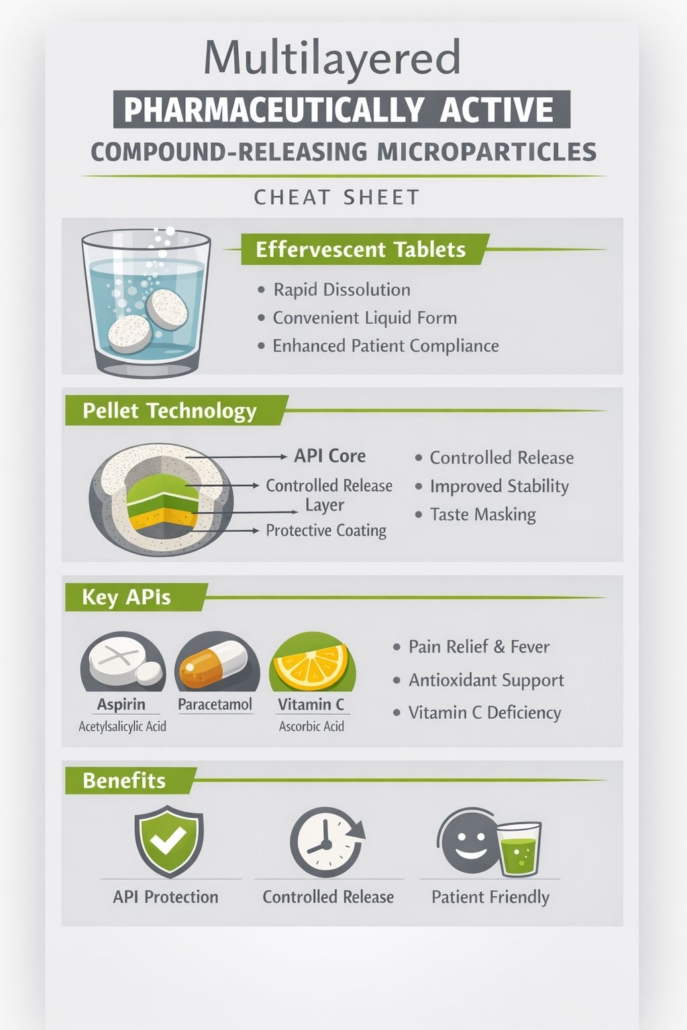
Multilayered pharmaceutically active compound-releasing microparticles in a liquid dosage form represent an innovative approach to oral drug delivery. This technology combines the benefits of coated pellets with the convenience of liquid administration. Effervescent tablets are solid dosage forms that release carbon dioxide when they dissolve in water. This reaction results from the interaction between an acid source, such as citric acid, and a carbonate or bicarbonate salt. Patients consume the resulting solution or suspension immediately after preparation. Consequently, effervescent tablets improve ease of administration and often enhance patient compliance.

Pellets play an increasingly important role in modern effervescent tablet formulations. Unlike conventional powder blends, pellets can carry individual functional coatings that protect active pharmaceutical ingredients (APIs) from degradation. In addition, pellets can separate incompatible ingredients within the same dosage form. They also improve taste masking and enable modified-release properties. As a result, formulators can develop more stable and effective products. Furthermore, pellet-containing effervescent tablets often reduce gastrointestinal irritation and improve dose uniformity. These advantages benefit both the final pharmaceutical product and the patient.
Multilayered pharmaceutically active compound-large

Multilayered pharmaceutically active compound-large

Summary of EP3117824A1

The European patent EP3117824A1 describes a drug delivery platform based on multilayered pharmaceutically active compound-releasing microparticles suspended in a liquid dosage form. The invention addresses a major challenge in pharmaceutical formulation. Many controlled-release and enteric-coated particles lose functionality when they remain in contact with water for extended periods. Therefore, maintaining stability during storage becomes difficult.

The patented technology uses microparticles that contain an API-loaded core surrounded by multiple functional coating layers. A controlled-release or enteric coating forms the intermediate layer. An additional outer protective layer surrounds this coating. The inventors designed this outer layer from a combination of hydrophilic and hydrophobic materials. Consequently, the layer protects the underlying release-controlling membrane from premature exposure to the liquid environment.

During storage, the protective coating minimizes drug leakage and preserves the integrity of the controlled-release system. As a result, the microparticles maintain their desired release characteristics for extended periods. Once the patient administers the formulation, the outer coating dissolves rapidly in the stomach. Subsequently, the underlying controlled-release coating resumes its intended function. This mechanism allows the formulation to deliver the API at a predefined location or rate within the gastrointestinal tract.

The invention offers particular advantages for drugs that require modified release, intestinal targeting, or protection from acidic gastric conditions. In addition, the technology supports the development of patient-friendly liquid formulations. This feature benefits pediatric, geriatric, and dysphagic patients who often struggle to swallow tablets or capsules. Overall, the patent combines the flexibility of pellet-based drug delivery with improved stability in aqueous dosage forms. Therefore, it represents an important advancement in oral pharmaceutical technology.

Impact of MCC spheres in this Patent

In EP3117824A1, CELLETS® or similar spherical starter cores serve as the fundamental substrate for producing the multilayered pharmaceutically active compound-releasing microparticles. These inert pellet cores, commonly composed of microcrystalline cellulose, provide a highly uniform and mechanically stable surface onto which drug-containing layers and subsequent functional coatings can be applied with high precision.

Their excellent sphericity promotes uniform coating thickness, which is critical for achieving reproducible controlled-release performance and minimizing variability between pellets. Furthermore, Cellets enable high drug loading while maintaining robust processing characteristics during fluid-bed coating operations.

Pellet size also plays an important role in the final product performance. Smaller pellets, typically in the range of 100–500 µm (such as CELLETS® 100, 200, 350), offer a larger surface area and can provide faster or more uniform drug release, whereas larger pellets, often between 500–1500 µm (such as CELLETS® 500, 700, 1000), facilitate the application of multiple coating layers and may support more sophisticated release profiles.

In addition, smaller pellets generally improve content uniformity and patient acceptability, especially in liquid and effervescent dosage forms, because they create a smoother mouthfeel and more homogeneous suspension. Therefore, selecting the appropriate Cellet size represents a key formulation parameter that influences coating efficiency, drug release kinetics, stability, and overall patient experience.

Acetylsalicylic Acid, Paracetamol, and Ascorbic Acid in Pellet-Based Effervescent Formulations

Although EP3117824A1 does not specifically focus on acetylsalicylic acid, paracetamol, or ascorbic acid, the technology applies well to these APIs. Acetylsalicylic acid, commonly known as aspirin, belongs to the nonsteroidal anti-inflammatory drug (NSAID) class. It treats pain, fever, inflammation, and cardiovascular disorders. Depending on the classification source and physiological conditions, aspirin generally falls within BCS Class I or Class III. Because aspirin can irritate the gastric mucosa, pellet-based controlled-release systems may improve gastrointestinal tolerability.

Paracetamol is an analgesic and antipyretic agent that treats pain and fever. It is generally classified as a BCS Class I compound due to its high solubility and permeability. Furthermore, pellet technology can improve taste masking and provide modified-release options. These properties make paracetamol formulations more suitable for pediatric and elderly patients.

Ascorbic acid, also known as vitamin C, functions as a water-soluble vitamin and antioxidant. Healthcare professionals use it to prevent and treat vitamin C deficiency. It exhibits high aqueous solubility and frequently appears in effervescent products. Moreover, pelletization can improve formulation stability by separating ascorbic acid from reactive ingredients. This approach may reduce degradation during storage and improve product quality.

Conclusion and Outlook

Multilayered pharmaceutically active compound technology offers a sophisticated solution for modern oral drug delivery. It combines coated pellet systems with liquid dosage forms while maintaining controlled-release functionality. Moreover, the technology supports improved stability, enhanced patient convenience, and flexible formulation design. When formulators incorporate pellets into effervescent tablets, they can protect sensitive APIs, reduce gastrointestinal side effects, and optimize therapeutic performance. As pharmaceutical research advances, multilayered pharmaceutically active compound systems will likely support more complex formulations and personalized treatment strategies. Consequently, this technology may become an increasingly important platform for next-generation oral medicines.

Patent Summary

  • Name of Patent: Multilayered pharmaceutically active compound-releasing microparticles in a liquid dosage form
  • Patent Number: EP3117824A1
  • Year of Patent: 2015
  • Patent Holders: Federica Ronchi, Jonathan Goole, Karim Amighi, Georges Guillaume, Vincent Stephenne
  • Affiliation: Be Pharbel Manufacturing
Formulation and Design of Multiunit Particulate Systems

Introduction to the Formulation and Design of Multiunit Particulate Systems

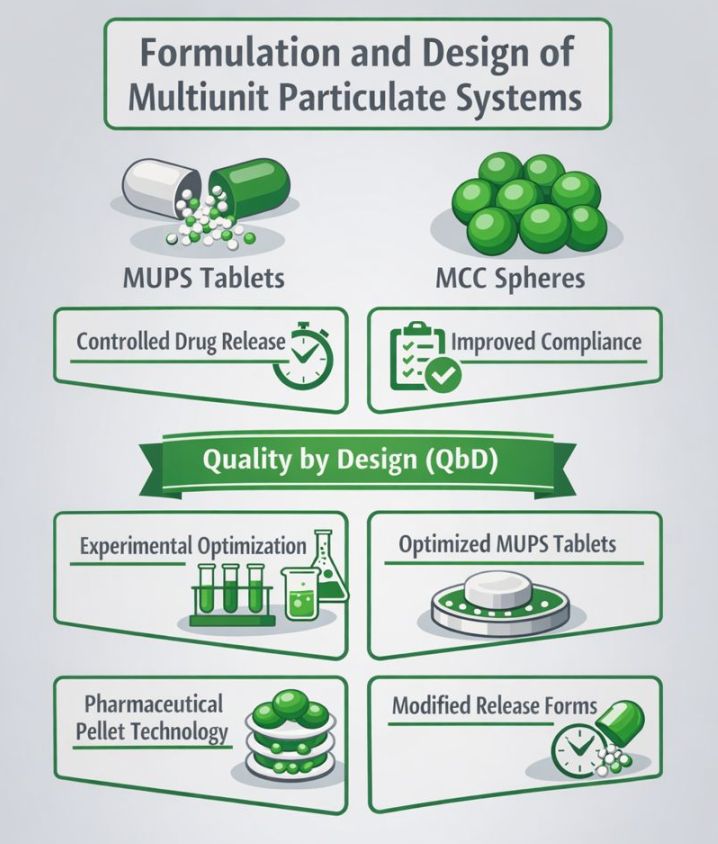
Formulation and design of multiunit particulate systems focus on oral dosage forms that contain many small, functional subunits instead of one single unit. These systems typically consist of pellets, granules, or coated spheres that are filled into capsules or compressed into tablets. As a result, they allow precise control of drug release and improved robustness during gastrointestinal transit. Moreover, the formulation and design of multiunit particulate systems emphasize a deep understanding of materials, coating technologies, and compression behavior. Therefore, developers can protect sensitive drug layers while ensuring consistent performance. In recent years, Quality by Design approaches have further strengthened this concept by linking formulation variables directly to product quality and clinical relevance.

Functionality and Consumer Compliance Opportunities of Multiunit Particulate Systems

Multiunit particulate systems offer clear functional advantages that directly support consumer compliance. First, the multiparticulate structure distributes the drug dose along the gastrointestinal tract, which improves absorption consistency. In addition, this distribution reduces local irritation and lowers the clinical risk of dose dumping. Furthermore, these systems often improve swallowability because the individual subunits are small and well tolerated. Consequently, patient groups such as children and older adults benefit significantly. At the same time, multiunit particulate systems enable flexible dosing and advanced release profiles. Therefore, they align better with daily routines and long-term treatment needs, which ultimately enhances adherence.

Formulation and Design of Multiunit Particulate Systems

Formulation and Design of Multiunit Particulate Systems

Summary of the Pantoprazole MUPS Tablet Study

The referenced publication examines the formulation and design of multiunit particulate systems (MUPS) through the development of a pantoprazole MUPS tablet using a Quality by Design framework. The study aimed to understand how selected formulation variables affect critical tablet characteristics. To achieve this, the authors used enteric-coated pantoprazole pellets as multiparticulate units and compressed them into tablets with protective excipients. As a result, the formulation needed to balance mechanical strength with coating integrity.

The researchers applied a factorial design of experiments to evaluate three key variables: dry polymer content, matrix-forming polymer concentration, and pellet loading. Subsequently, they measured responses such as dissolution behavior, tablet hardness, friability, and disintegration time. The results showed that each variable influenced tablet quality in a measurable way. For example, higher pellet content increased the risk of coating damage during compression. However, appropriate polymer levels reduced this risk and stabilized drug release.

Based on statistical analysis, the study defined an optimized design space that delivered robust tablets with acceptable mechanical properties. In addition, the optimized formulation demonstrated dissolution behavior comparable to a marketed reference product. Therefore, the study confirmed that a well-designed multiunit particulate system can deliver pantoprazole effectively without compromising enteric protection. Overall, the work highlights how systematic formulation control improves both product performance and development efficiency.

Role of MCC Spheres in the Multiunit Particulate System

MCC spheres (such as CELLETS® 150-300) played a central role as inert starter cores in the multiparticulate formulation. First, they provided a uniform and mechanically stable substrate for drug layering. Moreover, their spherical shape supported homogeneous coating and predictable dissolution behavior. During compression, MCC spheres showed favorable plastic deformation, which helped absorb mechanical stress. As a result, they protected the enteric coating from cracking or rupture. Consequently, MCC spheres enabled the successful conversion of coated pellets into a compressed MUPS tablet while maintaining functional integrity.

Conclusion and Outlook

In conclusion, formulation and design of multiunit particulate systems offer a robust strategy for developing patient-friendly oral dosage forms. The pantoprazole study clearly demonstrates how a Quality by Design approach links formulation variables to tablet performance. Moreover, the use of MCC spheres highlights the importance of selecting suitable core materials for compression stability. Looking ahead, advances in material science and process understanding will further strengthen multiunit particulate systems. Therefore, these systems will continue to play a key role in improving therapeutic consistency and consumer compliance.

References

[1] G.S. Sonar, S. Rawat, International Journal of PharmTech Research, CODEN (USA): IJPRIF, ISSN: 0974-4304, Vol.8, No.8, pp 05-23, 2015. (link)

Influence of Water on the Structure of MCC-thumbnail

Influence of Water on the Structure of MCC

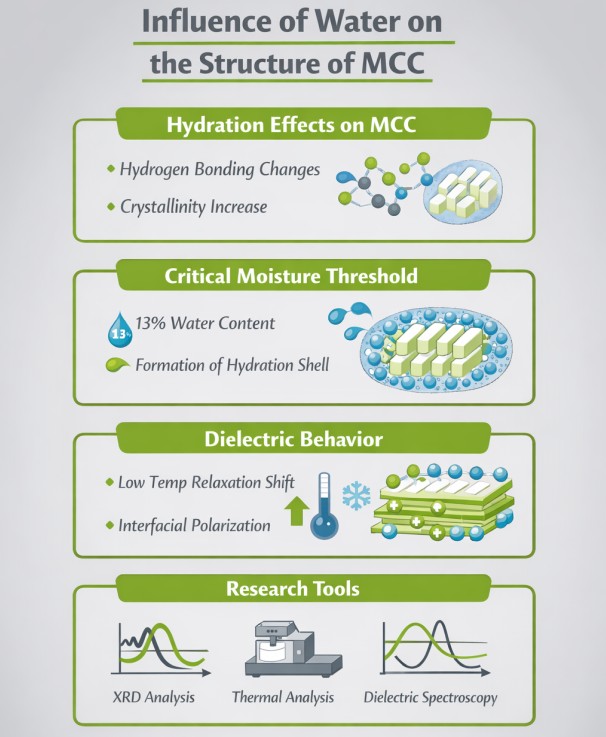
Influence of Water on the Structure of MCC describes how moisture reshapes microcrystalline cellulose at both structural and dielectric levels [1]. Water interacts strongly with hydroxyl groups on cellulose chains. Therefore, it changes hydrogen bonding and mobility inside amorphous and crystalline regions. Moreover, the system develops distinct hydration states depending on water content. At low moisture levels, water remains mostly adsorbed on surfaces. However, at higher levels, it forms multilayer hydration shells around crystallites. Consequently, the material shows measurable changes in crystallite order and dielectric relaxation behavior. In addition, a critical hydration threshold appears where the structure shifts toward a continuous interfacial water network. As a result, both permittivity and loss mechanisms change significantly across temperature and frequency ranges.

Technologies and Materials Used in the Study

The study combines structural and dielectric characterization techniques to analyze hydrated cellulose systems. Specifically, X-ray diffraction resolves changes in crystallinity and crystallite dimensions. In addition, thermal analysis distinguishes bound water from loosely adsorbed water fractions. Broadband dielectric spectroscopy then tracks relaxation processes across temperature and frequency domains. Therefore, the researchers connect molecular mobility with macroscopic dielectric response.

The material system consists of microcrystalline cellulose processed into compacted pellets for measurement. Moreover, pellet compaction ensures stable geometry and reproducible dielectric contact. In similar experimental frameworks, standardized spherical MCC pellets such as CELLETS® 1000 are often used. These pellets provide uniform particle size, consistent porosity, and predictable packing behavior. Consequently, they reduce structural variability during pressing. In addition, they improve signal stability in dielectric spectroscopy because they minimize air gaps and heterogeneity effects. As a result, researchers can isolate water-induced changes more reliably and compare hydration states under controlled conditions.

Influence of Water on the Structure of MCC

Influence of Water on Structure and Dielectric Behavior

Water strongly controls both structure and dielectric response in MCC. Initially, small water amounts occupy surface sites and weak adsorption layers. However, increasing hydration strengthens hydrogen bonding rearrangements. Moreover, water molecules increase chain mobility in amorphous regions. Consequently, the material shows shifts in crystallite boundary structure and apparent crystallinity.

At moderate hydration, water forms multilayer shells around crystallites. Therefore, interfacial polarization becomes more pronounced. In addition, dielectric permittivity increases due to enhanced dipole alignment. Meanwhile, relaxation processes shift toward lower temperatures because water lowers activation barriers for molecular motion. As a result, β-relaxation associated with surface groups becomes more visible.

At higher hydration levels, the system approaches a percolated water network. Thus, the dielectric response becomes dominated by interfacial water dynamics. Moreover, the cellulose–water system transitions into a more flexible structural regime. Consequently, both structural stability and dielectric dispersion change significantly across frequency ranges.

Conclusion and Outlook

Water governs the structural and dielectric behavior of MCC in a direct and measurable way. Specifically, it modifies hydrogen bonding networks and reorganizes interfacial regions. Therefore, hydration controls crystallite order and molecular mobility at the same time. Moreover, a critical moisture threshold marks a transition into a continuous hydration regime.

In addition, these findings highlight the importance of controlled humidity in cellulose-based systems. Future research should focus on tuning water content to engineer dielectric properties. Moreover, standardized pellet systems, including CELLETS 1000-type MCC materials in comparable studies, can improve reproducibility. Consequently, hydrated cellulose systems may support future applications in bio-based dielectrics, sensors, and adaptive functional materials.

References

[1] Kovalov, K.M., Alekseev, O.M., Lazarenko, M.M. et al. Influence of Water on the Structure and Dielectric Properties of the Microcrystalline and Nano-Cellulose. Nanoscale Res Lett 12, 468 (2017); doi: 10.1186/s11671-017-2231-5

MCC pellets under rheological investigation-thumbnail

MCC pellets under rheological investigation

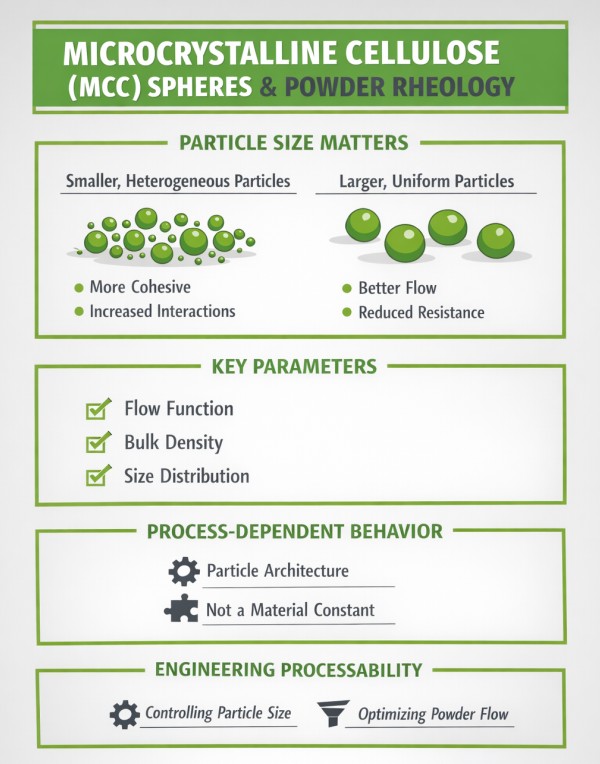
MCC pellets under rheological investigation are ideal model spheres for studying powder behavior. In this study, we revisit the work of V. Mohylyuk and R. Dattani to analyze the effect of pellet size on powder properties. Understanding how pellet size influences flow and handling is essential for optimizing powder performance. Moreover, investigating size variations helps improve material processing and formulation strategies. By focusing on these aspects, researchers can better predict and control the behavior of MCC spheres in different applications.

Rheological behavior has a deep impact

The rheological behavior of powders greatly affects pharmaceutical formulations and processing steps. In particular, when studying MCC pellets under rheological investigation, powder rheology becomes a key area of focus. Typically, powders behave as solids under static conditions; however, they can fluidize under certain circumstances. Consequently, fluidization is widely used in pharmaceutical processes because it enables controlled and uniform coating or layering of starter beads with drugs and functional excipients. Moreover, while fluid behavior in liquids depends on inter- and intra-molecular interactions, network bonds, and temperature, powder fluidization primarily relies on micro-particular properties such as particle size, surface characteristics, and flowability. In addition, the exact gas speed and volume required for powder fluidization must be carefully adjusted for each system. Therefore, a thorough analysis of the powder is essential to achieve precise control and optimal performance.

Materials: MCC pellets

CELLETS®

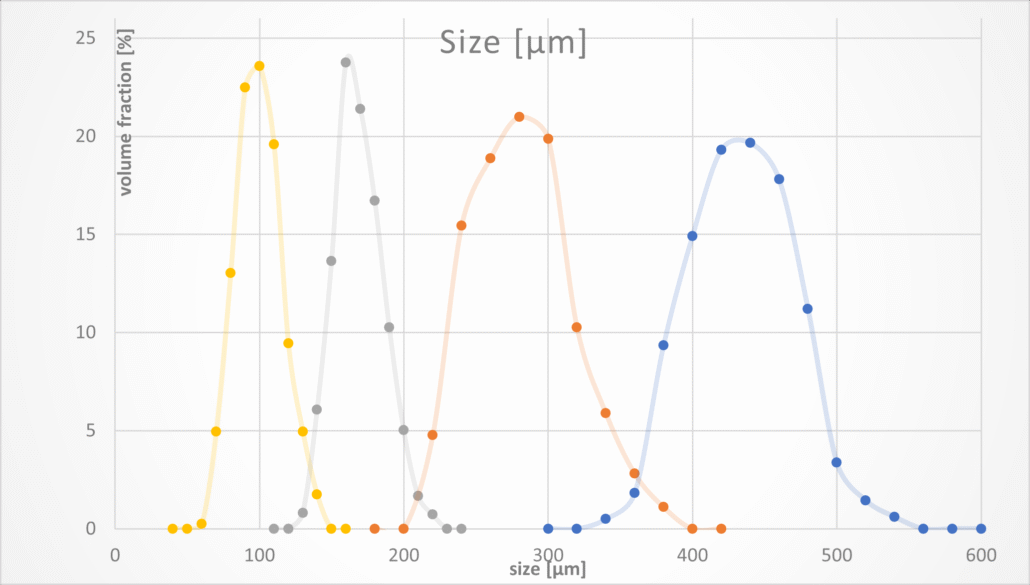
In this study, CELLETS® are used for the investigation. These pellets consist of Microcrystalline Cellulose, featuring a smooth surface, high sphericity, and minimal friability. Due to these properties, CELLETS® are popular as starter beads in pharmaceutical formulations and are ideal model spheres for rheological studies. Four types—CELLETS® 90, CELLETS® 100, CELLETS® 200, and CELLETS® 350—were examined, with size distributions ranging from 90 µm to 500 µm. The D50 values for these types vary between 94 µm and 424 µm. The specific size distribution of each CELLETS® type is summarized in Table 1.

Type Particle size distribution (≥ 85 %)
CELLETS® 90 60-100 µm
(250/150)
CELLETS® 100 100-200 µm
(150/80)
CELLETS® 200 200-355 µm
(80/50)
CELLETS® 350 350-500 µm
(50/35)

Table 1: Particle size distribution of selected MCC spheres.


MCC pellets under rheological investigation

Characterization Methods for MCC Pellets Under Rheological Investigation

First, we measured the particle size distribution of MCC pellets under rheological investigation using optical digital microscopy (Keyence VHX 600). This approach provides precise and reliable data on pellet dimensions, which is essential for understanding their flow and handling properties.

Next, we applied standard pharmacopoeia methods to determine bulk and tapped density, as well as flow rate using a gravitational funnel. In addition, we analyzed the dynamic angle of repose and dynamic cohesivity index with a rotating drum tester (GranuDrum). Furthermore, we used a powder rheometer (FT4 Powder Rheometer) to evaluate basic flowability energy, specific energy, aerated energy, permeability, and compressibility. Altogether, these measurements give a comprehensive understanding of MCC pellets under rheological investigation and offer detailed insights into their performance in pharmaceutical applications.

Results of the rheological investigations

Figure 1 presents the particle size distribution of MCC pellets under rheological investigation, as measured with an optical digital microscope.

Mohylyuk 2022 MCC pellets under rheological investigation image 1

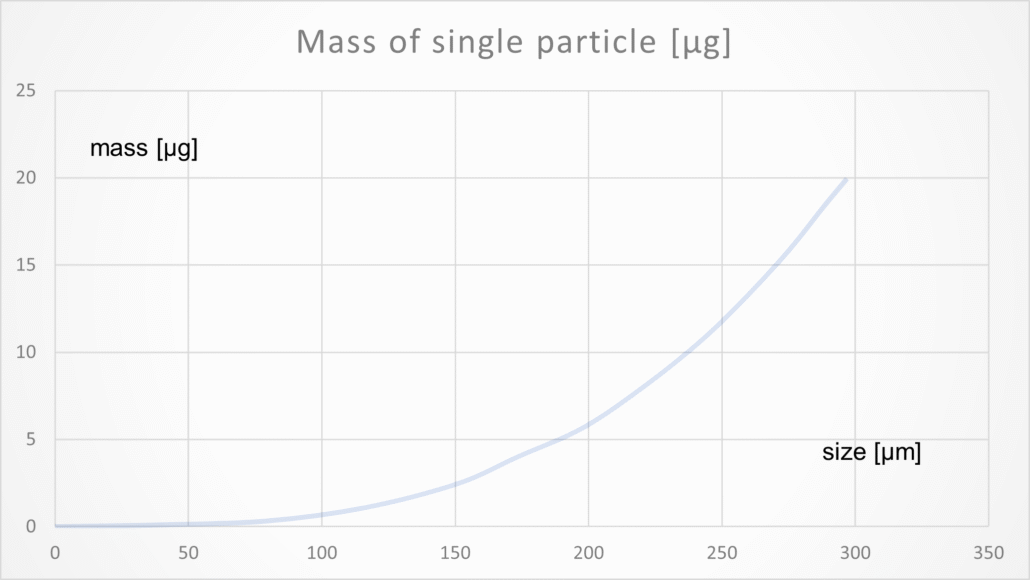
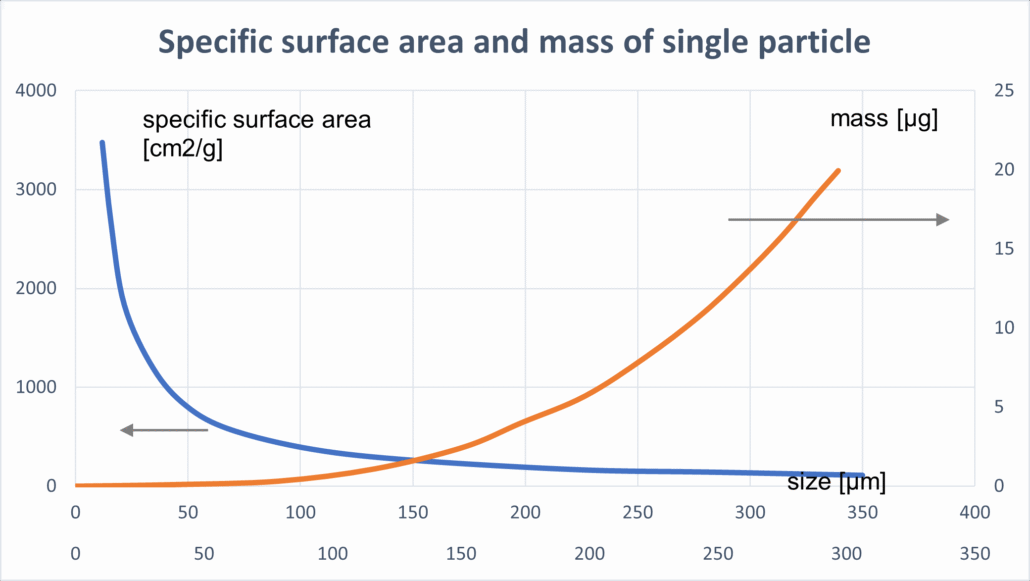
With increasing particle size the apparent specific surface area (fig. 2) decreases obviously. Hence, a decrease in pellet size, allow an expectation in increase in mechanical interlocking.

Mohylyuk 2022 MCC pellets under rheological investigation image 2
specific surface area

With increasing particle size, the bulk and tapped density of CELLETS® increases; however, the densification kinetics remained approximately the same for all pellet sizes (Fig. 3). Moreover, a few periodic oscillations significantly influenced the density of the pellets, highlighting subtle variations in their behavior.

density

With increasing particle size the compressibility decreases (fig. 4). The applied force was identical for all pellets sizes. Worsening packing efficiency.

Mohylyuk 2022 MCC pellets under rheological investigation image 4 compressibility

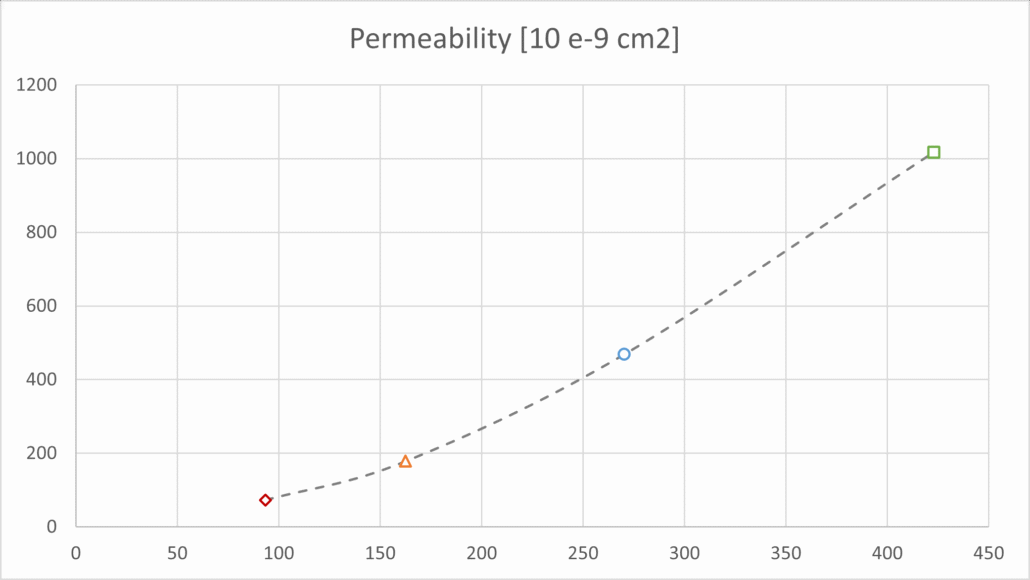
With increasing particle size the permeability increases while applying the same force for all pellet types. (fig. 5). increase in voids between particles.

permeability

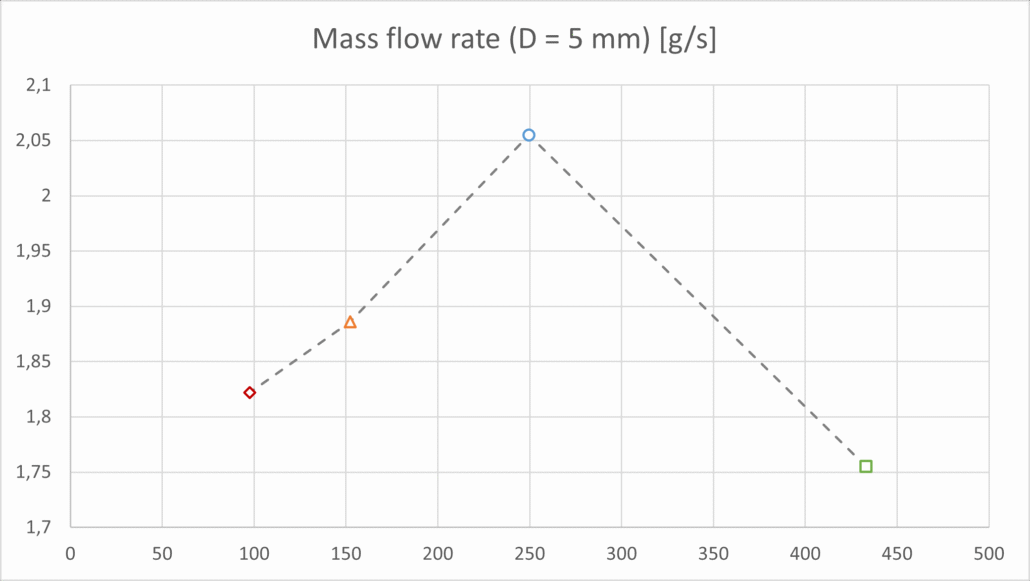
The gravitational funnel method suggests an absence of correlation between the mass flow rate and pellet size or specific surface area (fig. 6).

mass flow rate

Analyzing the dynamic angle of repose

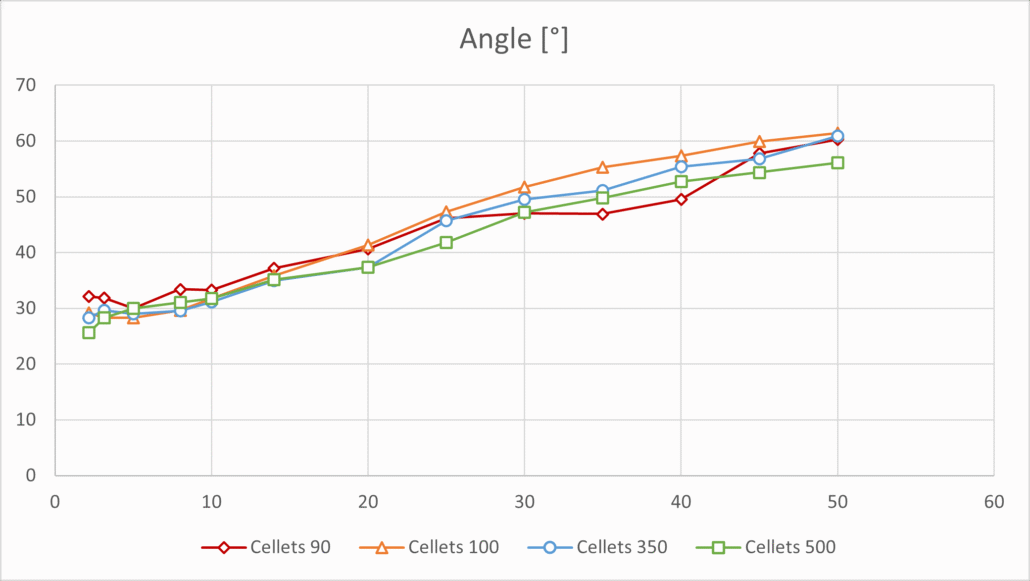
We analyzed the dynamic angle of repose to evaluate the powder flow of MCC pellets under rheological investigation. All pellet sizes showed similar behavior: as the rotation speed increased, the angle of repose rose almost linearly. The measurements for all pellet types formed a funnel shape within the range of analytic errors (Fig. 7). These results clearly characterize the dynamic flow ability of the powders.

Mohylyuk 2022 MCC pellets under rheological investigation image 7 angle

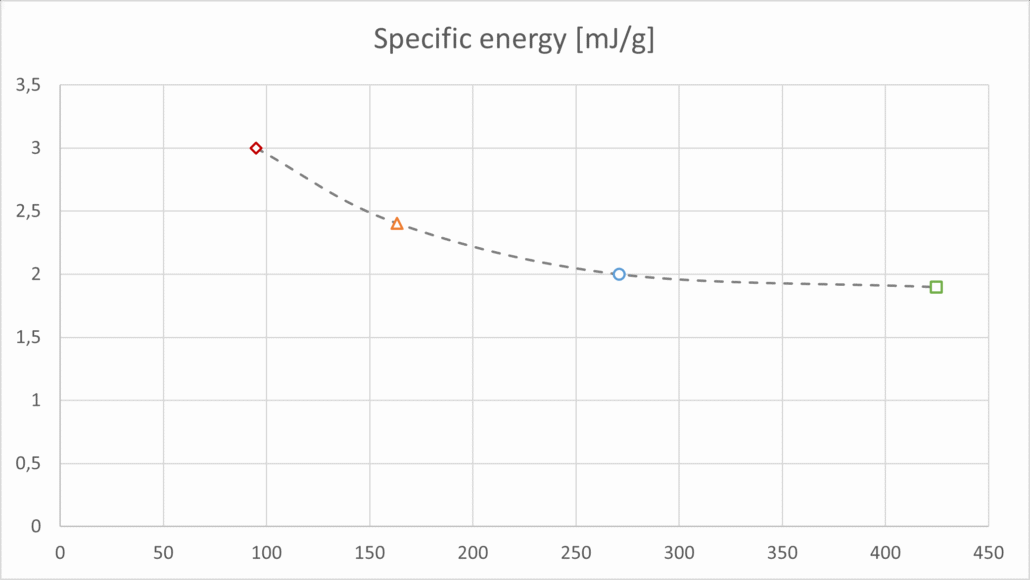
With increasing particle size the specific energy decreases (fig. 8). The level of interlocking and friction between powder particles decreased, the flowability increased.

Image 8 specific energy

With increasing particle size the basic flowability energy decreases (fig. 9). the flowability in a constrained environment increased.

basic flowability

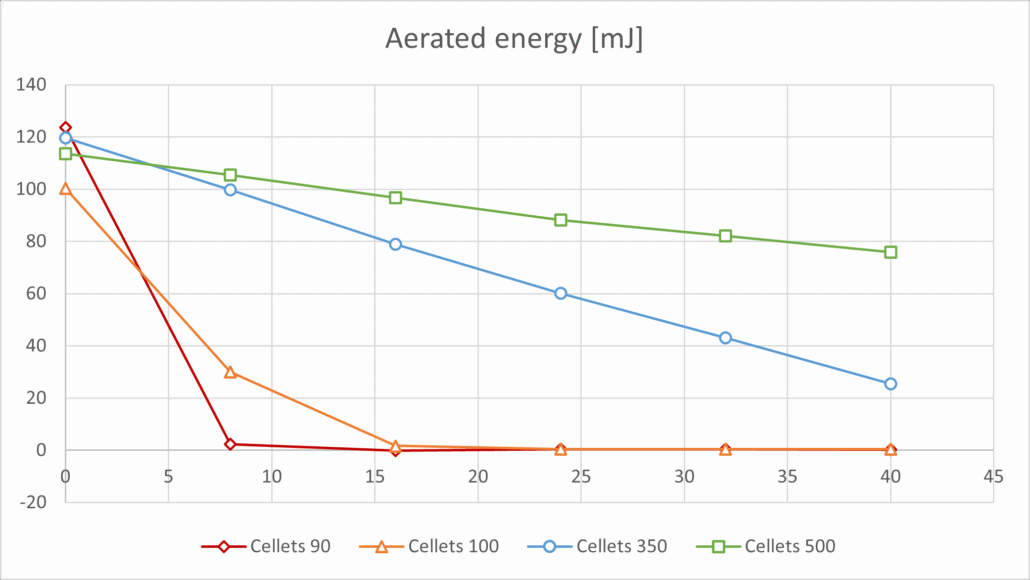
The aerated energy rises as air velocity decreases (Fig. 10). This parameter helps determine the minimum fluidization velocity, as increasing air velocity alters interparticle interactions.

aerated energy

The aerated energy increased with increasing pellet size (fig. 11). dependent on particle mass and inter-particle interactions (friction).

Mohylyuk 2022 MCC pellets under rheological investigation image 11 aerated energy size

with increasing pellet size, the cohesive index decreases (fig. 12). an indicator of the sum of inter-particle interaction forces.

12-cohesive index

Summary

Overall, researchers have now characterized MCC pellets under rheological investigation more comprehensively than ever before, providing new insights into their flow behavior and material properties. Powder rheology methods successfully revealed the bulk powder behavior, flow properties, and inter-particular interactions as a function of pellet size. CELLETS® served as robust model spheres made of Microcrystalline Cellulose, making them ideal for these detailed investigations. This study highlights the importance of pellet size in predicting and optimizing powder performance in pharmaceutical formulations.

References

[1] V. Mohylyuk and R. Dattani, “Assessment of the effect of microcrystalline cellulose (MCC) spheres size on the flow via powder rheology”, Conference: The FORGE: Hybrid Conference on Particle Characterisation (March 2022), doi:10.13140/RG.2.2.14935.75688