The development of an innovative method to improve the dissolution performance of rivaroxaban

This article [1] on the development of an innovative method to improve the dissolution performance of rivaroxaban was first published here.

Abstract

The dissolution performance of rivaroxaban has become a critical focus in pharmaceutical research, as this hydrophobic drug is practically insoluble in water, limiting its absorption and therapeutic effectiveness. Recent advancements in formulation strategies have explored the use of drug–cyclodextrin complexes to overcome solubility challenges, but traditional solid-state inclusion methods often result in incomplete encapsulation. To address this limitation, researchers have developed an innovative technique to integrate liquid-state rivaroxaban–hydroxypropyl-β-cyclodextrin complexes into solid dosage forms. By dispersing the drug complex with hydroxypropyl-cellulose and coating cellulose pellets under precisely controlled processing conditions, this approach enhances drug stability, compressibility, and flowability. Comprehensive physicochemical characterization confirmed successful complexation, while dissolution studies demonstrated significantly improved release rates, particularly within the first 10 minutes, when compared to conventional rivaroxaban tablets.

A method to improve the dissolution performance of rivaroxaban

Recent advances in solid dosage form design with active ingredient–cyclodextrin complexes have attracted strong interest in pharmaceutical research. However, most earlier studies focused on solid-state complexes, which often caused incomplete inclusion. Therefore, new methods became necessary to improve drug incorporation.

In this study, the researchers developed a novel way to integrate liquid-state drug–cyclodextrin complexes into solid dosage forms. Specifically, their work centered on rivaroxaban, a poorly water-soluble and hydrophobic drug. To achieve this, Ozon et al. combined rivaroxaban with hydroxypropyl-β-cyclodextrin at a 1:1 molar ratio and kept the mixture in a liquid state. Furthermore, to increase viscosity, the team added 2% hydroxypropyl-cellulose. Finally, they sprayed the resulting dispersion onto cellulose pellets (CELLETS® 780) using a Caleva Mini Coater.

Improved Process Strategies for Rivaroxaban Dissolution

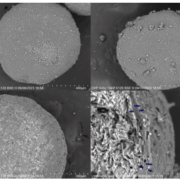
The researchers carefully controlled the process conditions. Specifically, atomization air pressure stayed at 1.1 atm, while fluidizing airflow ranged between 35–45 m³/h. After coating, they analyzed the pellets and raw materials using FTIR, XRD, SEM, and DSC techniques. As a result, these tests confirmed that rivaroxaban successfully formed inclusion complexes with hydroxypropyl-β-cyclodextrin. Furthermore, the final pellets showed excellent flowability, good compressibility, and adequate hardness.

In addition, HPLC-DAD analysis confirmed a drug loading of 10 mg rivaroxaban per 750 mg of coated pellets. For dissolution testing, the researchers used two distinct media: sodium acetate buffer pH 4.5 with 0.2% sodium dodecyl sulfate, and phosphate buffer pH 6.8 without surfactants. They then compared the new capsules with both reference capsules and conventional tablets. Consequently, results showed that the experimental capsules matched the release profile of Xarelto® 10 mg. Moreover, they released rivaroxaban at a faster rate within the first 10 minutes.

Conclusion

In conclusion, this research introduces an effective method to create solid dosage forms from liquid-state drug–cyclodextrin complexes. More importantly, this innovative approach significantly improves the dissolution performance of rivaroxaban. Therefore, it opens promising new possibilities for enhanced drug delivery and greater oral bioavailability. This breakthrough highlights the potential of liquid-state inclusion complexes to optimize the dissolution performance of rivaroxaban, paving the way for more efficient drug delivery systems and enhanced oral bioavailability.

References

[1] E. A. Ozon, E. Mati, Oana Karampelas, V. Anuta, I. Sarbud, A. M. Musuc, R.-A. Mitran. D. C. Culita, I. Atkinson, M. Anastasescu, D. Lupuliasa, M. A. Mitu, Heliyon 10(12), 2024, e33162; doi: 10.1016/j.heliyon.2024.e33162

Connecting information

Are you working on dissolution performance of rivaroxaban or similar API, as well? Get in touch with us. We supply material support for educational research activities.
Exploring a Modern Control Strategy for Wurster Coating-thumbnail

Control Strategy for Wurster Coating and Its Importance in Modern Drug Formulation

Control Strategy for Wurster Coating plays a central role in the production of high-quality pharmaceutical pellets for extended-release drug products. In multiparticulate formulations, coating efficiency and coating accuracy determine the final drug release profile. Therefore, manufacturers must control coating thickness with high precision. Even small differences in pellet size can affect coating uniformity and alter dissolution behavior. As a result, coating consistency directly influences product quality, therapeutic performance, and patient safety. Modern pharmaceutical manufacturing increasingly relies on Quality by Design (QbD) principles and Process Analytical Technology (PAT). Consequently, advanced control strategies help manufacturers achieve reliable and reproducible coating results while reducing process variability.

Understanding the Wurster Process and Bottom-Spray Fluid-Bed Technology

The Wurster process is a specialized bottom-spray fluid-bed coating technology used for pellets, beads, and granules. During the process, conditioned air fluidizes the particles inside the coating chamber. At the same time, a spray nozzle applies the coating suspension from below. The characteristic Wurster column creates a controlled particle circulation pattern. As a result, each pellet repeatedly passes through the spray zone and receives a uniform coating layer. This mechanism enables highly accurate film formation on large numbers of particles. Therefore, the technology has become the preferred solution for extended-release, delayed-release, and taste-masked formulations. Compared with many alternative coating methods, the Wurster process delivers superior coating uniformity and process reproducibility.

Exploring a Modern Control Strategy for Wurster Coating

How a Modern Control Strategy for Wurster Coating Improves Process Performance

Traditional coating processes often rely on spraying a predefined amount of coating material. However, pellet size variations can influence the final coating thickness. Consequently, manufacturers may achieve different coating results even when they use the same coating quantity. A modern Control Strategy for Wurster Coating addresses this challenge through real-time process monitoring. Instead of focusing only on coating mass, the strategy measures particle growth during the coating process. Manufacturers can then continue spraying until the target coating thickness is reached. As a result, the process directly controls a critical quality attribute rather than an indirect process parameter. Furthermore, this approach compensates for substrate variability and improves batch-to-batch consistency. It also strengthens process robustness and supports regulatory expectations for advanced pharmaceutical manufacturing.

The Function of CELLETS® 500 in Wurster Coating Studies

CELLETS® 500 microcrystalline cellulose pellets serve as highly spherical starter cores for coating development and process evaluation. In the referenced study, researchers used CELLETS® 500 as a model substrate to investigate coating performance. This approach eliminated the influence of active pharmaceutical ingredients and allowed a focused assessment of coating behavior. In addition, the pellets provided a reproducible and well-characterized surface for coating application. Researchers compared different pellet size populations to examine the impact of substrate dimensions on coating thickness. Consequently, CELLETS® 500 helped validate the effectiveness of a PAT-based Control Strategy for Wurster Coating and demonstrated the importance of controlling particle growth during processing.

Benefits for Pharmaceutical Products and Patients

A modern Control Strategy for Wurster Coating offers significant advantages for both manufacturers and patients. First, it improves coating uniformity and dissolution profile consistency. Second, it reduces batch variability and minimizes the risk of product deviations. Moreover, precise coating control supports predictable drug release throughout the intended dosing period. This consistency helps ensure reliable therapeutic outcomes. At the manufacturing level, companies can reduce waste and improve production efficiency. In addition, advanced process control supports continuous improvement initiatives and data-driven decision-making. Ultimately, patients benefit from consistent drug performance, improved treatment reliability, and enhanced product quality.

Conclusion and Outlook

Control Strategy for Wurster Coating has become a key element of modern pharmaceutical pellet manufacturing. The combination of bottom-spray fluid-bed technology and real-time process monitoring enables highly accurate coating control. Furthermore, PAT-based approaches allow manufacturers to target coating thickness directly and compensate for pellet size variability. This capability improves product quality and strengthens process reliability. Looking ahead, digitalization, automation, and advanced analytics will further enhance Wurster coating operations. As pharmaceutical manufacturing continues to evolve, modern Control Strategy for Wurster Coating concepts will support more efficient production processes and more consistent extended-release drug products for patients worldwide.

References

[1] Edward Godek, Chris O’Callaghan, Ian Jones, Piyush Patel, Pharmaceutical Technology, 08 Feb 2018, 43(8)

formulation and design of multiunit particulate systems-small

The Role of Pellets in Advanced Oral Drug Delivery

Formulation and design of multiunit particulate systems play a central role in modern oral drug delivery. Pellets used in Multiunit Particulate Systems (MUPS) distribute the active ingredient into many small units. As a result, they reduce the risk of dose dumping and minimize local irritation. In addition, they improve content uniformity and gastric emptying reproducibility. Therefore, patients benefit from safer therapy and lower variability in plasma levels. Moreover, pellet-based systems allow functional coating and precise release control. This advantage becomes critical for acid-labile drugs. Consequently, the formulation and design of multiunit particulate systems offer clear technological and therapeutic benefits. The uploaded publication applies this concept to Pantoprazole and uses a Quality by Design framework to achieve a robust MUPS tablet.

Summary of the Study: QbD-Based Development Strategy

The publication by G. S. Sonar and S. Rawat [1] describes a structured QbD-driven development of an oro-dispersible Pantoprazole MUPS tablet. First, the authors defined a Quality Target Product Profile. Then, they identified critical quality attributes such as acid resistance, buffer-stage dissolution, hardness, friability, and disintegration time.

Next, the team performed risk assessment using cause-and-effect diagrams and Failure Mode and Effects Analysis. This step identified three critical formulation variables. These variables included the quantity of dry enteric polymer, the amount of PlasACRYL® HTP20, and the percentage of pellets in the final tablet. Subsequently, they applied a 2³ full factorial design to study main and interaction effects. This statistical model allowed precise evaluation of formulation influences.

The results showed that the enteric polymer mainly controlled acid-stage drug release. In contrast, PlasACRYL® HTP20 improved film flexibility and reduced pellet rupture during compression. Furthermore, the pellet percentage strongly influenced mechanical strength and disintegration time. Because compression can damage coated pellets, the authors introduced a cushioning layer with PEG 6000. This modification reduced acid-stage drug release significantly.

The optimized formulation achieved less than 10% release in 0.1 N HCl and 70–80% release in pH 6.8 buffer. In addition, the tablets showed acceptable hardness and friability below 1%, a disintegration time at 17 s. Composition was of 100 mg dry polymer, 34 mg PlasACRYL HTP20 and 35% of MCC pellets in a tablet. Starter cores can be used such as CELLETS® 150-300.
for formulation V4. The similarity factor f2 reached 56.5, which confirmed pharmaceutical equivalence to the reference product. Finally, the researchers defined a validated design space with robust operating ranges. Therefore, the study demonstrates how QbD strengthens the formulation and design of multiunit particulate systems.

formulation and design of multiunit particulate systems

API, QbD Principle, and Final Formulation

Design Pantoprazole: API Type, BCS Class, and Indication

Pantoprazole is a proton pump inhibitor and a substituted benzimidazole derivative. It irreversibly blocks the H⁺/K⁺-ATPase in gastric parietal cells. Consequently, it suppresses gastric acid secretion. Clinicians prescribe it for gastroesophageal reflux disease, peptic ulcer disease, and Zollinger–Ellison syndrome. Pantoprazole is acid-labile and degrades rapidly at low pH. Therefore, manufacturers formulate it as an enteric-coated dosage form. According to the Biopharmaceutics Classification System, Pantoprazole belongs to BCS Class II. Thus, it shows low solubility but high permeability, which makes dissolution control essential.

QbD Principle and Its Formulation Advantage

Quality by Design follows ICH Q8 to Q10 guidelines. It starts with predefined objectives and builds product understanding through risk management and experimental design. Instead of relying on empirical testing alone, developers link critical material attributes and process parameters to critical quality attributes. Consequently, they can predict product performance. In the formulation and design of multiunit particulate systems, QbD reduces development risk and improves robustness. Moreover, it allows regulatory flexibility when operating within the approved design space.

Final Formulation Design and Drug Release Profile

The final MUPS tablet consists of layered pellets compressed into an oro-dispersible matrix. First, the developers applied a drug-loading layer onto microcrystalline cellulose starter cores. Then, they added a seal coat using hypromellose. Afterward, they applied an enteric coat with Eudragit L30D-55 and PlasACRYL® HTP20. To protect the pellets during compression, they added a cushioning layer containing PEG 6000. Finally, they blended the coated pellets with excipients such as microcrystalline cellulose, mannitol, crospovidone, and lubricants before compression.

The optimized formulation delivered less than 10% drug release after 120 minutes in acidic medium. Subsequently, it released 70–80% of the drug within 30 minutes in phosphate buffer pH 6.8. The tablets showed hardness around 47–48 N, disintegration below 20 seconds, and friability under 0.5%. Therefore, the formulation achieved acid protection, rapid intestinal release, and mechanical stability simultaneously.

Conclusion and Outlook

The study clearly demonstrates that formulation and design of multiunit particulate systems benefit from a structured QbD approach. By combining risk assessment, factorial design, and statistical validation, the researchers developed a robust Pantoprazole MUPS tablet. Moreover, they established a well-defined design space that ensures consistent quality. As pharmaceutical development evolves, QbD will further enhance efficiency and regulatory confidence. In the future, integration of process analytical technology and advanced modeling will strengthen pellet-based platforms even more. Consequently, the formulation and design of multiunit particulate systems will remain a key strategy for complex oral drug delivery.

References

[1] G.S. Sonar1, S. Rawat, International Journal of PharmTech Research, CODEN (USA): IJPRIF, ISSN: 0974-4304, Vol.8, No.8, pp 05-23, 2015. (link)